
In partnership with

Opinion for The Latino Newsletter

Secretary of State Marco Rubio with President Donald J. Trump, February 19, 2026. (Public Domain)
Marco Rubio is the first Hispanic to become the Secretary of State of the United States. He is the son of Cuban immigrants and is fluent in Spanish — all great qualifications for the U.S. to improve relations with Latin American countries. But Rubio’s priorities are not diplomatic ones. As a core member of the Trump administration’s team with 2028 presidential aspirations, Rubio is working on toppling governments he ideologically opposes.
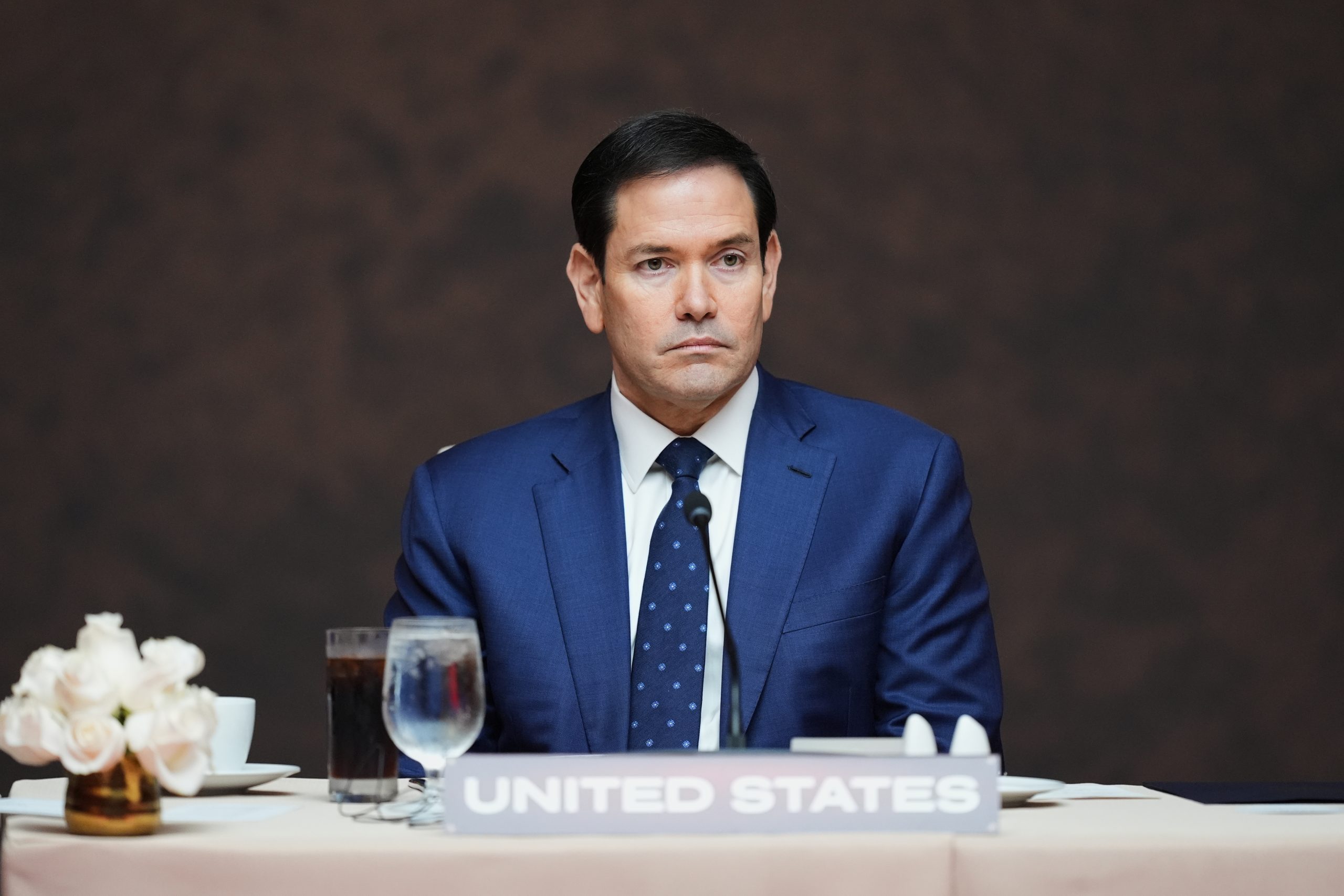
A strong and effective Secretary of State maintains foreign relations, improves communication between the United States and the rest of the world, and negotiates on behalf of the President. It’s not about being an inflexible ideological zealot — and yet, that is exactly what we are getting with Rubio, who has a long record as an interventionist neoconservative, and who in 2016 called Donald Trump “a serious threat to the future of our party, and our country.” He is now all in with Trump.

No Surprises
As a Senator, Rubio supported many American military interventions, including bombing Libya in 2011 to help topple Muammar Gaddafi, and bombing countries like Syria. He also promoted the use of drone strikes. As Secretary of State during the current war with Iran, Rubio has already called for a reexamination of the country’s relationship with NATO. This isn’t diplomacy at all.

Being part of Florida’s Cuban American community, Rubio represents an exile group still consumed with wanting to topple Cuba’s communist government. Rubio’s parents left Cuba in the 1950s and later watched Fidel Castro turn the island communist — a grievance that has driven much of Rubio’s political identity. By extension, any left-wing governments friendly with Cuba, such as Venezuela and Nicaragua, are viewed as enemies. Now Rubio’s dreams can become a reality in his new position of power. Venezuela has already become the first target.
Rubio has been a longtime critic of the Venezuelan government, regularly courting the Venezuelan exile community in Florida. By 2019, he was openly advocating for regime change on social media, posting photos of Gaddafi being killed by a mob — a pointed suggestion that Nicolás Maduro could meet the same fate — and comparing the Venezuelan president to former Panamanian dictator Manuel Antonio Noriega. None of that was idle talk. By the start of this year, the U.S. was kidnapping Maduro.
That operation was the culmination of a coordinated campaign. It started with military strikes on alleged drug smuggling boats, the seizure of Venezuelan oil tankers, and ultimately an armed attack on Venezuelan soil. U.S. Special Forces captured Maduro and his wife, Cilia Flores, while bombing Venezuelan targets. Now both are on trial for drug smuggling, and the U.S. is moving to control Venezuelan oil and resources.
Now that Venezuela has bent to U.S. pressure, Cuba has become the next target of regime change. It appears to be on its last legs, with power outages and blackouts crippling the island. Rubio and Trump are enforcing a fuel embargo to hasten a collapse by blocking oil tankers from reaching Cuban shores.
Only One Strategy
For Rubio and many right-wing Cuban Americans, there is only one strategy for Cuba: collapse the government. Even if it means the entire population suffers without electricity or other basic necessities. That suffering will drive more Cubans to flee the island and come to the United States, increasing illegal immigration. For Rubio, though, the consequences are worth it if communism ends in Cuba during his lifetime.
Such antagonism is not limited to Cuba and Venezuela. Nicaragua has long been a target of U.S. intervention, and conservatives have despised its current leader, Daniel Ortega, since the 1980s, when the United States funded the Contra War against the Sandinista government — a conflict that left thousands of Nicaraguans dead. Since Ortega returned to power in 2007, U.S.-Nicaraguan relations have deteriorated, and Rubio has been sharply critical of the Ortega government and its human rights record.
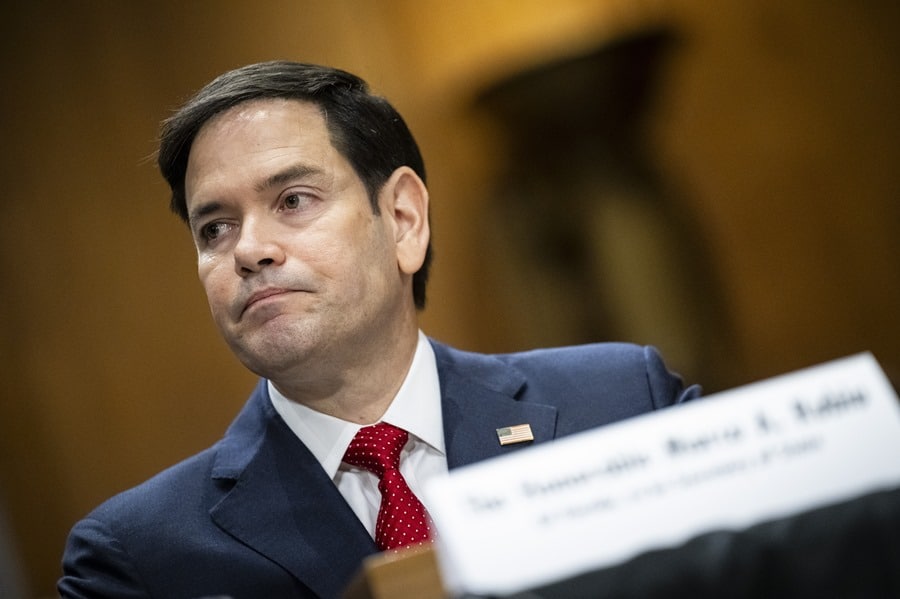
Rubio has also gone after leftist leaders like Gustavo Petro of Colombia and Luiz Inácio Lula da Silva of Brazil, despite neither being authoritarian in the mold of Maduro or Ortega. In this case, the tensions are not over human rights and democracy, but ideological drama. To be a good diplomat, one has to work to get along with people of different views.
There is now a Hispanic face as Secretary of State — one who speaks Spanish — but none of that matters if the policy is the same. Rubio has chosen ideology over diplomacy. The opportunity for a more positive chapter for the United States and Latin America was there. Rubio walked past it.
Joseph Ramirez is a journalist and blogger from Torrance, California. Born to a Guatemalan father who fled the Guatemalan civil war, he developed a deep interest in Latin America. He studies and writes about the effects of U.S. actions in the region and their relation to immigration. More at his blog, Complicated Politics.
The Latino Newsletter is a 501(c)(3) nonprofit organization. Help us reach our $100,000 goal to fund our podcast’s third season and to offer more opportunities for journalists to file their stories without paywalls or paid subscriptions.
And Now a Word From Our Sponsor
100 Genius Side Hustle Ideas

Don't wait. Sign up for The Hustle to unlock our side hustle database. Unlike generic "start a blog" advice, we've curated 100 actual business ideas with real earning potential, startup costs, and time requirements. Join 1.5M professionals getting smarter about business daily and launch your next money-making venture.
What We’re Reading
A 770% Surge: From NBC News, “Arrests of immigrants without criminal convictions by ICE have surged 770%, while street arrests saw a more than 1,000% increase during the first year of President Donald Trump’s second term, according to a new analysis released Tuesday.”

Julio Ricardo Varela edited and published this edition of The Latino Newsletter.
The Latino Newsletter welcomes opinion pieces in English and/or Spanish from community voices. Submission guidelines are here. The views expressed by outside opinion contributors do not necessarily reflect the editorial views of this outlet or its employees.