
In partnership with

Opinion for The Latino Newsletter

Benicio del Toro at the 2025 Cannes Film Festival (Photo by Harald Kirchel/Wikiportraits)
There isn’t a scorecard hanging up in my office. Still, I find myself eagle-eyeing Hollywood’s inclusion and omission of Latino talent every awards season, especially when it comes to fellow Puerto Ricans. This year blesses us with a third Oscar nomination for our “Boricua Brando,” Benicio del Toro — the honor stemming from the actor’s sublime portrayal of Sensei “A few small beers” Sergio in Paul Thomas Anderson’s “One Battle After Another.”
In a career spanning nearly four decades, del Toro seems universally loved by the industry — a once-in-a-generation marvel. What surprises me is that we don’t have more Benicios, especially with the very subtle steps del Toro took to move Latino screen acting away from one of the oldest tropes in the industry — the antiquated Latin lover archetype.
The Thirst Trap That Wouldn’t Go Away
The Latin lover arrived over a century ago, joining other anti-immigrant monikers like Tango pirate or Dance gigolo to dog whistle the “exotic” newcomers finding success in entertainment and dance halls — a thirst trap to some, a sexual threat to others.
In the 1920s, press outlets deemed Italian silent-screen star Rudolph Valentino the original “Latin Lover” (which is a hilarious title to receive), although his Hollywood peers, including the Spaniard Antonio Moreno and the Mexican Ramón Novarro, helped the label gain steam with their smoldering, exotic, hips-don’t-lie dance-heavy appearances in films of the era. They played heroes, rebels, but always lovers — incredible status markers for immigrant actors in leading roles.
By the 1930s, nearly all Hollywood films included sound. For performers like Moreno and Novarro, it was one thing to look exotic. It was another thing to sound exotic (Valentino passed away unexpectedly at age 31 in 1926). The 1934 Hays Code brought a series of restrictions to Hollywood films — toned-down depictions of desire, limits on miscegenation or race-mixing, and “American values” as a primary story export.
Adding to this complexity were changes in the U.S. labor force. In 1942, the Bracero Program brought millions of Mexican laborers to cover wartime shortages. At the same time, Puerto Rico's Operación Manos a la Obra meant that scores of new Caribbean residents settled in cities like New York and Chicago. Onscreen, Latinidad became a filter to view the country’s ills (sound familiar?).
Latino masculinity fell into a few camps — thugs, foreign threats, and “sí, señor” sycophants. There were bright spots on television, mostly in comedy, with the work of Desi Arnaz, Freddie Prinze, and Erik Estrada. But the Latin lover trope remained for many actors, often re-employed for mockery. At best, the variation portrayed Latino characters as elder exotic treats for or old ladies (see Ricardo Montalbán and Fernando Lamas’ television runs), but more frequently, the Latin lover moved into the 1970s and 1980s as lecherous, open-shirted playboys and foreign clowns found to be cowardly, tacky, and sleazy (see Taylor Negron’s Julio in “Easy Money”, Stephen Bauer’s Manny in “Scarface,” and Billy Crystal’s run playing Fernando Lamas on “Saturday Night Live”).
Enter Benicio From Santurce
By the time Benicio del Toro’s career gained steam in the early 90s, the actor found himself in yet another new wave in the Latin lover canon — Spanish-speaking hunks with accents were trendy. In a decade starting with Gerardo's “Rico Suave” and ending with Ricky Martin’s “Livin' La Vida Loca”-fueled Latin Boom — with some deeply tanned Antonio Banderas in “Desperado” and Madonna’s baby daddy/himbo, Carlos León, halfway through — Latino and Spanish-speaking men were pedestaled for the gaze. And with a lean physique, striking face, and penetrating look, Benicio del Toro arrived smoking hot.
It’s gotta be acknowledged that Beni from Santurce had the industry asset of looking “appropriately foreign,” dare I say, “Mediterranean,” with those hazel eyes and thin nose. Like most of the Latino actors who made it to Latin lover status, del Toro shared a proximity to whiteness. He wasn’t particularly urban-looking, or too dark, too Indigenous. But like many of his Latino peers in the 90s, when del Toro talked, it was obvious the dude was from Latin America. And unless you were singing, Hollywood continued to offer limited paths for Latino actors, especially those with accents. Del Toro's speaking style — a slow, Caribbean, somnolent patter — represented a recipe of diasporic sancocho, stemming from an upbringing in both urban and rural Puerto Rico mixed with a period of adolescence spent in Southern Pennsylvania. But in an industry that mocked or muted foreignness on-screen, del Toro has used his accented English as a revolutionary tool in portraying Latino masculinity.
To hear Benicio speak in boricua Spanish “es otra cosa.”
For del Toro’s breakout role as the criminal Fred Fenster in 1995’s “The Usual Suspects,” the actor leaned into his unique patois, making his character incomprehensible to the other characters in the cult classic, creating something beyond Puerto Rican, Latino, or even foreign — del Toro’s Fenster felt extraterrestrial.
Exposure from “The Usual Suspects” landed del Toro a Hollywood rite of passage — playing leading man in 1997’s romcom, “Excess Baggage” opposite MTV-era It girl Alicia Silverstone. Instead of a rote Latin lover performance, del Toro plays the character of Vincent like a mumbling cheetah, a wild subversion of a role meant to be simple eye candy, my man.
Del Toro closed out the decade with three wildly disparate, but importantly, distinct vocal performances as Dr. Gonzo in Terry Gilliam’s “Fear and Loathing in Las Vegas”, Franky Four-Fingers in Guy Ritchie’s “Snatch”, and an Oscar-winning turn (spoken in Mexican-infused Spanish) as the honorable cop Javier Rodríguez Rodríguez in Steven Soderbergh’s “Traffic”.
This decade of decisions cemented del Toro as an actor-first actor, with recurring collaborations with Hollywood auteurs (a small sample includes work with Wes Anderson, William Friedkin, Alejandro González Iñárritu, and four films with Soderbergh). Since 2000, del Toro has maintained industry cred by oscillating between roles as character actor and leading man (I mean, Jesus, in two years del Toro jumped between portrayals of Che Guevara AND the Wolfman!), hopping into franchises and smaller indie fare, playing a wide range of “where is this guy from?” roles without ever deliberately hiding his Latinidad.
Bring on the Boricua Brandos
Even with all of del Toro’s kudos in the industry, I marvel still at his lack of contemporaries, acolytes — whatever you wanna call it. Is del Toro a singular talent? Hell yes, he is. But even Brando had his imitators. James Dean spawned generations of bad-boy malaise. Jack Nicholson had his Christian Slaters. We’ve moved into a new era, where the Latin lover is, potentially, a thing of the past, and thanks to del Toro’s work, we now have the privilege of Latino star power lauded as weird, wild, or unpredictable, instead of just exotic, steamy, or dangerous. Where’s our next generation of Boricua Brandos?
There’s hope that the Academy and future auteurs will index the talents of our Anthony Ramos, Ismael Cruz Córdova, or our rising matinee star, Bad Bunny (shit, give Esai Morales some elder statesmen material!). Until we see a wider range of our guys, we run the risk of defaulting to the antiquated tropes albatrossed to past generations of actors.
For now, I’m grateful that our Beni from Santurce is still getting his flowers. He never starred in another romcom, but maybe there’s still time.
Mark Pagán is an award-winning journalist, filmmaker, producer, and the creator of the critically acclaimed podcast, Other Men Need Help. A former teacher, social worker, and b-boy, his work spans print, podcasting, film, and theater, appearing in outlets and festivals including The New York Times, NPR, the BBC, The Atlantic, The Whitney, and Slamdance Film Festival. Substack: markpagan.substack.com.
The Latino Newsletter is a 501(c)(3) nonprofit organization. Help us reach our $50,000 goal to fund our podcast’s third season and to offer more opportunities for journalists to file their stories without paywalls or paid subscriptions.
And Now a Word From Our Sponsor
Become An AI Expert In Just 5 Minutes

If you’re a decision maker at your company, you need to be on the bleeding edge of, well, everything. But before you go signing up for seminars, conferences, lunch ‘n learns, and all that jazz, just know there’s a far better (and simpler) way: Subscribing to The Deep View.
This daily newsletter condenses everything you need to know about the latest and greatest AI developments into a 5-minute read. Squeeze it into your morning coffee break and before you know it, you’ll be an expert too.
Subscribe right here. It’s totally free, wildly informative, and trusted by 600,000+ readers at Google, Meta, Microsoft, and beyond.
What We’re Reading (and Watching)
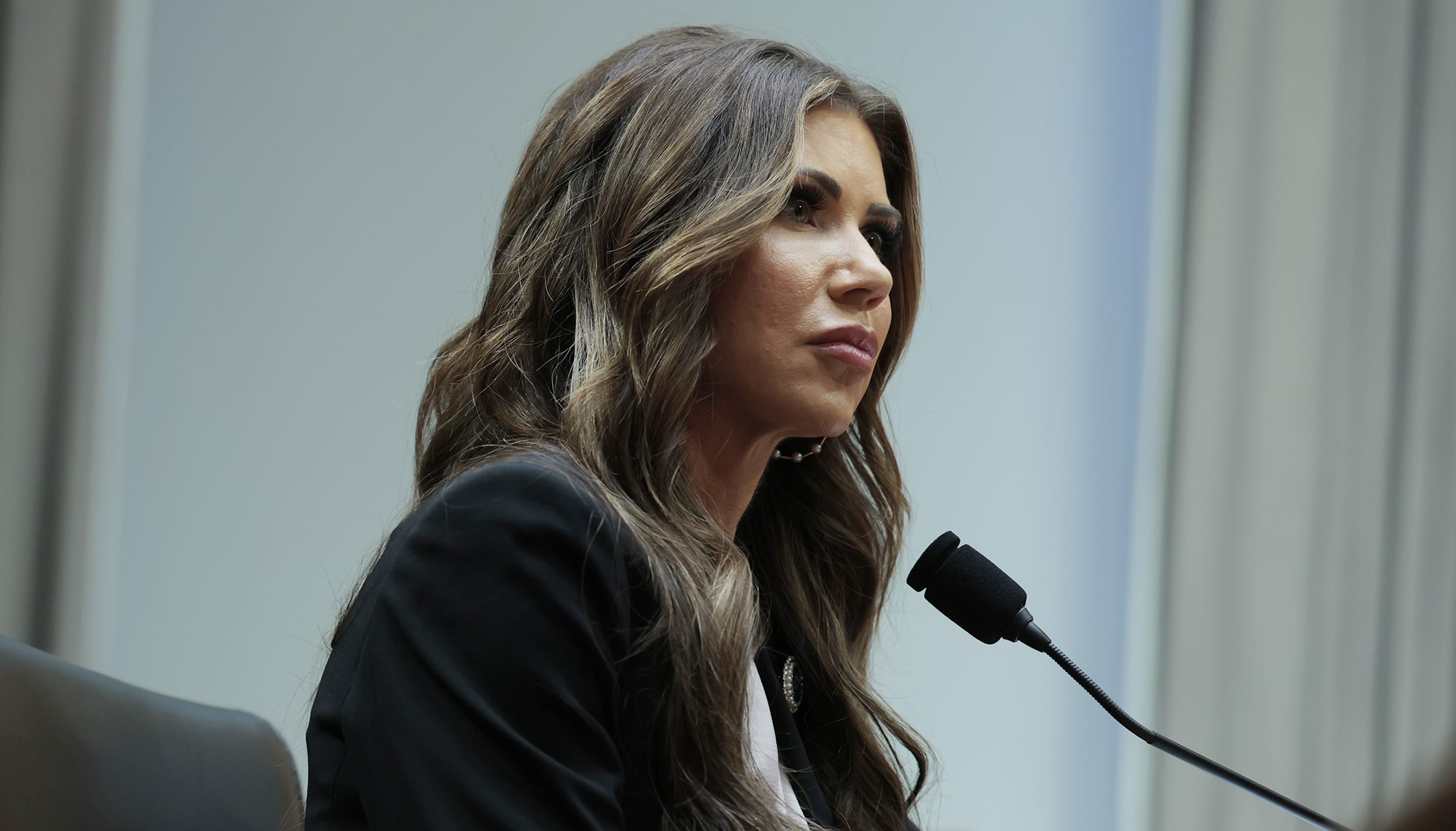
Trump Says Noem Is Out: From MS NOW, “Kristi Noem, the face of some of the Trump administration’s most high-profile immigration controversies over the past year, was ousted Thursday as secretary of the Department of Homeland Security, a day after she faced intense grilling from lawmakers in Congress.”
Rosalía’s Rave: Even my gym instructor was playing Rosalía’s stunning Brit Awards performance this week, which features Björk and a techno remix of her opus “Berghain.” The best part on rewatch: you can see Björk vibing and dancing in the background before her reveal.
Spain Is Having a Week: I can’t get enough of Spanish Prime Minister Pedro Sánchez standing up to Trump.
Nuria Net edited this edition of The Latino Newsletter. Julio Ricardo Varela published it.
The Latino Newsletter welcomes opinion pieces in English and/or Spanish from community voices. Submission guidelines are here. The views expressed by outside opinion contributors do not necessarily reflect the editorial views of this outlet or its employees.