
In partnership with


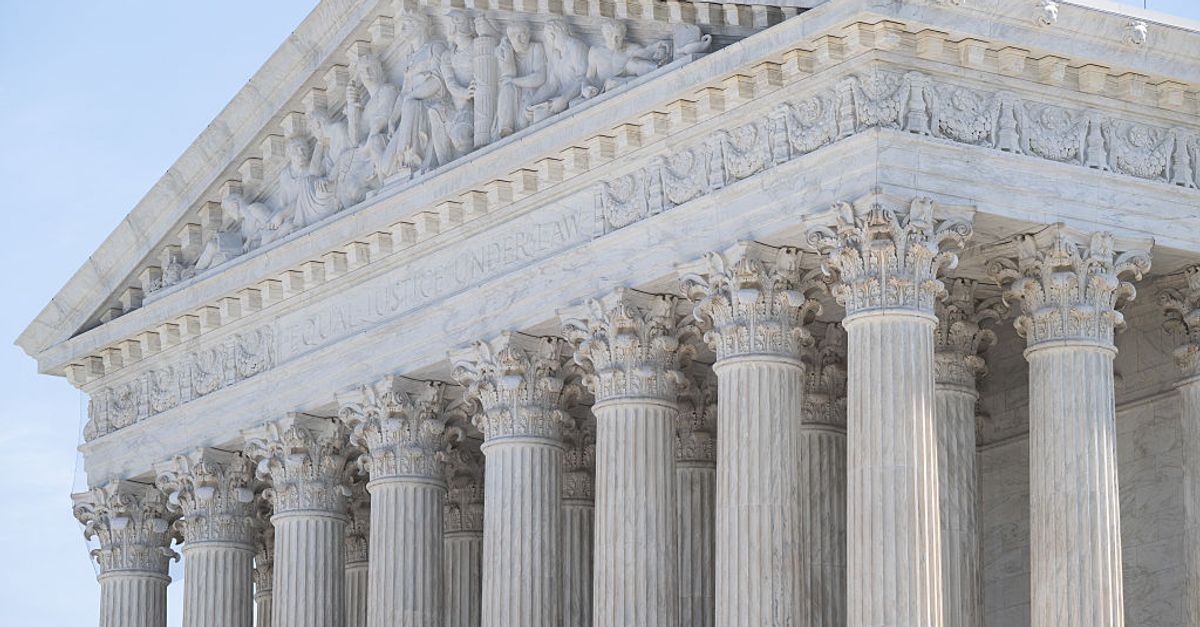
Close-up of the Supreme Court building in Washington, D.C. (USDA Photo by Ken Hammond/Public Domain)
Opinion for The Latino Newsletter
On Monday, the Supreme Court issued a 6-3 decision affirming that birthright citizenship is a civil right for everyone born in America. In a crushing defeat, President Trump’s efforts to undo the 14th Amendment ended.
The greatness of the United States lies in its being a nation of immigrants. The Supreme Court has reaffirmed that we are a nation built by that energy, hard work, and patriotism.
Section 1 of the 14th Amendment states, “All persons born or naturalized in the United States, and subject to the jurisdiction thereof, are citizens of the United States and of the State wherein they reside.”
The government’s three branches have historically interpreted this language to provide a broad grant of citizenship. In keeping with that understanding, the Supreme Court ruled in the 1898 case United States v. Wong Kim Ark that the 14th Amendment guarantees birthright citizenship to anyone born in the United States, including the children of parents who are not U.S. citizens. There are only a few narrow exceptions — for instance, U.S.-born children of foreign ambassadors would not be considered American citizens.
The court has upheld this historical interpretation.
Why You Should Care
All Americans should care because the President’s efforts were a direct challenge to hard-fought constitutional protections fundamental to our national story. Birthright citizenship has allowed generations of immigrants to fully contribute to this country, rather than remain in the shadows as a permanent underclass.
Ending birthright citizenship would have disproportionately harmed our community. Latino children are the fastest-growing population in the country. In 2022, 27 percent of all children nationwide were Latino. A UCLA report notes that our community comprises 75% of all U.S.-born children of non-citizen parents. Furthermore, they estimate that 50% of children born to noncitizen parents would have been affected by Trump’s executive order.

My very own citizenship would have been denied because my mother was a noncitizen at the time I was born. The last few years have been personal to me, and as this current administration continues to target our community, this warped effort has only resulted in spreading fear and mistrust and heightened social and legal instability.
While Trump will continue to look for other avenues, this victory ensures that our citizenship cannot be denied to future generations.
Still, Monday’s news will not change the political strategy of railing against immigrants — a consistent feature of Trump’s public rhetoric. He has regularly used inaccurate, derogatory, and racist language to refer to immigrants coming into the country. Some of his comments mirror language used by white supremacists, such as his claim that immigrants are “poisoning the blood” of the country. He frequently ties undocumented immigrants to a spike in crime, with no proof that this has occurred.
In 1936, Germany’s Nuremberg Laws did not recognize birthright citizenship for Jewish people, who were classified as state subjects without full rights. This marked a significant departure from the principles of citizenship based on birth.
In 2026, Trump wanted to end birthright citizenship and create a permanent class of people who would not qualify for citizenship. This would have impacted not just their lifetimes but the lifetimes of their children and their children’s children. Trump wanted to prohibit these children from going to school, owning a home, becoming employed, having access to healthcare, or voting.
When immigrants have been provided with opportunities and a level playing field, they have over-performed in schooling, job outcomes, and entrepreneurship. Immigrant success helps everyone.
More than 25 million foreign-born residents are naturalized U.S. citizens. Immigrant households in the U.S. significantly boost the economy, holding an estimated $1.3 trillion to over $6.6 trillion in spending power/wealth. In 2022, immigrants paid over $382 billion in federal taxes and $196 billion in state and local taxes, with the Congressional Budget Office projecting they will add $7 trillion to the U.S. economy over the next decade.
The Court’s decision to uphold birthright citizenship gives us hope that we can provide for our families and make contributions to this country’s greatness. Trump’s actions were a shameful and unnecessary effort that the Supreme Court properly ended.
Mauro Morales is a retired attorney and civil rights leader who spent 25 years in federal service, most recently as Staff Director of the U.S. Commission on Civil Rights. He also served in the Obama Administration, including senior roles at the Office of Personnel Management, and previously worked in private practice and on Capitol Hill.
Get Us to $25,000
As we independently distribute American Colony and celebrate our 2nd birthday, we are at 44% of our target to make our $25,000 summer goal. Give now to keep us going.

And Now a Word From Our Sponsor
The Wild World of the Van Gogh Truthers

In 1990, after years of practicing medicine and reviewing Van Gogh’s case history via his hundreds of letters, Arenberg published a paper in JAMA diagnosing Van Gogh as suffering not from epilepsy, as the artist’s physician claimed a century earlier, but from Ménière’s disease, an inner-ear affliction that can cause vertigo, of which Van Gogh complained, and tinnitus, a persistent ringing in the ears. Ménière’s, to Arenberg, could better explain Van Gogh’s decision to slice off his ear. After retiring, in 2017, Arenberg recommitted himself to studying Van Gogh and became convinced that art historians had made an even more alarming mistake: Van Gogh had not committed suicide. He’d been murdered.
Read the article for free on Air Mail, a lively digital read for the world citizen, with stories both foreign and domestic that you won’t find anywhere else, written by some of the world’s finest journalists.
What We’re Reading
10 Years of PROMESA: Ten years ago today, President Barack Obama signed the PROMESA Act, creating an unelected fiscal oversight board in Puerto Rico. WRLN’s Daniel Rivero filed an interview with economist José Caraballo Cueto about the federal law.
Julio Ricardo Varela edited and published this edition of The Latino Newsletter.
The Latino Newsletter welcomes opinion pieces in English and/or Spanish from community voices. Submission guidelines are here. The views expressed by outside opinion contributors do not necessarily reflect the editorial views of this outlet or its employees.