

Alejandra Agüero, a Venezuelan resident of Boston, speaks about her family’s experience during the June 24 earthquakes at a press conference at Peka Restaurant in Boston. (Photo by Rosanna Marinelli/The Latino Newsletter)
Editor’s Note: Para la versión en español de este artículo, visita El Planeta.
BOSTON — Videos of collapsed homes, people trapped under debris, and families searching for missing relatives have flooded social media, turning the twin earthquakes that struck Venezuela on June 24 into a painful real-time experience for Venezuelans in cities like Boston. Many have been glued to their phones, trying to reach loved ones as the death toll climbs.
Alejandra Agüero spent Wednesday night searching for confirmation and calling relatives after the first alerts appeared shortly after 6 p.m. The uncertainty, she said, was one of the hardest parts: not knowing whether the reports were real, where the quake had hit, or if her family was safe. Her relatives in Yaracuy described feeling the ground move like waves as communications collapsed across the country. The damage there was less severe than in Caracas, Valencia, and Maracay, but the emotional toll, she said, has been overwhelming for Venezuelans inside and outside the country.
“Physically, I look fine, but emotionally I’m not okay,” Agüero said, holding back tears. “My mom is here with me, but her head is in Venezuela — where her sisters are, where her sons are.”
Agüero, who studied renewable natural resources and led disaster-preparedness workshops in Venezuela before resettling in Boston, kept returning to one painful reflection: that the country she left once had the capacity to respond to disasters it no longer can. “There was material, there were prepared people, there was heavy machinery to clear rubble,” she said. “We could have been trained in that era to help. But in this era, I don't think there's anything.”
A Disaster Felt From Boston
Two powerful earthquakes struck northern Venezuela on Wednesday evening — a magnitude 7.2 quake near San Felipe, followed about 40 seconds later by a magnitude 7.5 shock near Yumare. Among the strongest to hit the country in over a century, they leveled neighborhoods in the coastal state of La Guaira and collapsed buildings across Caracas. By Friday, National Assembly President Jorge Rodríguez said at least 920 people had been killed and more than 3,300 injured, with more than 50,000 names on a registry for the missing — figures officials warn are still rising.
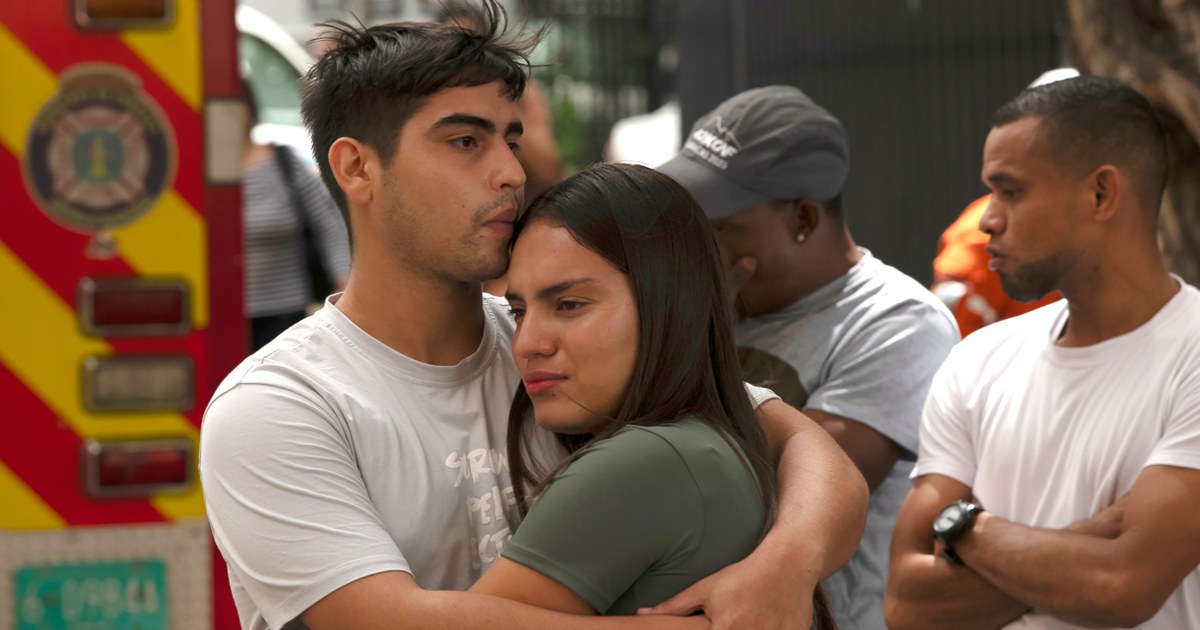
More than 2,000 miles away, that toll is measured in unanswered phone calls. With the airport closed, the usual instinct — to send supplies, to get on a plane — was off the table. So Boston’s Venezuelans turned to what they could do from here: organize.
On Thursday, the Venezuelan Association of Massachusetts (VAM), Casa de Venezuela, and local leaders gathered at Peka Restaurant to launch an emergency fundraising campaign to support trusted organizations on the ground, including Cáritas de Venezuela and the Venezuelan Medical Association.
“The hospitals are overwhelmed — there isn’t even saline solution,” said VAM board member Carlina Velásquez. The effort runs on two tracks: funding rescue work and helping families still unable to reach loved ones. “We cannot promise answers,” said director Ciro Valiente, “but we can promise that no family will face this uncertainty alone.”
The response has been pan-Latino. Patria Sánchez, a Dominican leader and president of LULAC Evolución Boston, said her organization would do whatever was needed. “Right now, more than ever, our Venezuelan brothers and sisters need us,” she said. “I’m asking everyone to join this great cause, because tomorrow it could have been us.”
The disaster also landed amid renewed uncertainty over Temporary Protected Status. Gov. Maura Healey said her thoughts were with worried Venezuelan families in Massachusetts, calling federal efforts to deport people to such countries “outrageous and sickening.”
How to Help in Massachusetts
Confirm details with each organization before sending money or supplies, as drop-off points and hours can change.
To donate money
VAM, a 501(c)(3) nonprofit, has opened a relief campaign; donate online or via Zelle to [email protected]. Through “1 arepa por Venezuela,” a $5 donation to @carolicious424 goes entirely to VAM, which also hosts a charity bingo Sunday, June 28, at 3 p.m. at Bow Market, Somerville.
To drop off supplies
“Boston Unido por Venezuela” collects supplies at 11 Forrest Street, Winthrop (info: 617-952-1831). Emprende Boston holds a collection on Sunday, June 28, noon–6 p.m. at 5 Antrim, East Boston.
Rosanna Marinelli is a multimedia correspondent for The Latino Newsletter and the News Editor at El Planeta.
The Latino Newsletter is a 501(c)(3) nonprofit organization, and we turned 2 years old. Help us with our birthday campaign by giving here.
What We’re Reading
Anti-Immigration Allies: From Maanvi Singh for The Guardian, “In the U.S. Supreme Court, it seems Donald Trump has found loyalists in his crusade against immigration and immigrants.”
Julio Ricardo Varela edited and published this edition of The Latino Newsletter.
Consider donating to The Latino Newsletter. Any contribution, no matter how small, helps keep this newsletter free and accessible to all. ¡Gracias mil!