
In partnership with

Opinion for The Latino Newsletter

I spent most of my childhood making myself smaller, so my parents wouldn’t feel bad.
Not because they asked me to or because they sat me down and said, “Your feelings come second here.” It was more subtle than that.
Every time I started to say something real, whether it was something that pushed back or something that expressed what I actually needed, I could feel their emotions changing in real time. And the guilt would take over immediately.
My inner voice would say: “Look at everything they've sacrificed. Look at how hard they work. Who am I to make their lives harder?!”
So I swallowed it. Whatever I wanted to say, whatever boundary I wanted to draw, whatever version of myself I wanted to express, I kept it inside just to keep the peace.
And I kept the peace for years. Until I stopped keeping it entirely.
I Stopped Caring
Around 16, 17, 18 years old, I swung hard in the other direction. I started coming home late. I did what I wanted and stopped caring about how it landed.
I remember getting home at 2 am one night (my parents had told me midnight at the latest). I thought the house was quiet, so I crept down the hallway toward my room. Then I heard it.
“Qué falta de respeto eres.”
And then came the 15-minute rant about how irresponsible I was, how I didn’t care about them, how everything they’d done for me meant nothing. Days later, when other family members heard about my behavior, they took their turn too, reminding me of the sacrifices, the struggle, the debt I owed my parents.
I remember thinking: I don't give a f***.
And I meant it. Not because I was heartless, but because I had spent so much of my life suppressing who I was just to keep everyone comfortable that when the wall finally broke, it broke completely.
I went from total self-erasure to total self-interest. There was no middle or nuance. Just the pendulum swinging as far as it could go in the opposite direction.
A Common Pattern
That pattern (from suffocation to rebellion) is one of the most common things I see in Latino men who grew up in households where the rule was simple: “As long as you live under my roof, you follow our rules.”
The problem with the “my roof, my rules” approach is that it never teaches you how to have a self. It just teaches you to wait until you can escape.
But here’s where the story gets interesting, because rebellion isn’t the same as evolution.
When I was 18, I had just gotten back to Miami after visiting my cousins in Texas.
On the flight home, I met a girl. We hit it off. At the end of the flight, she invited me to stay at her hotel. I called my parents to let them know I was going out. A few hours later, I realized I was in no condition to drive home, so I called my dad.
Now, context matters here: My parents were deeply opposed to sleeping anywhere that wasn't home or my grandparents’ house my entire life. They never explained why. Just a firm, automatic no, every time, forever.
So calling my dad to say I was spending the night somewhere (with a girl I’d met on a plane, no less) wasn’t going to go smoothly.
He flipped and started demanding to know where I was so he could come get me. Then the guilt trip hit fast. How could I do this to them? What am I thinking? Don’t I care about how they feel?
But instead, I took the opportunity and said: “Dad, I’m not coming home. And based on your reaction, I’m not telling you where I am either. I’ll wake up tomorrow and come straight home. Good night.”
Then I hung up and did exactly that.
Staying Committed to Yourself
I’ve thought about that phone call a lot since then.
On the surface, it might look like more rebellion, more of the same “I don’t give a f***” energy from the late nights and the arguments.
But it wasn’t.
Something was different. I wasn’t running away or blowing them off out of spite. I was calm and stated what I was going to do. I committed to “I’ll be home tomorrow,” and I kept it.
I wasn’t trying to hurt them. I just wasn’t willing to abandon myself to manage their emotions anymore.
That’s the distinction most Latino men never get taught exists. There is a difference between breaking your family and differentiating from your family.
One is destruction, and the other is growth, but they can feel identical from the inside. The guilt that Latino kids carry around their parents is real, and it runs deep. It’s not made up.
Our parents did sacrifice and worked hard. They did give up things so we could have more, but sacrifice doesn’t transfer ownership of your identity.
Not Self-Erasure
Love doesn’t require self-erasure, and honoring your parents doesn’t mean living inside the emotional boundaries they’re comfortable with forever.
The problem is nobody teaches you how to hold both things at once. So it is about:
Love and limits.
Gratitude and autonomy.
Respect and self-respect.
So you either collapse into compliance or explode into rebellion. Most Latino men I know have done both at different points in their lives.
The real “adult” work is finding the third option. It sounds like this: “I love you, and I’m not doing that.” It sounds like showing up the next morning, coming straight home like you said you would, and proving through your actions that evolution isn't abandonment.
It also means accepting that the people you love may not like your boundaries. And in most Latino families, nobody modeled it for us, which means we have to build it from scratch, in real time, while the guilt is still running.
Your family doesn’t need you to be the same. They need you to be whole, and sometimes those two things are in conflict. When they are, always choose the whole.
About the Author
Chris Bustos is a Latino father, business coach, and the host of Waking Up His-panic — a podcast and YouTube channel exploring emotional awareness, Hispanic identity, and what it means to evolve as a man. His work helps professionals and entrepreneurs grow without losing themselves in the process.
Like What You Read? Support Us.
This story cost us $200 to produce, and instead of hiding the work behind a paywall, we keep it free and accessible. Give now to keep us available to all. Any amount will help!
And Now a Word From Our Sponsor
Wish your car insurance was pricier? Didn’t think so.

Find out if another carrier could offer you a better rate. Compare your offers all in one place and get your best rate on LendingTree. Just answer a few questions and get your quotes in a matter of minutes.
What We’re Reading
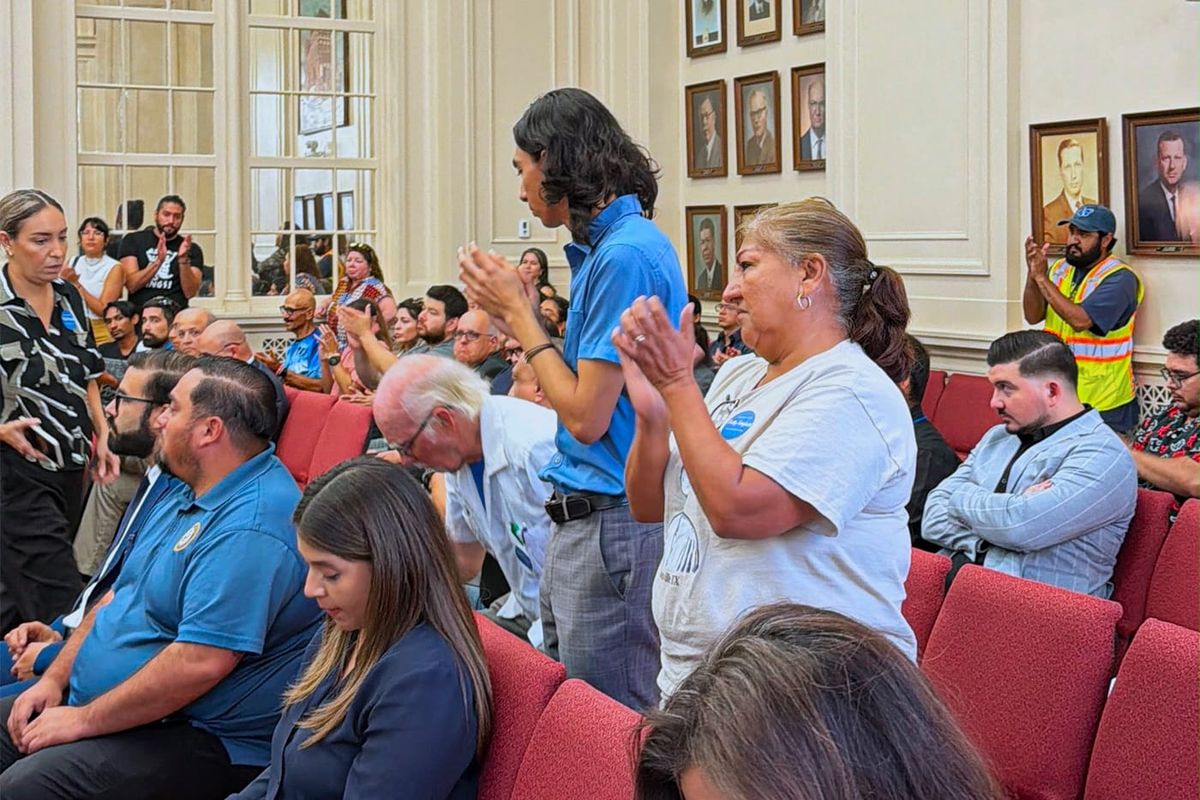
Data Centers in the RGV: From our friends at Across the Americas, “A coalition of community groups, nonprofit advocacy organizations and local businesses hand-delivered a letter to the Brownsville City Commission during a commission meeting Tuesday night, asking for more say on rules for data centers and a 180-day moratorium on any new projects.”
Silent Detention: From GBH News’ Sarah Betancourt, the “Silent Detention” series explores the challenges immigrants affected by detention face in accessing behavioral healthcare, existing supports, and potential solutions to the deficit in trauma services.

Julio Ricardo Varela edited and published this edition of The Latino Newsletter.
The Latino Newsletter welcomes opinion pieces in English and/or Spanish from community voices. Submission guidelines are here. The views expressed by outside opinion contributors do not necessarily reflect the editorial views of this outlet or its employees.