
In partnership with


Via Canva Pro
LOS ANGELES — Latinos in California are in for a tough battle because California’s democracy remains a tool of containment. On Tuesday, a small number of primary ballots fell like ash across a fractured topography, cementing a choice between the fortified coastal wealth of Steve Hilton’s Huntington Beach and the corporate-managed resistance of Xavier Becerra, with the self-funded billionaire Tom Steyer in close third.
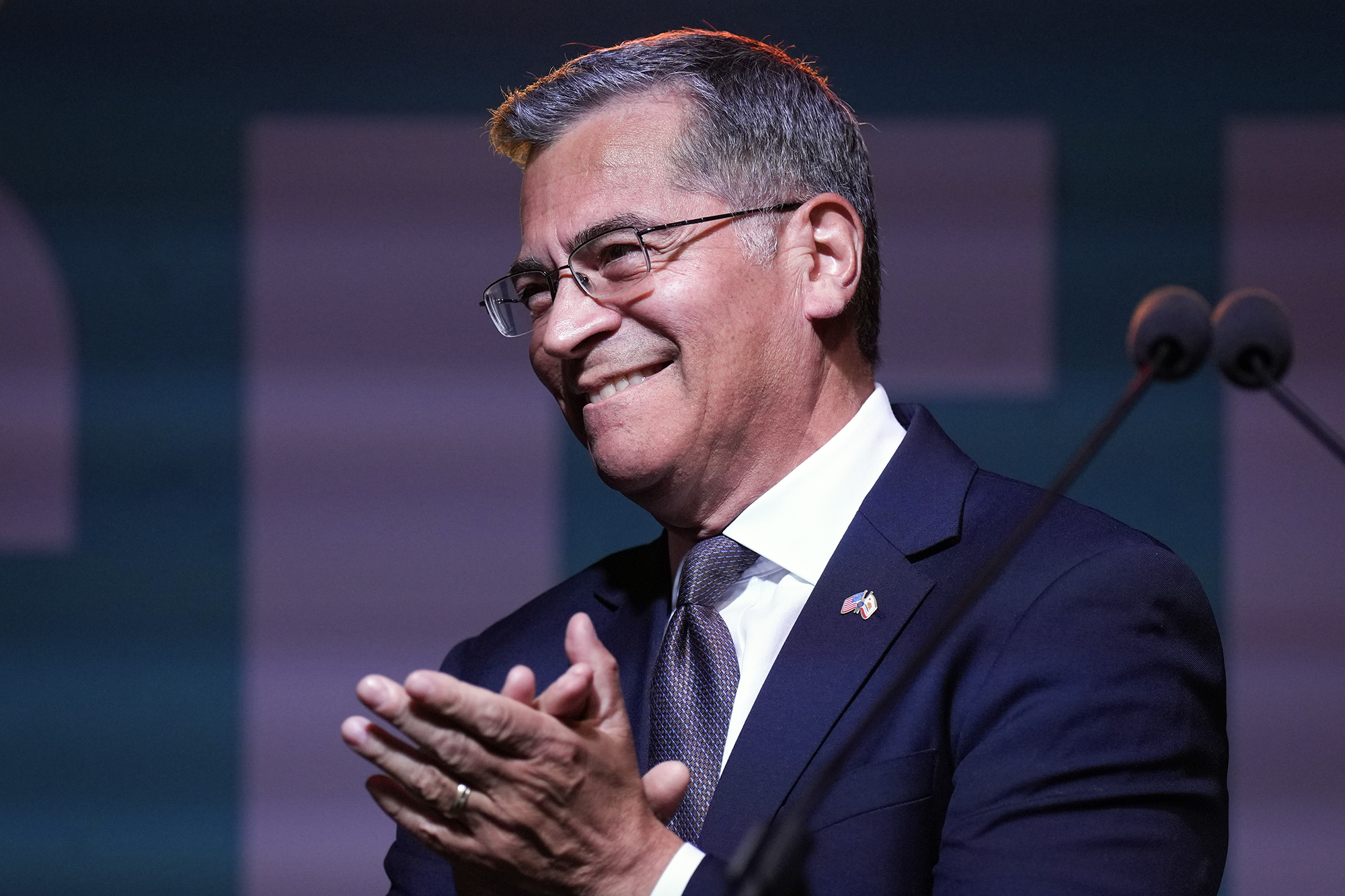
For the Latino working class, trapped in the gaps between rising utility bills and industrial oil derricks with money to spend on campaigns, the state’s political map looks less like progress and more like a grid of social control. After speaking with GOTV canvassers and local elected officials, and thinking critically about the latest returns, it is evident that most eligible Latino voters weren’t fully excited about any one candidate. As returns come in, it is still not entirely clear that the November election will feature Hilton and Becerra — progressive votes can be late and may leave room for a Steyer/Hilton race.
Hilton, the likely Republican candidate for November, is aggressive, Trump-backed, and all for rollbacks of environmental protections and policies that disproportionately impact Latino frontline communities. Becerra represents an elite managerial liberalism that preserves the status quo under the banner of resistance. Steyer, who some call the only candidate with plans and a progressive platform, is also a billionaire who has shelled out millions that could have been spent directly solving the structural issues affecting the state.
It isn’t a far reach to argue that corporate fortresses and suburban enclaves are voting for austerity, while working-class neighborhoods bear the brunt of rising utility costs and climate displacement and still vie for a true form of representation.
Becerra is promising to be a historic Latino figure, yet his platform operates defensively within a neoliberal consensus, promising to “freeze rates” rather than restructure the corporate monopolies squeezing Latino families. Given the California electorate and his Latino namesake, it is highly likely he will be elected governor of the state, but can Latinos stand with him?
The Old Latino Guard
Hours after polls closed, former Los Angeles Mayor Antonio Villaraigosa conceded. In what I wrote last fall, his race was a fight for relevance, and it is clear through the lack of true campaign support and the votes that people don’t fully trust Antonio anymore.

The old gatekeepers of California power are fading into irrelevance, punctuated by the quiet collapse of yesterday's establishment giants. Yet as Becerra steps into the void to duel a Trump-backed vanguard, the poetry of representation collides with the prose of material survival. We are left to ask: Does a historic identity at the top change the structural caste of a state that continues to extract labor while rationing survival?
A report on the immigration policies Becerra oversaw is likely to come up throughout the year. In my reporting work for this piece, two different Latino political leaders asked the same question: What has Becerra actually done?
It’s interesting to see all the surprised reactions to the early success of Hilton’s race. While many votes remain to be counted, whether Hilton makes it to November is not the main concern for California Latinos. It is that Hilton did maintain strong support from a rising GOP-voting Latino bloc.
The most interesting shift has often occurred in working-class and middle-income Latino communities outside coastal urban centers. For example, if Hilton reaches 20–28% statewide support, that support is not coming solely from traditional Republican voters. It likely includes some Latino voters frustrated with affordability, housing, and economic conditions.
Who Writes the History?
Beneath the horse-race numbers lies a deeper question. Californians are not simply choosing a governor. They are deciding whether the state’s dominant political coalition still possesses a coherent story about the future.
For working-class Latinos in Riverside, Bakersfield, Fresno, and the Inland Empire, the California Dream increasingly resembles an eviction notice, a three-hour commute, or an insurance bill they can no longer afford.
If Becerra ultimately becomes California’s first Latino governor, the achievement will be historic.
But history alone cannot lower rent. It cannot insure a home against wildfire. It cannot shorten a commute from San Bernardino to Los Angeles.
The deeper challenge facing California’s next governor is not symbolic representation but democratic legitimacy.
After decades of demographic transformation, Latinos are no longer asking whether they belong in California’s political story. They are asking whether the story still belongs to them.
Francisco Avilés Pino is a Mexican writer and producer based in Los Angeles, whose work spans journalism, film, and fine art, exploring how power, identity, and culture shape immigrant and Latino/a life in America. Their work has appeared in the Museum of Contemporary Art-LA, HarperCollins, NPR, Vogue, The Nation, and The Intercept.
The Latino Newsletter is a 501(c)(3) nonprofit organization, and we turned 2 years old! Help us with our birthday campaign by giving here.
And Now a Word From Our Sponsor
Take control of your chaotic inbox

Spam. Promotions. Phishing links. A messy inbox is more than annoying. It’s risky.
Proton Mail shields your inbox from invasive tracking and junk clutter by default. No creepy ad sorting. No surveillance. Just clean, simple organization designed to protect your focus.
You shouldn’t have to fight your email to find what matters. Proton Mail keeps your inbox safe, private, and easy to manage — so you can stay productive, not distracted.
What We’re Reading
The Encuentro Nacional: Over at Hispanic Federation, the Encuentro Nacional took place on Wednesday morning in Washington, D.C., and convened “over 150 leaders from across the country to Capitol Hill to call on Congress to reject the partisan legislation they are considering, which would pour $72 billion into immigration enforcement without oversight or accountability,” according to a media release.

Julio Ricardo Varela edited and published this edition of The Latino Newsletter.
The Latino Newsletter welcomes opinion pieces in English and/or Spanish from community voices. Submission guidelines are here. The views expressed by outside opinion contributors do not necessarily reflect the editorial views of this outlet or its employees.