

SAN JUAN — A new bill already passed in Puerto Rico’s Senate and House threatens to drastically change government transparency for the worse, lengthening wait times, declaring information confidential, and revealing requestors’ identities. Advocates say the changes are a threat to transparency and democracy in the archipelago.
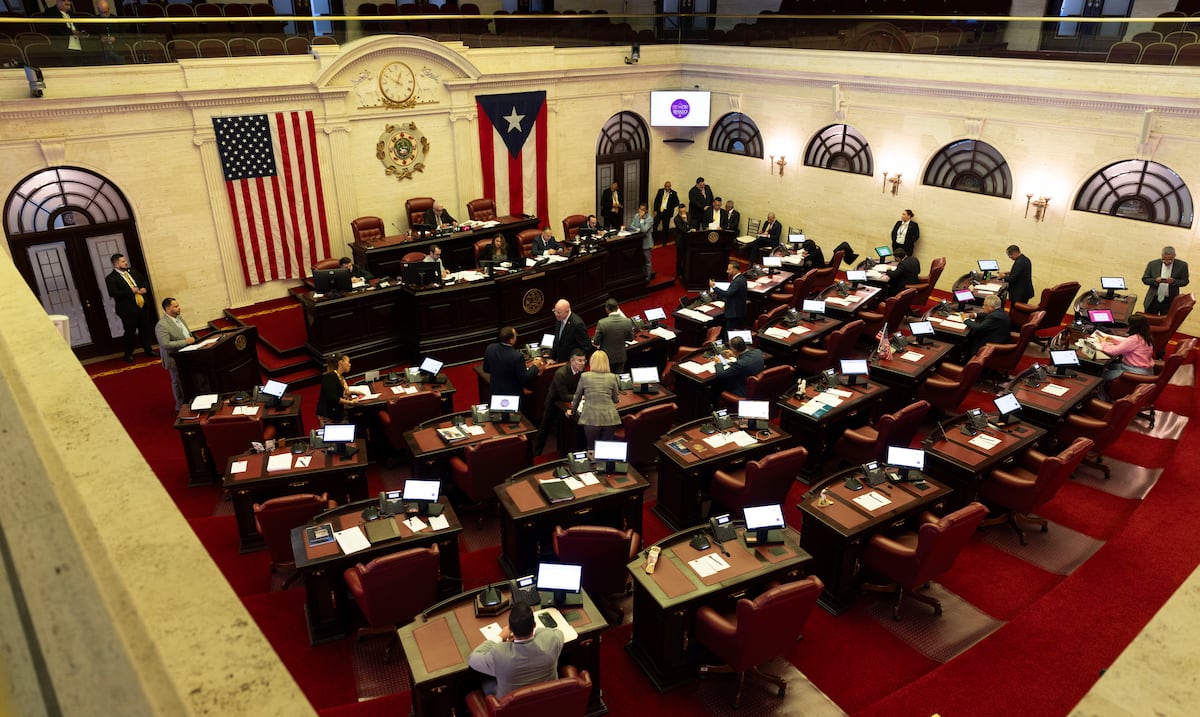
Senate Bill 63, first introduced by Senate President Thomas Rivera Schatz on January 2, aims to amend Puerto Rico’s Transparency and Expedited Procedure for Access to Public Information Act (Law 141-2019). It was rushed through the legislature with little public debate and approved by the House in the late hours of November 13, the last day of the legislative session, a day after its president, Carlos “Johnny” Méndez, said he was not going to fast-track its evaluation. It was then sent to a reconciliation committee, which added new amendments that further restrict Puerto Ricans’ fundamental right to information.
It has not yet been sent to Governor Jenniffer González-Colón for signature, according to Puerto Rico’s legislative services website.
“The lack of information and lived experience that has been used to push this through is outrageous. And anyone who believes in democracy cannot believe in this bill,” Issel Masses, founder and executive director of government transparency watchdog Sembrando Sentido, said.
Here are some of the multiple changes proposed by SB63:
It would double response times in some cases and triple them in others.
It would require a person to notify agency leadership so that the request is considered valid.
It would also allow agencies or judges to decide what information is confidential, therefore making it unreleasable to the public.
Agencies will no longer be required to provide data in the requested format. For example, an agency could theoretically hand you a floppy disk even though you asked for an Excel file.
Agencies would no longer be required to produce information if it is spread out across multiple documents.
Agency monthly reports on the records requests they receive must now include requestors’ personal information, which could lead to political intimidation or doxxing.
“It’s very difficult to see what might be happening here without it being a blatant attempt to obscure the truth about what's happening with our money and with the decisions that impact us every day and affect our lives, and that determine the conditions of our lives,” Masses said.
Masses explained that the changes to the request process effectively function as traps, so requests are not considered valid, further extending the time between the first request and a person receiving the information they requested.
“The independentistas defeated, the minority defeated,” Rivera Schatz said right before approving the project in the Senate, according to El Nuevo Día. Seconds before, he falsely claimed the project does not limit the public’s access to information or affects personal rights.
Sounding the Alarm
Dozens of local organizations, such as Sembrando Sentido and the Centro de Periodismo Investigativo (CPI), have spoken against SB63 and its damaging effects on transparency. Democratic Representatives Nydia Velázquez and Alexandra Ocasio-Cortez both criticized the bill as it made the rounds. The Centre for Law and Democracy concluded that, if enacted, SB63 would move Puerto Rico from 94th to 106th in its Global Access to Information Rating.

“There are no entities other than two government agencies that support this project. There’s nothing. No sector of civil society, not even the private sector, has come forward to support this initiative. It's not in the New Progressive Party’s platform. It wasn't a reason why this government was elected either. The truth is there's no reason for the government to sign off on this project,” Carla Minet, CPI’s executive director, said.
SB63’s changes would make an already troublesome law much worse. Entities like the CPI have had to sue government agencies more than 50 times for refusing to hand over information. Journalists like myself who make local records requests in Puerto Rico often encounter delays or other hassles. Sometimes agencies and municipal governments don’t have a publicly listed email address to send requests. Other times, they ignore your request for weeks or altogether.
Take one example of what happened to a colleague and me when we sued the Department of Natural and Environmental Resources (DNER) for records. The time between the initial request and getting the documents the court ordered the DNER to provide took so long that we were unable to include the data in our final reporting. Because the DNER did not have the records digitized, we received a foot-high stack of files that are still being slowly digitized.
Minet explained that SB63 comes at a time when other laws are being implemented that limit access to public information. For example, a recently passed law limits access to data from the Demographic Registry, which experts have said will negatively affect scientific investigations and journalism.
“It would seem as if this administration has a public policy aimed at limiting press access in order to hold the government accountable,” Minet said.
Freedom of information laws, such as Law 141-2019, allow anyone, not just journalists and nonprofits, to request information from the government. In some cases, this might be something innocuous, like a zoning guideline. However, in many cases, requests are made for information that the government does not want the public to see. Law 141-2019 is the avenue where people can force the government to reveal information.
Sembrando Sentido and the CPI have created a document outlining the step-by-step process for contacting the Governor and requesting that she veto the bill.

Carlos Berríos Polanco is a journalist from Puerto Rico who covers climate, conflict, and their intersection. He is also the Deputy Editor of The Latino Newsletter’s San Juan bureau.
Help us reach our $50,000 goal by December 31 to power next year’s reporting, community storytelling, and a new audio documentary on Puerto Rico.
What We’re Reading (and Watching)
Military Boat Strikes: From The Guardian, Rep. Jim Himes (D-CT) described the unedited video of a Department of Defense boat strike that killed two survivors of a previous strike as “one of the most troubling scenes” he’s seen in public service. This comes as human rights advocates and policy experts are demanding the video be publicly released.

Latinos and New Jersey: From our friends at The Latino Vote podcast, “Chuck and Mike sit down with Dr. Patricia Campos-Medina, the co-chair of Mikie Sherrill's winning gubernatorial campaign,” who was part “of the most dramatic Latino voter shifts in recent history.”
ICE Hires Can’t Read: An investigation by the Daily Mail found that the Trump administration’s rush to hire 10,000 new deportation officers has lowered hiring standards so drastically that new recruits include people who can “barely read or write” and who have pending criminal charges.

Julio Ricardo Varela edited and published this edition of The Latino Newsletter.
Consider donating to The Latino Newsletter. Any contribution, no matter how small, helps keep this newsletter free and accessible to all. ¡Gracias mil!