
Sponsored by


Lupita Nyong’o from Universal Pictures’ promotional video about The Odyssey
Opinion for The Latino Newsletter
Hombres necios que acusáis / a la mujer sin razón, / sin ver que sois la ocasión / de lo mismo que culpáis. “Foolish men, who accuse women without reason, never seeing that you are the cause of the very thing you blame.” —Sor Juana Inés de la Cruz, 1689
When Christopher Nolan announced that Lupita Nyong’o would play Helen of Troy in his adaptation of Homer’s The Odyssey, Elon Musk used his platform on X to question whether she was beautiful enough for the part. The complaint was never really about Lupita. It was about the world Nolan built around her, a world in which a Black Latina stands at the center of the oldest story the West tells about itself.
For 30 years, the National Hispanic Foundation for the Arts, co-founded by actors Jimmy Smits, Sonia Braga, Esai Morales, Merel Julia, and myself, has pushed for Latinos to be seen in film in modern and contemporary ways. What Nolan built is that idea made real.
Homer Never Gave Helen a Face
Here is what the objection misses, and what Homer himself understood. Throughout the Iliad, the poet never describes Helen’s face. Not her eyes, not her hair, not a single feature. Her beauty appears only through its effect: the old men on the walls of Troy watch her pass and murmur that no one could blame two nations for bleeding 10 years over such a woman. That is the whole portrait. Homer refused to give Helen a face because her power was never in the particulars, and every Helen since, in every painting, opera, and film, has been an act of interpretation, since the source text leaves the artist no other choice.
Myth belongs to every generation that chooses to tell it again. There is no true face of Helen to betray, no record to honor. A director stages the ancient world he wants us to see, and every choice, from the light to the language to the faces on the screen, is an argument about what the story means now.
What Nolan chose is the achievement. He took a foundational Western myth and filled it with a cast that mirrors the society we move through today. A Kenyan-Mexican woman stands at the center as the face that starts a war. Around her, the crew, the court, and the household carry faces from every corner of the world, cast not as a slogan, but as a place, a landscape of belonging that feels like the present day. That is not a betrayal of the material. It is a living reading of it, and it may be the most vivid The Odyssey has ever looked.
The Cast Nolan Trusted
Look at who he trusted with it. John Leguizamo, who spent 40 years making room for Latino stories on stage and screen and holds our Raúl Juliá Award for Excellence, plays Eumaeus, the loyal servant at Odysseus’s side, and the first reviews name him among the
standouts. Jesse Garcia, our Horizon Award honoree, carried Flamin’ Hot as Richard Montañez, the janitor who talked his way into a Frito-Lay boardroom after breaking out in the Sundance film Quinceañera; he appears here in a role the studio has not yet revealed. Jimmy Gonzales, the son of migrant farm workers who carried Blue Miracle out of his own childhood in poverty and foster care, plays Cepheus, one of the crew who sails with Odysseus. Each of them is in this film because Nolan wanted him in it, and the picture is richer for it.
Then look at Lupita herself. She was born in Mexico City to Kenyan diplomat parents, members of the Luo people, who follow a tradition of naming a child after the events of the day. Because their daughter arrived in Mexico, they gave her a Spanish name: Lupita, a diminutive of Guadalupe, for La Virgen de Guadalupe, La Morenita, the Patroness of the Americas. She was raised in Kenya, returned to Mexico at sixteen to learn Spanish, holds citizenship in Kenya, Mexico, and the United States, and trained at the Yale School of Drama. She became the first Kenyan and the first Mexican-born actress to win an Academy Award. And in 2014, People magazine named her the World’s Most Beautiful Woman.
That is the woman a trillionaire says is not beautiful enough to play Helen of Troy.
She stands where two archetypes meet. One appeared in a vision on a hillside and transformed a hemisphere. The other launched a thousand ships and brought empires to their knees. Both were doubted by the powerful. Both proved undeniable. Lupita carries the first in her name and the second in her craft, and she has spent her career inhabiting exactly that kind of transformation, the surrender to something larger than oneself that turns a performance into testimony. She does not need to argue her case. The tilma has already been opened. The image is already there.
Media fluency means seeing a provocation for what it is. When the world’s richest man picks a fight over who is allowed to be beautiful, he is not reviewing a film. He is arguing about whose face belongs at the center of the story we tell about ourselves. Nolan already answered him. He put her there, and he built a world around her that says she has always belonged.
The Scoreboard Doesn’t Lie
The scoreboard this week makes the stakes plain. When the Television Academy announced its 2026 nominations, the entire field contained two Latino acting nominees, Colman Domingo and Oscar Isaac, with three nominations between them. Meanwhile, Bad Bunny’s Super Bowl halftime show, watched by one of the largest audiences in television history, earned nine nominations, the most ever for a halftime performance, nearly all of them in craft categories. The audience is ours. The applause is ours. The center of the frame, too often, still is not. That is precisely why Nolan’s choice matters.
And for anyone who still cannot see why the choice is fair, remember how the story begins. Helen of Troy was born from an egg. Her mother lay with Zeus in the form of a swan, and the most beautiful woman in the world hatched from a shell. A tale that starts there was never about literal truth. It was always about meaning, and meaning is what Nolan chose to serve.
Musk can question the casting all he likes. He cannot touch the thing Nolan made. Myth endures because every age remakes it in its own image, and this age, through this director, chose a world where a Kenyan-Mexican woman is the most beautiful face in the room, and Latino artists stand at the hero’s side. That is not politics. It is art, doing what art has always done. Our talent is not waiting at the edges of the culture. It is already at the center.
Her name is Lupita. It was given with intention. For generations, we were left on the cutting room floor, held soft and out of focus at the edge of the frame. Nolan called for the close-up. And the close-up tells the truth no edit can cut: Black is beautiful. Indigenous is beautiful. Beautiful enough to launch a thousand ships.
About the Author
Felix R. Sánchez is Chair and Co-Founder of the National Hispanic Foundation for the Arts.
Like What You Read? Support Us.
This edition cost us $200 to prep, edit, and produce, and instead of hiding behind a paywall that blocks the complete piece, we keep it free and accessible. Give now to keep us available to all. Any amount will help!
And Now a Word From Today’s Sponsor
Stop overpaying for wireless. Get a Tello plan for under $25

Unlimited everything. No contract. Just $25/mo. With Tello, you get reliable 5G coverage, zero hidden fees, and none of the bundles you never wanted.
What We’re Reading
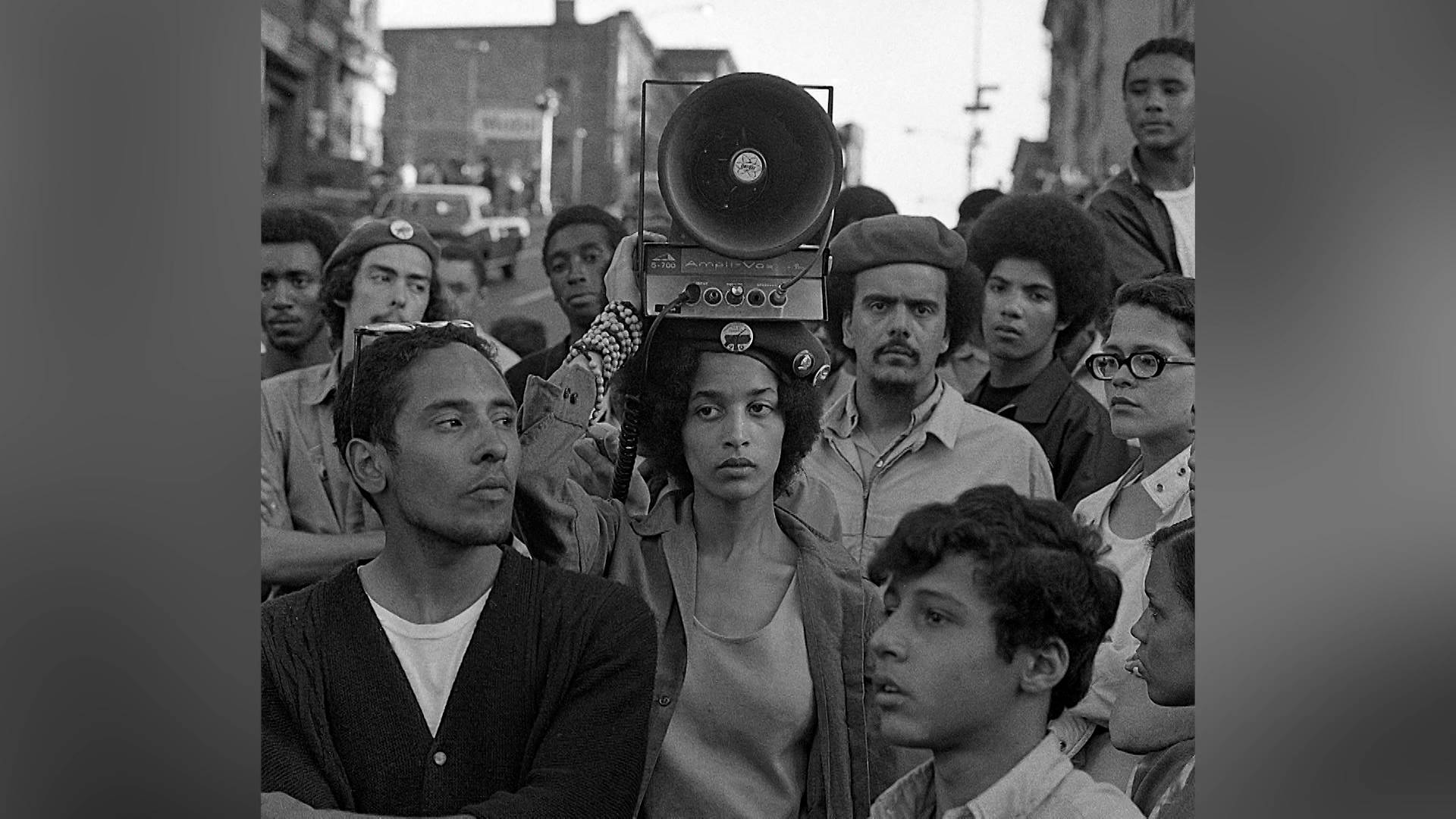
Rest in Power, Denise Oliver-Vélez: Via Democracy Now!, “Lifelong activist, organizer, and educator Denise Oliver-Vélez has died at the age of 78. She was a central figure in the civil rights movements of the 1960s and 1970s and was the first woman elected to the Young Lords Central Committee, a radical Puerto Rican human rights group modeled on the Black Panther Party, which Oliver-Vélez was also a member of. She later became the first Black female program director in public radio and taught at SUNY New Paltz.”
Julio Ricardo Varela edited and published this edition of The Latino Newsletter.
The Latino Newsletter welcomes opinion pieces in English and/or Spanish from community voices. Submission guidelines are here. The views expressed by outside opinion contributors do not necessarily reflect the editorial views of this outlet or its employees.