
In partnership with


Rebekah Sánchez, Plenitud PR’s Agriculture Program Director, ploughs one of the organization’s fields. (Source: Plenitud PR)
Federal funding cuts from the Trump administration have significantly affected Puerto Rican nonprofits. Rural community organizations that already have difficulties accessing private funds are especially vulnerable. Puerto Rican nonprofits say the cuts have limited their ability to respond to crises and community needs.
“When there are emergencies in Puerto Rico, it’s the third sector that acts first. We reach places the government does not. We serve those highly vulnerable populations,” Áurea Berrios Sáez, executive director of the Naranjito Adolescent Program (Programa del Adolescente de Naranjito or PANI), a community organization that has served a rural municipality and its surrounding towns for more than 30 years, said. It provides educational and psychological services to children and adults.
PANI suffered a $20,000 reduction in 2025 and a $70,000 cut in 2024 due to reductions in Justice Department grants to programs that help victims of crime. Each year, PANI serves at least 80 individuals using Justice Department Victim of Crime Act (VOCA) funds. Losing personnel from a program disrupts the relationships they have with community participants and weakens the organization’s sustainability, Berrios Sáez said.
Additionally, funding cuts have already partially eliminated the organization’s crime prevention services targeting violence in isolated areas.
“We are from the mountains, and there are still many taboos surrounding many issues,” Bárbara Nieves, a mental health counselor who collaborates with PANI, said. “We still need to reach places where people do not want to leave their communities, and for them, they have a life as normal as anyone else's, even as they are experiencing violence.”
Nieves explained that sexual abuse is particularly normalized in rural municipalities like Naranjito, and that cycles of violence are likely to continue without crime prevention and holistic health services.
Outsized Cuts
In a December 2025 survey of 17 Puerto Rican nonprofit organizations by Filantropía Puerto Rico, six of the 10 that received federal dollars had funds cancelled in the past year. Two lost more than 90 percent of their federal funding. Three said they had not had federal funding cuts.
Nationwide, the Trump administration cut at least $820 million that supported more than 550 organizations, according to the Brennan Center for Justice. The cancelled funds range from VOCA funds, AmeriCorps, and U.S. Department of Agriculture (USDA) grants. The cuts compound previous reductions made during the Biden administration.
Programs have been targeted due to perceived “wokeness” because they tackle racial, sexual, and gender inequalities. However, the grants that have been cut primarily relate to preschool development programs, environmental protection, and efforts to address structural racism, among other areas.
In April 2025, the Trump administration also terminated Community Based Violence Intervention and Prevention Initiative grants. While they were not mentioned by name in the letter announcing the cuts, the Trump administration used the $2 million Taller Salud, a feminist health nonprofit, received as an example of funding “DEI and cultural Marxism.” The cuts impactedTaller Salud’s Acuerdo de Paz (Peace Agreement) violence-prevention program, which had to cancel services for 80 participants and halt events that reached around 2,000 people in the Afro-Puerto Rican municipality of Loíza. The Acuerdo de Paz was well-regarded for reducing the homicide rate by 67 percent, according to Taller Salud’s data.
Federal funds make up over 40 percent of Puerto Rico’s Commonwealth budget in 2025, according to the Fiscal Oversight and Management Board. The Puerto Rican government depends heavily on the federal government for its fragile safety net. Many nonprofits address service gaps in education, health, the arts and culture, and community and economic development.
Thirty-seven percent of residents in Puerto Rico live below the poverty line — the highest rate in the United States. More than half of Puerto Rican children are impoverished. By comparison, the poverty rates in Mississippi and Louisiana, the two poorest states, hover between 18 and 19 percent, according to U.S. Census Data.
The population in the rural, mountainous interior of the archipelago and in the two island municipalities experiences higher rates of poverty than coastal urban areas, but is served by substantially fewer nonprofits, according to a 2022 Filantropía Puerto Rico study.

A 2022 map showing the number of people living below the poverty line and the number of nonprofit organizations in Puerto Rico by municipality. (Source: Filantropía Puerto Rico)
Cuts to Other Programs
It is not just Department of Justice funds that are being cut. The USDA slashed millions across dozens of programs. Plenitud PR, a farm and teaching center that provides fresh food and educational events in Las María, lost approximately $50,000, while an additional $500,000 in funds is at stake if the Trump administration continues eliminating federal grants.
In January, the Environmental Defense Fund, Foundation for a Better Puerto Rico, and Mujeres de Islas (Women From Islands) — a community organization that promotes development in Culebra through agriculture, food, and educational programs — lost funding from the Department of Energy (DOE) that would help to install solar panels in 44 low-income households. It was part of more than $500 million in cancelled DOE awards granted for residential solar and battery storage in Puerto Rico.
The program had already installed solar panels on 20 businesses that provide essential services in Culebra, such as restaurants, a gas station, and a supermarket.
Mujeres de Islas also lost AmeriCorps VISTA and AmeriCorps State grant funding for Proyecto Siembra, which helps build community gardens, after the Trump administration revoked funding for programs that supported racial, economic, and social justice. AmeriCorps funded the project for over a decade. It delivers food to around 140 residents each week, and over 60 people participate in educational programs that visit schools, daycares, and senior homes.
While AmeriCorps funding was reinstated following a court ruling, Mujeres de Islas decided to continue Proyecto Siembra using solely private funds aligned with their mission and aimed at promoting stability.
“We need to move towards sustainability, but in collaboration and solidarity. Why? Because that is the only way we can be interdependent without depending on outsiders who want to trample on us,” Dulce del Rio-Pineda, organizational coordinator and co-founder of Mujeres de Islas, said.
The gutting of the nationwide AmeriCorps program and mass layoffs have also affected Puerto Rican Minds in Action (Mentes Puertorriqueñas en Acción or MPA), an intermediary organization that places volunteers in paid positions at nonprofits under AmeriCorps VISTA, by hampering communications with the remaining AmeriCorps staff, delaying payments to participants due to the 2025 government shutdown, and creating uncertainty about future funding.
“MPA was created to build capacity because we don’t have the framework to apply for federal grants. Even organizations that manage to attain all the framework and all the personnel required for federal funding will be affected by the changes,” Carolina Mejías Rivera, executive director of MPA, said. She pointed out that recent federal guidelines against funding diversity, equity, and inclusion initiatives could weaken proposals targeted towards serving impoverished communities.
It is hard for smaller and less connected nonprofits to access private funding, especially because immediate issues must be prioritized over grant writing.
“Everyone is receiving cuts from government grants,” Jessica Jones-Hughes, Plenitud PR Associate Director and Treasurer, said. “There’s more competition within the foundations and the private grant sector, and so it's making it more competitive for everyone.”
For now, AmeriCorps funding has been maintained for all programs through 2026.
“We have a large population below the poverty line. What are we doing with these people? We are forcing them to continue accepting realities that they may interpret as unchangeable,” Nieves said. “If we talk about resilience, we have to keep expanding opportunities for people to reinvent themselves.”
Cris Seda Chabrier is a bilingual reporter and photojournalist whose work has appeared in local and national outlets in both Puerto Rico and the United States. They graduated from the CUNY Graduate School of Journalism.
The Latino Newsletter is a 501(c)(3) nonprofit organization. Help us reach our $50,000 goal to fund our podcast’s third season and to offer more opportunities for journalists to file their stories without paywalls or paid subscriptions.
And Now a Word From Our Sponsor
Unbiased News Trusted by 2.3 Million Americans!

The Flyover offers a refreshing alternative to traditional news.
Tired of biased headlines and endless scrolling? We deliver quick, fact-focused coverage across politics, business, sports, tech, science, and more—cutting through the noise of mainstream media.
Our experienced editorial team finds the most important stories of the day from hundreds of sources, so you don’t have to.
Join over 2.3 million readers who trust The Flyover to start their day informed, confident, and ahead of the curve.
What We’re Watching (and Reading)
Democrats Slam Immigration Agency Heads: From C-SPAN, Rep. Dan Goldman (D-NY) blasted ICE acting director Todd Lyons over immigration tactics, calling them “outright fascist” during a House Committee on Homeland Security hearing. He then went on to tell Lyons that if he does not want ICE to be called “a fascist regime or secret police, then stop acting like one.” Rep. Delia Ramírez (D-IL) said, “DHS cannot be reformed. It must be dismantled.”
Migrants Challenging Illegal Detentions: From ProPublica, immigrants detained by the Trump administration’s mass deportation agenda have filed more than 18,000 legal challenges claiming their detention is illegal, more than the last three administrations combined. Immigrants are filling an average of 200 cases, called habeas petitions, a day in response to new policies that aim to ramp up deportations.

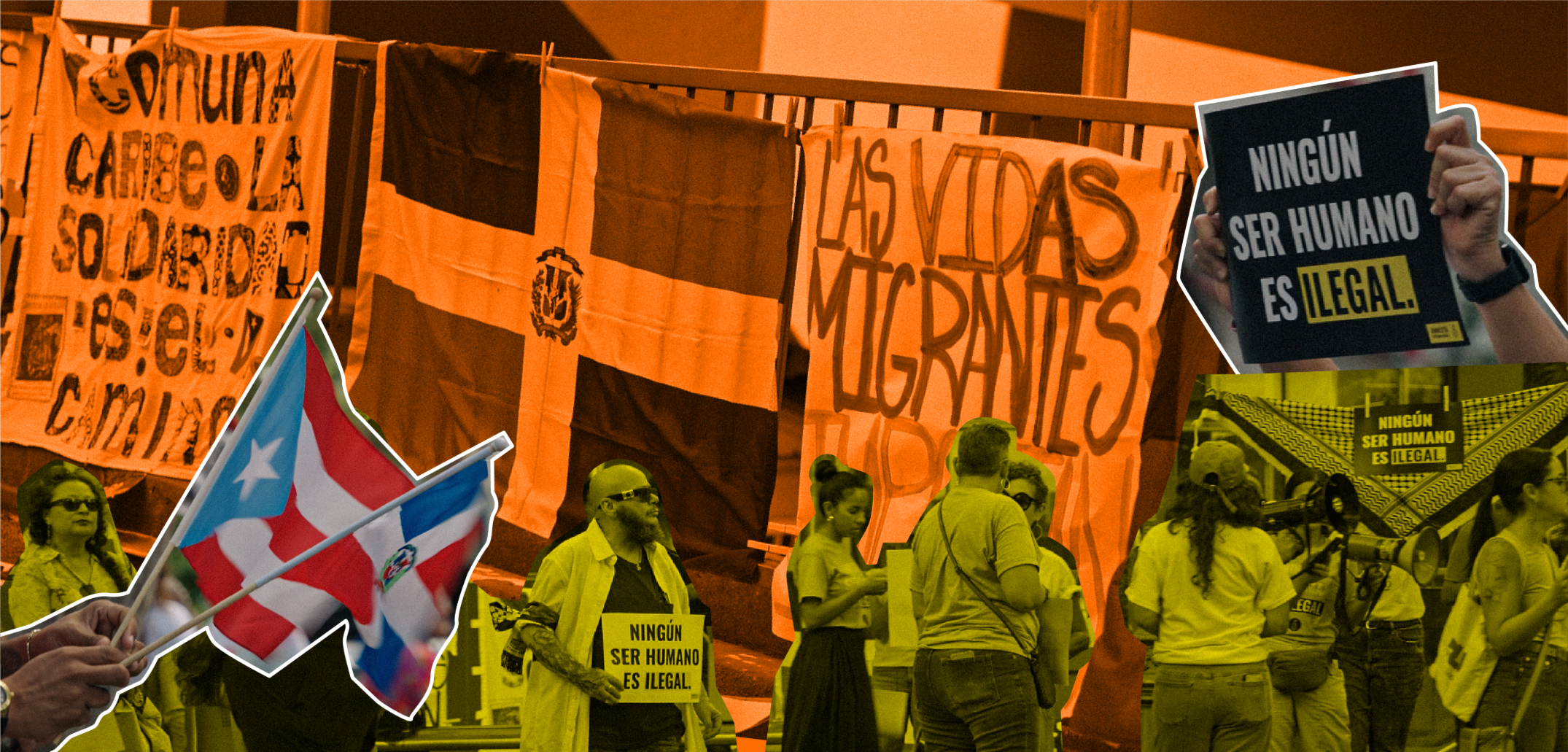
We Want Them to Stay in Puerto Rico: From 9 Millones, there have been at least eight habeas petitions filed in Puerto Rico to release migrants before they are removed from the archipelago to a detention center in the United States. Immigration lawyers discuss what they have learned from these cases and the many roadblocks federal immigration agencies and immigration judges have put in their way.
Carlos Berríos Polanco edited and published this edition of The Latino Newsletter.
Consider donating to The Latino Newsletter. Any contribution, no matter how small, helps keep this newsletter free and accessible to all. ¡Gracias mil!