

Benjamin De La Rosa (Via Canva Pro)
BOSTON — It is the Monday before the July 4 Saturday launch of American Colony, the most ambitious project The Latino Newsletter has ever produced. Over the last year, the team has been incredibly busy making this series a reality. What we thought would be an explainer podcast about the history of Puerto Rico’s political status since 1898 became something more creative, personal, emotional, and, yes, beautiful.
As the person who conceived the concept and as one of the show’s executive producers with Joaquín Cotler and Shake It Easy Media’s Nuria Net, seeing the work come in has been a joy, even when we thought we wouldn’t get to this moment. But despite the challenges and pivots, we kept moving forward. We are at this moment, and I have never felt more excited and nervous about any project than I do about this one.
It’s probably because this project is the result of more than 40 years of my life.
As part of a deeply proud family that always told me to never forget where I came from and to always be loud about it, my journey to understand what that meant began in college, from 1986 to 1990. I entered when I was 17. During that time, Puerto Rico had called me back during my high school years, so I decided to formally make it part of my concentration in the History and Literature of Latin America.
There were no Puerto Rican Studies classes I could take back then. Am pretty sure there were no tenured professors of Puerto Rican descent either. Most of my professors who taught the classes I needed to fulfill my requirements were either Cuban, Spanish, or American.
But there were grad students who essentially taught and prepped us for our senior thesis — the biggest requirement to ensure I would graduate. That’s where my thesis adviser and academic mentor, César A. Salgado, who now teaches at UT-Austin, opened the world of Puerto Rico’s history and literature to me.
It was exhilarating.
The culmination of my time with César was an intensive senior year where I worked on what would become a 70-page thesis, titled “Manuel Zeno Gandía and Rosario Ferré: The Transformation of the Island-Victim Motif.” I began researching the idea of an “isla víctima” — an island victim — after reading the works of Puerto Rico’s feminist writers, particularly Rosario Ferré, whose 1986 novella Maldito amor transfixed me.
I recall the summer before my senior year in 1989, right after I had interned as a summer reporter for The Boston Globe’s sports department. I was 20 years old when I went to Puerto Rico that summer to examine primary texts and essays on the “isla víctima” motif inside the University of Puerto Rico's main library. What I found rounded out the direction of my thesis, and I recall telling my abuelos about my findings over breakfast at their home in Guaynabo.
I felt safe and at home, and when I returned to Cambridge, for the next few months, all I did was work on my thesis. I felt proud of it all, especially at a place that didn’t uplift voices like mine.
Without getting into the academic details of what I submitted on March 1, 1990, to the Committee on Degrees in History and Literature, I concluded the following: the myths that perpetuate Puerto Rico’s victimization cannot vanish as long as the island remains a colony. And as long as the myths survive, so does the colony.

It’s real.
I got a good mark from one of the reviewers but not from another, who essentially marked it as “no distinction.” An academic term that essentially was an F. Part of the reason was the subject matter in the first place. Why would I, a Puerto Rican kid, write about Puerto Rico and specifically Puerto Rico’s feminist writers?
That stung, and I was crushed.
Even though I did graduate with honors in June of 1990, it took me years to shake that feeling of failure, but I also knew that what I had worked on for so many months as a senior was important. Still, I stopped writing and studying about Puerto Rico. That was a regret. But soon enough — probably 15 years after I got that “no distinction” — I started blogging more and more about the place I was born in and that shaped me.
That eventually led to Latino Rebels, Al Jazeera America, Futuro Media, Latino USA, In The Thick, filing opinion pieces about Puerto Rico for several outlets, and now, The Latino Newsletter. Puerto Rico had called me back again, and this time, I wasn’t going to listen to the critics who would question why I did what I did in the first place.
I have always wanted to create a podcast about Puerto Rico and call it American Colony. Being one of the first people to hear what the team is producing brings me back to when I was immersed in learning about myself and where I was born. That “no distinction” didn’t stop me 36 years ago, and it sure won’t stop me now.
I invite you to follow the work of American Colony and support us as we go. We are relying on individual donations to get us to the finish line. The series launches on July 4. We will publish all the episodes here at The Latino Newsletter, and you can also subscribe on Apple Podcasts, Spotify, and YouTube.
Get Us to $25,000
As we independently distribute American Colony and celebrate our 2nd birthday, we are at 44% of our target to make our $25,000 summer goal. Give now to keep us going.

What We’re Reading
Puerto Rico’s Water Crisis: Over at Carlos Berríos Polanco’s Heavy Weather site, an excellent analysis of the water crisis Puerto Rico’s metropolitan area has been experiencing for months.

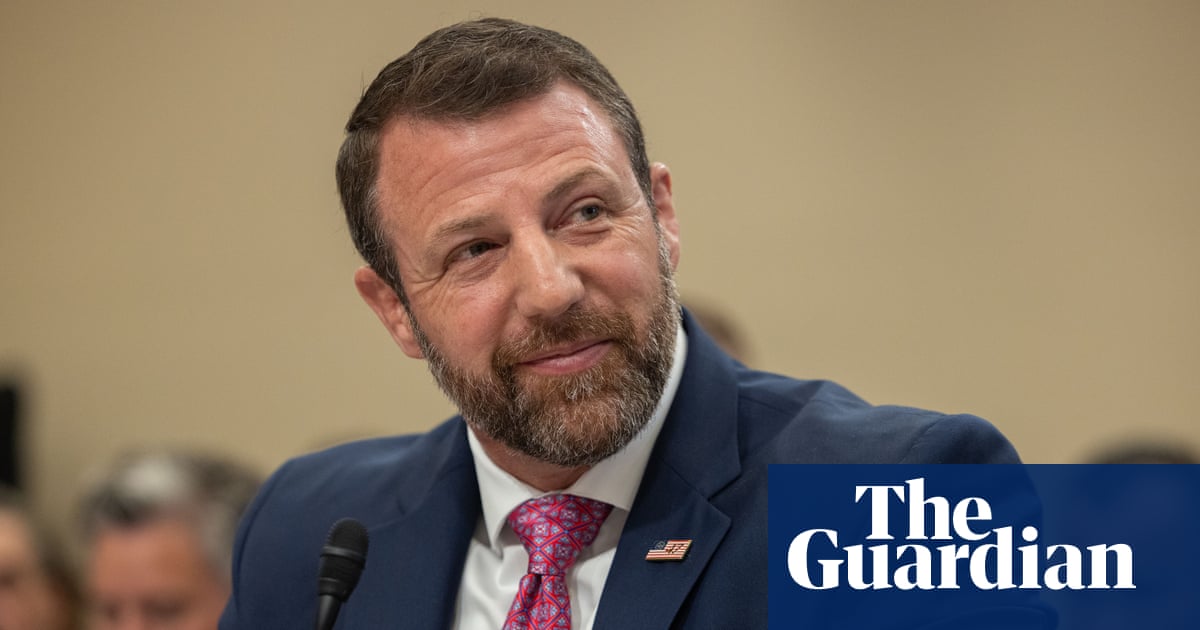
Mullin’s Comments on TPS: Via The Guardian, “Migrants in the U.S. on temporary protected status should seek permanent residence or leave, Markwayne Mullin, Homeland Security secretary, said in the wake of last week’s Supreme Court decision that stripped humanitarian protections from hundreds of thousands of immigrants.”
Julio Ricardo Varela is the founder of The Latino Newsletter. He is also its current part-time publisher and executive director. He edited and published this edition.