
In partnership with


Via Canva Pro
Opinion for The Latino Newsletter
Last fall, I sat in a conference about a $20,000 college scholarship. The presenter spent 20 minutes explaining the selection process. Then, almost as an afterthought, he added: “Only U.S. citizens may apply.”
A friend raised her hand. She is a Mexican immigrant and a permanent resident.
“Are green card holders allowed to apply?”
The answer was one word: No.
The room went quiet. My friend lowered her hand, the students around glanced at each other, unsure of what to say, and for a moment, I felt the burden of what that single word meant: a door had just closed.
That small exchange revealed a much larger truth that many ignore. For thousands of immigrant and Latino students, the biggest barrier to college is not the ability of immigrant students to succeed — it’s an educational system that silently shuts them out.
As a Texas resident, I know how these barriers go beyond a single scholarship. For nearly 24 years, students who grew up in Texas but lacked legal status could still access in-state tuition under the Texas Dream Act, a bipartisan policy that allowed undocumented students who graduated from Texas high schools to pay the same tuition as their classmates.
However, in June 2025, that pathway vanished when a federal judge struck down the law in United States v. Texas. Within hours, access to in-state tuition and state financial aid was blocked for most undocumented students. The decision immediately impacted roughly 57,000 Dreamers currently pursuing higher education in Texas and nearly 200,000 younger students on track to graduate from Texas high schools.

Financial aid presents another obstacle. The Free Application for Federal Student Aid (FAFSA) is the gateway to most federal grants, loans, and work-study programs that make college affordable for millions of students across the United States. But undocumented students cannot submit a FAFSA application at all, and even many students from mixed-status families hesitate to apply out of fear about sharing personal information. Permanent residents may qualify, but many scholarships and federal programs still restrict eligibility to U.S. citizens. The result is the continued exclusion of many immigrant students.
Psychological Fears
For some immigrant families, the barriers are also psychological. In an era of immigration crackdowns and aggressive enforcement by agencies like U.S. Immigration and Customs Enforcement, fear alone can be enough to shut down dreams.
U.S. Rep. Nancy Mace (R) has claimed that schools offering tuition benefits to undocumented students “reward illegal immigration” at the expense of federal taxpayers, while U.S. Rep. Dan Crenshaw (R) has argued that “DEI bureaucracy is directly responsible for a toxic campus culture that separates everyone into oppressor vs. oppressed.”
These statements reflect a moralized narrative that universities, once celebrated as forums for intellectual exploration, have become ideological spaces, reshaped by forces they see as alien to traditional values. What conservatives depict as woke imposition — the push for diversity, equity, and inclusion — is presented as evidence that universities are alienating Americans and denying students access to higher education.
Narratives that brand DEI initiatives as corrupting higher education are largely political theatrics. At “ivory towers,” diversity policies have expanded educational opportunity, not restricted it. Elite universities like MIT, Yale, Harvard, Penn, Pomona, and Amherst fully meet students' demonstrated financial needs, including those classified as "international applicants," which can also include undocumented students. In practice, families earning less than $100,000 pay little or nothing in tuition.
Talent exists everywhere, even if financial resources do not. If anything, they illustrate that expanding access to higher education in American institutions is a reaffirmation of their most enduring promise. MIT sums it all up in its motto, “Mens et Manus” (“Mind and Hand”), reminding us that higher education is meant to cultivate ability and drive impact, yet without financial bridges, the hands and minds ready to build, heal, and advance society are left behind.
The Consequences
It’s not just immigrant students who suffer when they are barred from higher education. The country they've called “home” pays a price as well. The vast majority of immigrant families, including those undocumented, contribute billions of dollars annually in state and local taxes — funding the schools their kids attend.
Do we want to deny those high school graduates the chance at an affordable college education? And do we want to forfeit the teachers, engineers, nurses, lawyers, or entrepreneurs they might become?
Education has long been a sine qua non of American democracy, the essential engine of innovation. Restricting access to it slowly erodes our nation’s future.
Don’t Stay Silent
When we stay silent in the face of those who question the right of Latino and immigrant students to access higher education, we inadvertently concede the moral high ground. Latino students are being shut out of scholarships, blocked from in-state tuition, and excluded from federal aid, all while being told their dreams are a “burden” on taxpayers.
Speaking out, showing the human cost, and confronting these false narratives head-on does not weaken our immigrant identity. It shows that expanding opportunities for Latinos strengthens our society as a whole.
I still think about that pause after my friend asked if permanent residents could apply for the scholarship. It lasted only seconds, but her question carried the weight of a larger message: some students are welcome to dream bigger than others.
The students shut out of that room are not outsiders to this country. They sit in the same classrooms, take the same standardized tests, and graduate from the same high schools. They are Americans, neighbors, classmates. When we deny them access to higher education, we are not protecting educational opportunities — we are eroding them.
The real question is not whether immigrant students belong in American universities. The question is whether a country that claims to value opportunity will let them use their minds and hands to shape its future.
Henders Aponte is a high school student passionate about politics and journalism. He writes about culture, politics, immigration, and education. He is also of Venezuelan descent.
The Latino Newsletter is a 501(c)(3) nonprofit organization. Help us reach our $50,000 goal to fund our podcast’s third season and to offer more opportunities for journalists to file their stories without paywalls or paid subscriptions.
And Now a Word From Our Sponsor
Every headline satisfies an opinion. Except ours.

Remember when the news was about what happened, not how to feel about it? 1440's Daily Digest is bringing that back. Every morning, they sift through 100+ sources to deliver a concise, unbiased briefing — no pundits, no paywalls, no politics. Just the facts, all in five minutes. For free.
What We’re Reading
Lowrider Stamps: The U.S. Postal Service is celebrating lowrider culture with a new set of stamps honoring the customized cars rooted in Mexican American and Chicano communities of the Southwest, KRQE reports. The collection features five classic vehicles, including several Chevrolet Impalas and a 1946 Chevrolet Fleetline, highlighting the artistry and craftsmanship of lowrider design. The stamps recognize the working-class Chicano tradition of lowrider culture that dates back to the 1940s.

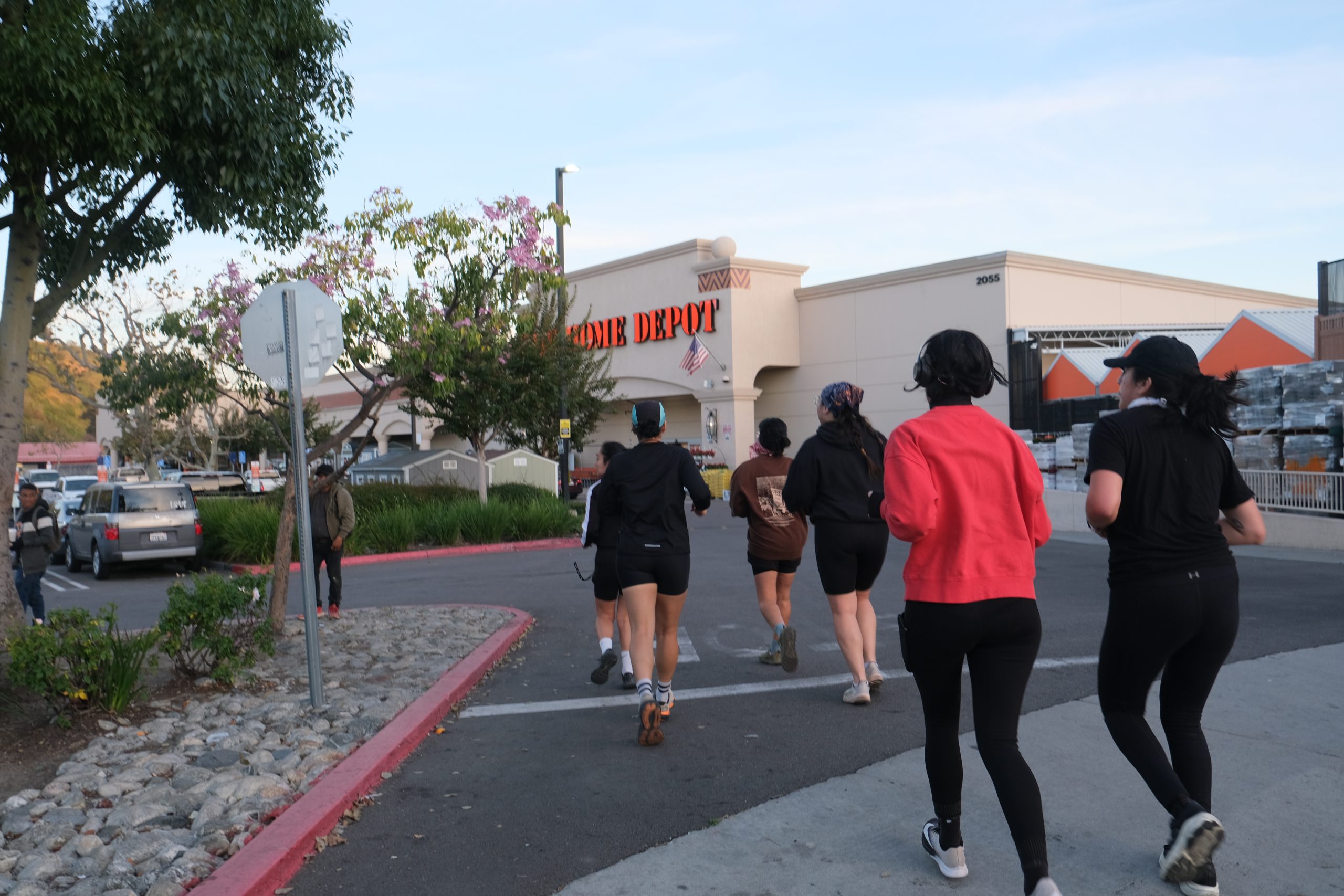
ICE Runners Club: A run club in Northeast Los Angeles is turning morning workouts into community patrols, scanning neighborhoods for federal immigration enforcement activity, Boyle Heights Beat reports. The group, founded by runner Claudia Yanez, moves through areas of northeast Los Angeles, such as El Sereno, Cypress Park, and Highland Park, while watching for suspicious vehicles and alerting community networks if agents appear. Organizers say the runs are meant to document potential ICE activity and reassure neighbors during a period of heightened enforcement.
Serena Maria Daniels edited this edition of The Latino Newsletter. Julio Ricardo Varela published it.
The Latino Newsletter welcomes opinion pieces in English and/or Spanish from community voices. Submission guidelines are here. The views expressed by outside opinion contributors do not necessarily reflect the editorial views of this outlet or its employees.