

Via Canva Pro
Opinion for The Latino Newsletter
As the world is tuned in to the World Cup, I’m thinking about how this event wouldn’t be possible without Latinos. And still, in the U.S., we are frequently told we don’t belong. But we are not guests, or whatever slur someone hurls at us. We are co-authors of this nation. And as we approach our country’s 250th anniversary, we are reclaiming our role.
In this year’s World Cup, Mexico hosts 13 matches. Los Angeles, Miami, and Houston — home to millions of Latinos — also welcome teams. Latinos play on the field, cheer in the stands, and staff concessions, cleaning crews, and the hospitality industry.
Think about the food and beer that fans enjoy. Latinos were involved in its harvesting, processing, transportation, preparation, and delivery.
“As much as these systems and our labor can be politicized, food itself transcends politics and reminds us of our common humanity,” Michele Cantos Garcia wrote back in 2023.
Still, Latinos’ role in the U.S. is often questioned. We’re not going to change who we are, but we have to change whose stories and leadership are recognized.
It takes extraordinary courage to leave your country. To step into unfamiliar languages, systems, and often complete isolation. No safety net. Just the responsibility to protect your family and endure. That decision is rooted in resilience and the belief that hard work can build a future. This is the story of millions of Latino immigrants.
There are also Latinos in the U.S. whose families never crossed a border. Long before those lines were drawn, this land was home to Indigenous civilizations whose knowledge, labor, and culture shaped the Americas. Spanish-speaking communities settled in St. Augustine and Santa Fe before the U.S. claimed territories across the Southwest, Florida, and the Caribbean.
After the Treaty of Guadalupe Hidalgo, families who lived on the land for generations were redefined as “others.” But despite that erasure, Latinos in the U.S. persisted. We built farms, railroads, cities, and movements. We fought on behalf of the U.S. in wars since this nation’s founding, and continue to do so today. Latino history is American history.
More Than a Demographic
Eighty percent of U.S. Latinos are citizens. But regardless of our citizenship status, this country is home. We are more than a voting bloc or demographic. Latinos are educators and entrepreneurs. Scientists and doctors. Farmworkers and engineers. Journalists, artists, caregivers, builders, and business owners. We are first responders running toward danger. We organize, vote, and govern. We serve in local offices, statehouses, and Congress.

People of Latin American heritage generate more than $4.4 trillion annually for the U.S. economy. Latino-owned businesses are the fastest-growing segment of entrepreneurs nationwide. Latinos do have power, and need to exercise it. We must demand accountability from political leaders who exploit fear, and from corporations that profit from our communities while retreating when courage is needed.

Here to Stay
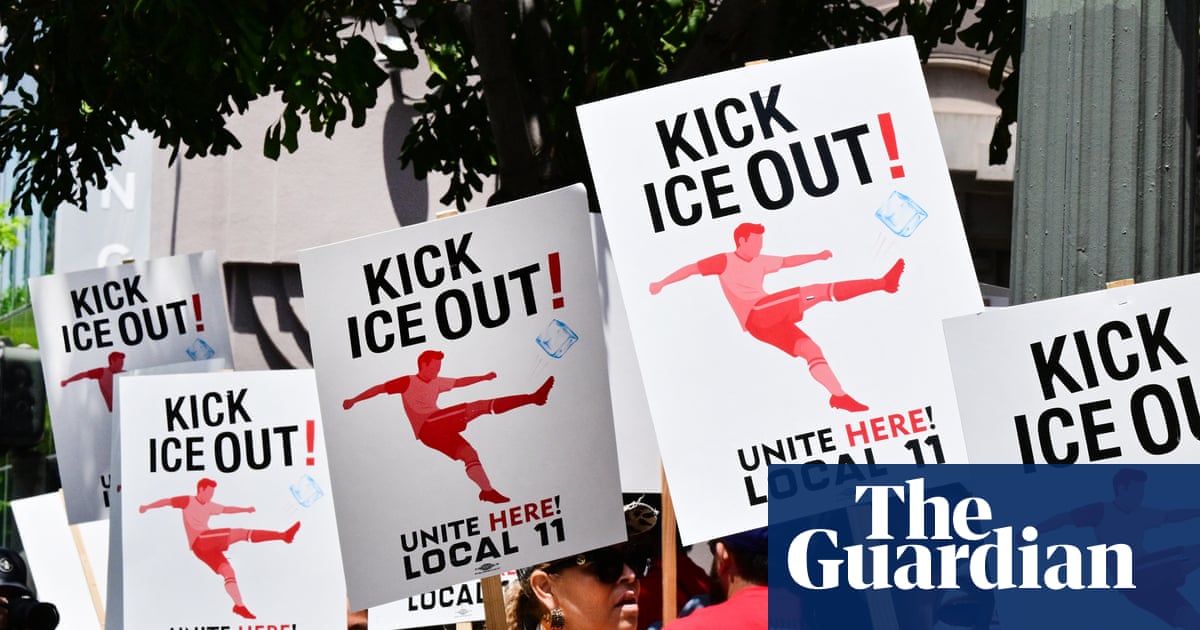
As the nation debates immigration, voting rights, and corporate responsibility, and gets ready to celebrate its 250th anniversary, Latinos are once again treated as a question mark instead of a constant. Even visitors coming to this country to cheer on their teams in the World Cup, and spend money at our hotels and restaurants, have to be on guard.
The Guardian wrote: “More than 120 civil society groups have even issued a travel warning to the 10 million potential visitors about ‘serious rights violations’ under the current political climate, including ‘arbitrary denial of entry and risk of arrest, detention and/or deportation.’”
These are incredible times.
At the 2026 World Cup, soccer players with Spanish, Indigenous, and African roots are here representing Argentina, Brazil, Colombia, Haiti, Portugal, Ecuador, Panama, Paraguay, Uruguay, Spain, and the United States.
And I’m wondering, do people really see us?
Do they understand that none of this is possible without Latinos?
Two hundred and fifty years after the founding of this nation, our nation, the United States is still our home. It’s time for everyone in this country — including those who occupy the highest of government offices — to realize that.
Sindy Marisol Benavides is a proud Honduran-American immigrant and the Founding Executive Director of Aquí: The Accountability Movement, where she is committed to amplifying the positive narrative of Latinos across the nation, advancing accountability in the fight against hate and discrimination, and driving systemic change that expands opportunity for the largest ethnic community in the U.S.
The Latino Newsletter is a 501(c)(3) nonprofit organization, and we turned 2 years old! Help us with our birthday campaign by giving here.
What We’re Watching
Puerto Rico at the United Nations: It’s time for more status conversations at the United Nations. On Monday, according to El Nuevo Día, over 70 organizations and individuals testified at the United Nations about Puerto Rico’s colonial status. Watch all the testimonies at this link.
Julio Ricardo Varela edited and published this edition of The Latino Newsletter.
The Latino Newsletter welcomes opinion pieces in English and/or Spanish from community voices. Submission guidelines are here. The views expressed by outside opinion contributors do not necessarily reflect the editorial views of this outlet or its employees.