
In partnership with


Screen grab of Los Tigres del Norte at NPR’s Tiny Desk (Photo: Vanessa Castillo/NPR)
Editor’s Note: George granted us permission to republish this opinion piece, originally published on his American Mexican Substack.
I love Los Tigres del Norte, the “Tigers of the North,” as they are affectionately referred to by many Mexicans and other Latinos here in the United States. They are an institution that represents a genre of music they helped redefine. Corridos and other forms of political and criminal folk narratives have existed since the early 1900s, when Mexican revolutionaries adopted corridos as a way to glorify leaders, battle victories, and share their fight for the rights of the people.
In the early 1970s, when Mexico was at a crossroads of the establishment of what would become the organized crime cartels that we know today, Los Tigres del Norte were making a name for themselves with catchy songs filled with emotional and gritty narratives of narcotraffickers, their wealth and power, and even love songs of betrayal and death.
Every Mexican family, in the U.S. or Mexico, has a Los Tigres del Norte CD, album, cassette, or 8-track lying around. My mom used to love the song “Camelia la Tejana,” whose proper name is “Contraband and Treason,” and if you ask my friends from my days in D.C., they’ll tell you that I can do a mean karaoke version. All this to say, Los Tigres del Norte are the ultimate ambassadors of the Mexican immigrant experience. They are cultural icons, musical revolutionaries, and now political advocates who are at the center of a controversy that claims censorship of Latino oppression and persecution.
A Historic Tiny Desk Concert and Its Cultural Relevance
When the first Tiny Desk concert was recorded in April 2008 at the Washington, D.C., headquarters of National Public Radio (NPR), nobody thought that the idea would rise to the level that it has in terms of cultural relevance. Being invited to perform a Tiny Desk concert is an acknowledgment of transcendence, influence, innovation, and appreciation for the artists and their fans.
Other Mexican and Mexican American artists have performed Tiny Desk concerts in the past, notably Café Tacvba, Natalia Lafourcade, and Grupo Frontera, but in today’s political environment, having a band like Los Tigres del Norte arrive in Trump’s D.C. to give this kind of concert was bound to invite controversy.
NPR’s Alt.Latino co-host Felix Contreras provided a tearful and heartfelt introduction in which he stated that the Latino community is under attack and credited Los Tigres del Norte with giving people back their humanity and telling the stories of immigrant life. This message is the center of the controversy surrounding the concert. It’s also important to note that the band’s lead singer, Jorge Hernández, spoke about the group’s legacy of singing about immigration and social problems. He emphasized that artists have a responsibility to speak up about problems affecting their community, and that music should be used to inform people, help them know their rights, and pass down history to younger generations.
Predictably, the concert began with a politically charged song, “Somos Más Americanos,” or “We Are More American,” which includes lyrics like “I’d like to remind the gringos that I didn’t cross the border, the border crossed me,” and “America was born free, it was man who divided it.”
After the song, Hernández delivered this message: “Our music, our stories, our vote — all part of how we show up.”
What was not so predictable was that the rest of the set would focus on their classic love songs, no more politics, and definitely no mention of trafficking or celebrations of narco-culture. With narco-politics being the main point of tension between the U.S. and Mexico, it was convenient, and probably best, that the band avoided that altogether.
“How we show up” is key to the message that the band delivered, and the biggest question that this controversy raises is the value of celebrity endorsements and whether the Latino vote will play a role in the outcome of the upcoming midterm elections.
The New Unpredictability of the Latino Vote
The fact that Latino voters abandoned Democrats in the 2022 election is undeniable. Latino voters went to the polls with the economy as their top priority, and as pointed out in a new report by the Pew Research Center, Latino voters backed Democrats by a 47-point margin in 2018; by 2022, that margin had shrunk to 21 points. That was a dramatic shift that nobody anticipated. But was it truly that Latinos abandoned the Democratic Party? Or was it that the traditional voter base was not excited to cast their vote?

The research points to something that is key: that differences in who turns out to vote have played the biggest role in this shift. In the 2024 presidential election, a higher share of Donald Trump’s 2020 voters than Joe Biden’s 2020 voters turned out to vote. Trump also won a higher share of those who had not voted four years earlier. This differs from 2020 and 2016, when those who didn’t vote in the previous presidential election favored Democratic candidates.
In short, a larger number of Trump voters cast their vote in the 2024 election, including Latino Trump voters and supporters, and that is my biggest concern for these midterms.
We can talk about Latino voting trends infinitely, but none of that matters if we don’t show up to vote, and historically, we do not.
If I were a Democratic Party leader, I would be concentrating my efforts on capitalizing on Trump’s dramatic decline in popularity among Latinos and how his economic policies have hurt this community.
A recent report by UnidosUS identifies the struggles that Democrats are facing with Latino voters, stating that “nearly 4 in 10 Hispanic voters are now part of the ‘moveable middle’ — a bloc big enough to decide who controls Congress, and still up for grabs heading into November.”
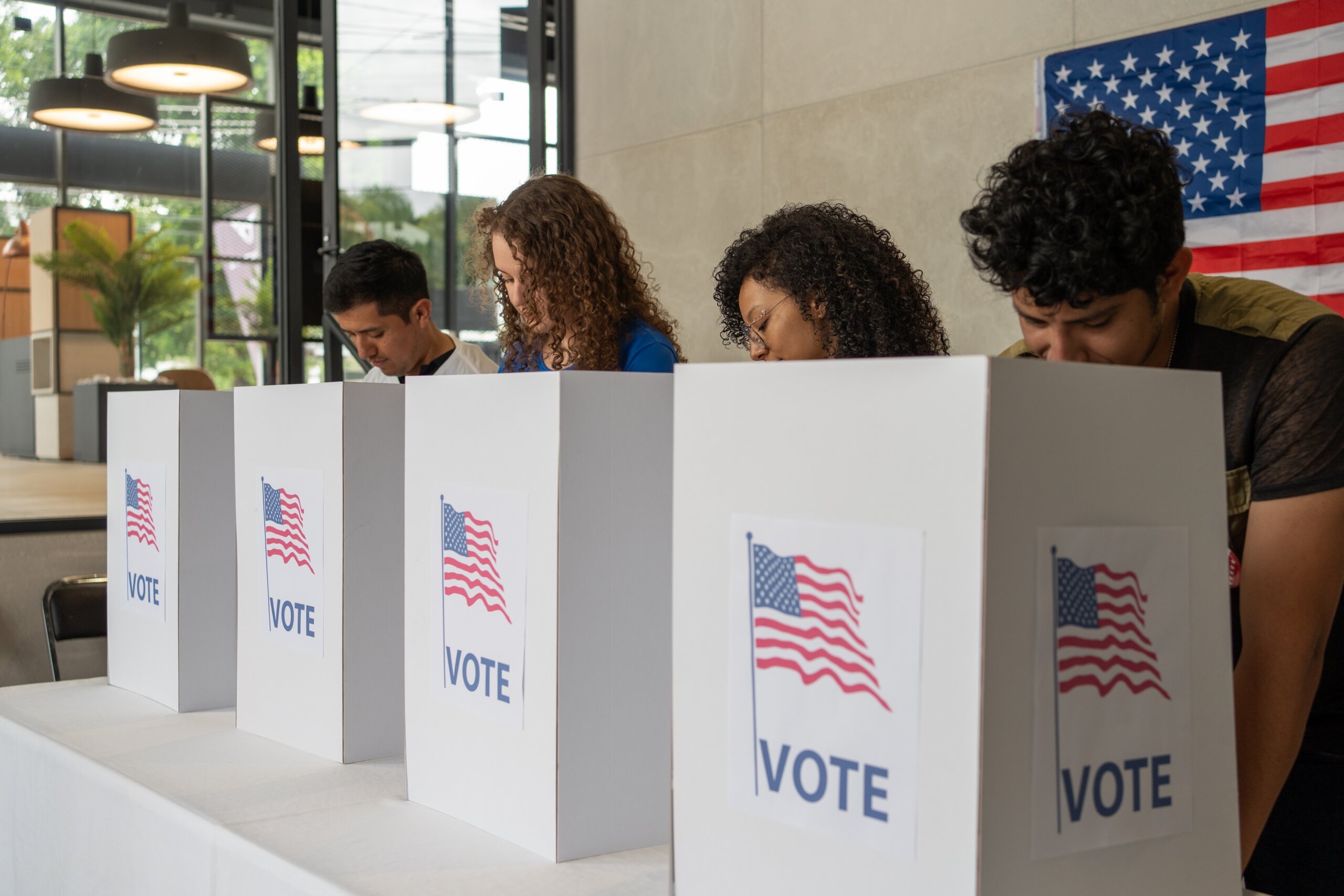
The report also finds that this Latino voter group makes up roughly 38 percent of Latino voters, a bloc with a significant presence in 12 of the 37 competitive U.S. House districts that will decide control of Congress, making the Latino vote critical to Democrats.
A Traditional Message That Doesn’t Connect
Support for Trump among Latinos has basically eroded. As Pew points out, his approval rating today among Latino voters is 24 percent, down from 38 percent in February 2025, with the majority of Latino voters pointing to the economy and his immigration policies as the reasons for their lack of approval.
The UnidosUS and Pew Research Center reports identify the economy as the top issue for Latino voters. Immigration is not the top issue for Latino voters; it comes in behind issues like a livable wage, housing costs, healthcare costs, and the general cost of living. Yet, the Democratic Party seems to be blind to that fact.
For better or for worse, my algorithms are all confused. I regularly receive ads on my social media in favor of Democratic candidates in both English and Spanish; I even saw a Spanish-language ad from James Talarico on YouTube. Did it mention the economy? No. Did it assume that my top issue as a Latino was immigration? Yes. And that’s the problem.
We, as Latinos, already know that Trump’s policies have been bad for immigrants. In fact, the majority of Latinos favor some kind of immigration enforcement and reform. What we don’t approve of is the violence, deaths, and persecution that have infiltrated the Latino community under the excuse of immigration enforcement.
The upcoming elections could be a turning point for Latino reconciliation with the Democratic Party if the party decides to truly understand the diversity of voices, experiences, and political views that exist within our community.
As Los Tigres del Norte pointed out, “that’s how we need to show up,” but we need to be motivated to do so, and the bland immigration message isn’t going to cut it. It will excite activist-oriented voters, but that’s not enough to turn the tide. You need the average person to feel the responsibility and the weight of their vote, and immigration isn’t it — it’s the economy.
George I. Gonzalez is a political and corporate communications expert with more than 20 years of experience. He founded Complex Made Simple, served as a White House appointee in the Obama administration, and writes The American Mexican on Substack. He is a proud native of Mexico City. Connect with him on LinkedIn.
Our New $40,000 Campaign
As we enter the final quarter of 2026, The Latino Newsletter is raising $40,000 to continue our work. We’ll share more exciting updates soon to help us reach that goal, and you can give anytime to keep this outlet free and accessible to all.
And Now a Word From Our Sponsor
Free email without sacrificing your privacy

Gmail is free, but you pay with your data. Proton Mail is different.
We don’t scan your messages. We don’t sell your behavior. We don’t follow you across the internet.
Proton Mail gives you full-featured, private email without surveillance or creepy profiling. It’s email that respects your time, your attention, and your boundaries.
Email doesn’t have to cost your privacy.
We Are a Listener’s Choice Winner!
Thank you to everyone who chose American Colony for the 2026 Signal Awards. We learned this morning that we took the Listener’s Choice prize and won the Bronze in our category. Thank you!
The Latino Newsletter welcomes opinion pieces in English and/or Spanish from community voices. Submission guidelines are here. The views expressed by outside opinion contributors do not necessarily reflect the editorial views of this outlet or its employees.