

The Latino Newsletter is distributing “Living Proof: A Colorectal Cancer Awareness Story,” a two-part video series that Michelle Zacarias worked on with Eddie Aguirre and The Social Primate. Michelle, an award-winning journalist who is also host of The Latino Newsletter podcast, was diagnosed with colorectal cancer at 34. What began as fatigue and digestive discomfort turned into a nine-month battle for answers — and a colonoscopy that saved her life.
Colorectal cancer is now the leading cause of cancer-related death among adults under 50 in the United States. Among Latinos, the disease hits particularly hard, and too often at a later stage.
Earlier on Monday, I connected with Michelle to talk about her experience and her story.
Julio Ricardo Varela: Why did you want to make this video now?
Michelle Zacarias: Part of the inspiration was launching during March, which is Colorectal Cancer Awareness Month. We know that colorectal cancer is now the leading cause of cancer-related death for people under 50, and specifically, it is also a leading cause of cancer-related death among Hispanics and Latinos, who are often diagnosed at later stages. This was obviously extremely personal to me, but it also felt really timely. This is a problem that has gotten increasingly worse over the last several decades, and now people like myself are being impacted.
There was obviously the public education aspect of it, and wanting to use my story as a way to help inform others who might be experiencing similar symptoms to me, because we know that early-stage diagnosis is really the key to getting adequate treatment. When I was diagnosed, it took nine months for me to get an official diagnosis, and I spent those nine months really just scrambling for answers, trying to figure out how I could get authorizations, how I could get approval for a colonoscopy even though I was only 34 at the time and outside of the range of what might typically be covered with my insurance.
JRV: How did the experience change you as a person?
MZ: All of these experiences I had felt really important for contextualizing how people have difficulty navigating the medical system. Whether you are a young person like myself or someone who has had a history of medical illness, it really doesn't matter — all of us are facing medical barriers. I think that was kind of an eye-opening experience for me, because I always felt like I had a really strong grasp of self-advocacy and could make things happen quickly if need be. As it turned out, even I was kind of caught up in the bureaucratic process of the medical industrial complex.
JRV: Has it impacted your journalism?
MZ: I think a lot of my journalism definitely shifted in the aftermath of my diagnosis, because so much of how our community operates is directly tied to the systemic barriers that we face in the healthcare field. I can continue to push for medical self-advocacy, but there were also institutional barriers that need to be addressed in order for people like myself to get a faster diagnosis. We know that in the last several decades, colorectal cancer rates have doubled for people under the age of 50, so that means that the age threshold for colonoscopy should also be lower.
These are all things that are difficult for people to talk about because many of these symptoms are uncomfortable — digestive issues, changes in stool texture, fatigue. A lot of these things are stuff that people don't like to talk about. So it is helpful for me to share my experiences and let other people know that it’s okay to talk about that and advocate for yourself when you're feeling like something might be off, whether it’s because of colorectal cancer or an autoimmune disorder or IBS or just something that isn't sitting correctly with your body.
JRV: What do you want people to take away from your story?
MZ: Looking back, there were so many parts of that journey that felt like they could have been more efficient or faster, or maybe I could have advocated a little harder for myself. But back then, I didn’t have any clarity, so I just went along with what I thought was the right course of action, which ended up really delaying the process. There were moments when I should have gone to the emergency room, moments when I should have pushed for a sooner colonoscopy. I felt like maybe I was making this into a bigger situation than it was. But if anything, I was downplaying my symptoms.
I hope that people in the future who are experiencing what I experienced really trust themselves and trust their body when it feels like something isn’t right.
More information on colorectal cancer screening and resources is available at colorectalcancer.org.
The Latino Newsletter is a 501(c)(3) nonprofit organization. Help us reach our $50,000 goal to fund our podcast’s third season and to offer more opportunities for journalists to file their stories without paywalls or paid subscriptions.
What We’re Reading
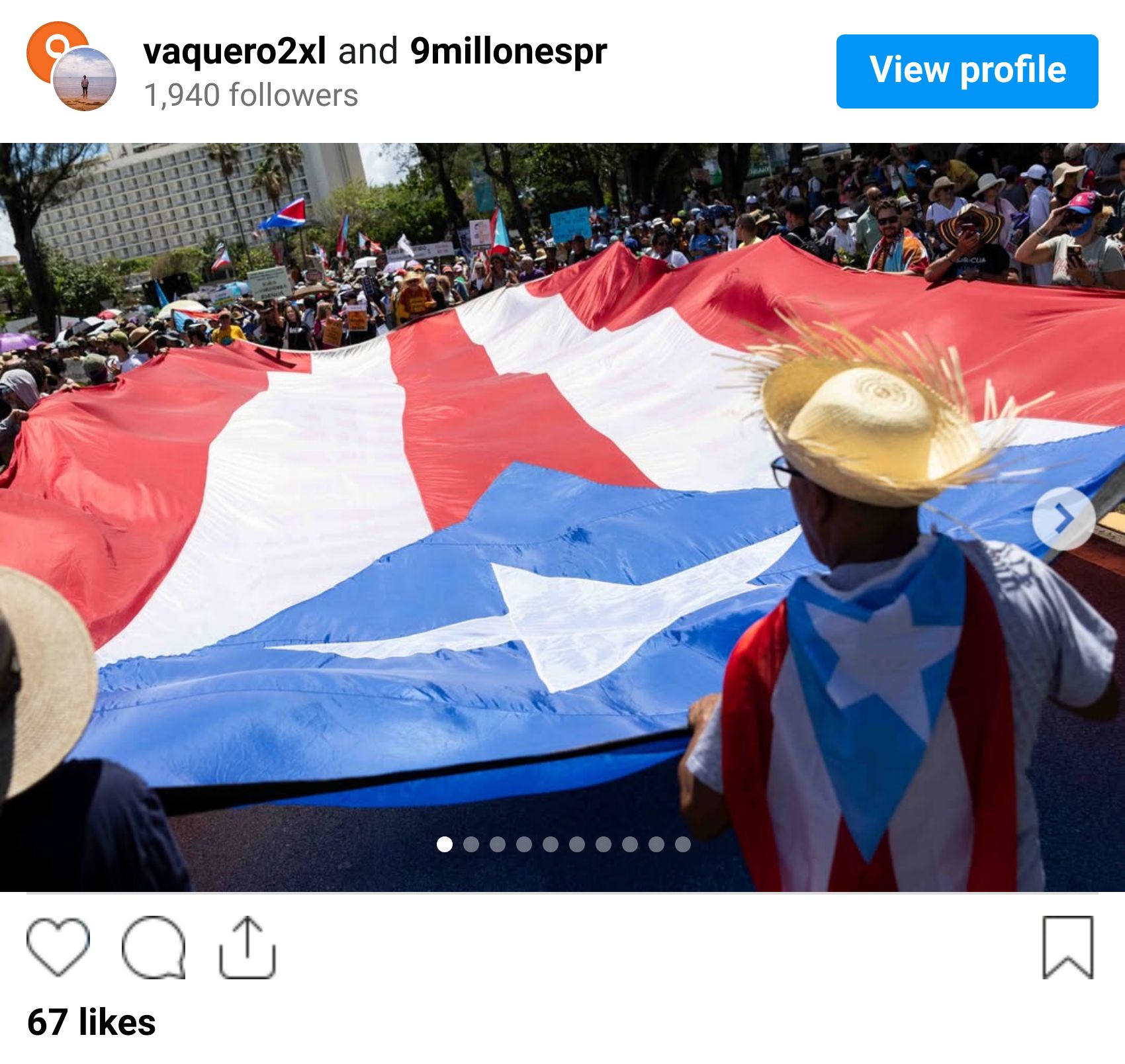
Esencia Protest: From Carlos Berríos Polanco and 9 Millones, “Thousands marched Saturday from the Escambrón Beach area to La Fortaleza to oppose the construction of Esencia, a massive tourism development project in Cabo Rojo.”
About the Author
Julio Ricardo Varela is the founder of The Latino Newsletter. He is also its current part-time publisher and executive director. He edited and published this edition of The Latino Newsletter.
Consider donating to The Latino Newsletter. Any contribution, no matter how small, helps keep this newsletter free and accessible to all. ¡Gracias mil!