
Sponsored by


Opinion for The Latino Newsletter
Originally published at Alberto C. Medina’s Substack, Free Puerto Rico
Throughout Puerto Rico’s history, if you asked a supporter of Puerto Rican statehood — or of the colonial status quo — what would happen to the island if it achieved independence, they would say something like this:
Puerto Rico would experience demographic and socioeconomic collapse, and likely lose a significant percentage of its population.
Basic services would become unreliable. Puerto Ricans would go days without power and water, and the island’s government would be unable to respond to crises.
Economic opportunity would be scarce, and poverty would be rampant. Children would go hungry.
Corruption would go unchecked and Puerto Rican leaders would engage in more grift than governing.
But if you’ve been following the news out of Puerto Rico, you know that’s not the island’s hypothetical future as a sovereign nation. It is Puerto Rico’s deadly colonial present as a U.S. possession.
Puerto Rico has lost 600,000 people in the past 20 years — a staggering 15% drop. The island is now on a demographic death spiral, with one of the oldest populations and lowest birth rates in the world. More than half of children live under the federal poverty line, and Puerto Rican families frequently have to choose between buying groceries or paying their power bill. And the power is out half the time anyway, whether Puerto Ricans pay their bills or not.

The island’s local government, led by the pro-statehood PNP for the past decade, features a cast of corrupt characters who constantly face allegations of fraud and theft. At the center is MAGA pro-statehood governor Jenniffer González-Colón, who was credibly accused of benefiting from a drugs-for-votes scheme in her 2024 election.
Another Crisis
And now thousands of Puerto Ricans have no water. Some of that crisis has been caused by a historic drought, but much of it is due to government neglect — both local and federal — of Puerto Rico’s critical infrastructure.
It bears repeating: the collapse didn’t happen because Puerto Rico became independent. It is happening now, while the island remains a U.S. colony. In the face of that political reality, independence is the only solution.
There are two frequent rebuttals to everything I’ve just written. First, that Puerto Rico’s crises have little to do with its political status and everything to do with the failures and ineptitudes of the island’s government. Certainly, that government shares a lot of the blame. But it operates within the colonial constraints of Puerto Rico’s status as property of the United States Congress. And, as I recently argued, colonialism also helps explain why Puerto Rico keeps electing terrible leaders in the first place.
Moreover, for the past decade, Puerto Rico has essentially been under the dictatorship of a federal oversight board established by Congress. That board approves Puerto Rico’s budgets, contracts, and executive orders. It can sue Puerto Rico’s government to invalidate its laws. It is behind the disastrous privatization of Puerto Rico’s power grid and myriad austerity measures that have left the island’s government unable to invest in basic infrastructure.
The concrete ways in which the federal oversight board, the U.S. government, and Puerto Rico’s colonial status have created or abetted the island’s crises are too many to detail here. But the proof is in the rotten pudding: Puerto Rico is a colony, and Congress is ultimately in charge. If we believe that with great power comes great responsibility, then the United States’ authority over the island also burdens it with the blame for our people’s suffering.
Other Colonies
The proof is also in the conditions of the other U.S. colonies. All are undergoing significant population loss and socioeconomic crises of their own. What is more likely: that Puerto Rico, the U.S. Virgin Islands, Guam, American Samoa, and the Northern Marianas are all terribly mismanaged by local leaders? Or that their one major commonality is largely to blame: political subordination to the United States?
The other common rejoinder is that, however bad things are in Puerto Rico now, surely they would be worse after independence. This is flawed logic on more than one account. For starters, it’s a viciously circular argument: the more the island struggles under U.S. rule, the more people will claim it is too poor and vulnerable to escape U.S. rule. Colonialism has, so to speak, cut Puerto Ricans’ legs out from under us. Now people point and say: “Look, they can’t even walk. How could they possibly survive without the all-powerful United States?”
Second, the constant refrain of “it could be worse” is a version of the fallacy of relative privation, or the “appeal to worse problems.” It dismisses and excuses the problems of today by fearmongering about a hypothetical future which can always be worse:
“Oh, did colonialism cut off Puerto Ricans’ legs? Well, as an independent country, Puerto Ricans will also lose their arms! So isn’t being legless, by comparison, a fine alternative?”
The metaphor is crude, but so is day-to-day life for hundreds of thousands of Puerto Ricans without power, food, and water. The nightmare is happening now. How much worse do things have to get before we change course? When Puerto Rico has lost a million people, will we still say that, without the United States, it would lose 2 million? If it loses 2 million, will we say that an independent Puerto Rico would instead be swallowed up by the sea and disappear entirely?
No Fear of the Future
The rising generation of Puerto Ricans who are living through the island’s crises have considered those questions — and decided that they’re tired of fearing the future. That’s why support for Puerto Rico’s sovereignty keeps growing.
The question must now be put to Americans, many of whom still tacitly or overtly support Puerto Rico’s current status — or annexation by our colonizers — because they believe independence would doom our people to a worse fate. It could: nothing in life is guaranteed, and the success or failure of a sovereign Puerto Rico will ultimately be up to its people. But read the stories about what’s happening to Puerto Rico now and see if you can still claim, in good faith, that the U.S. government has helped the island achieve stability and prosperity.
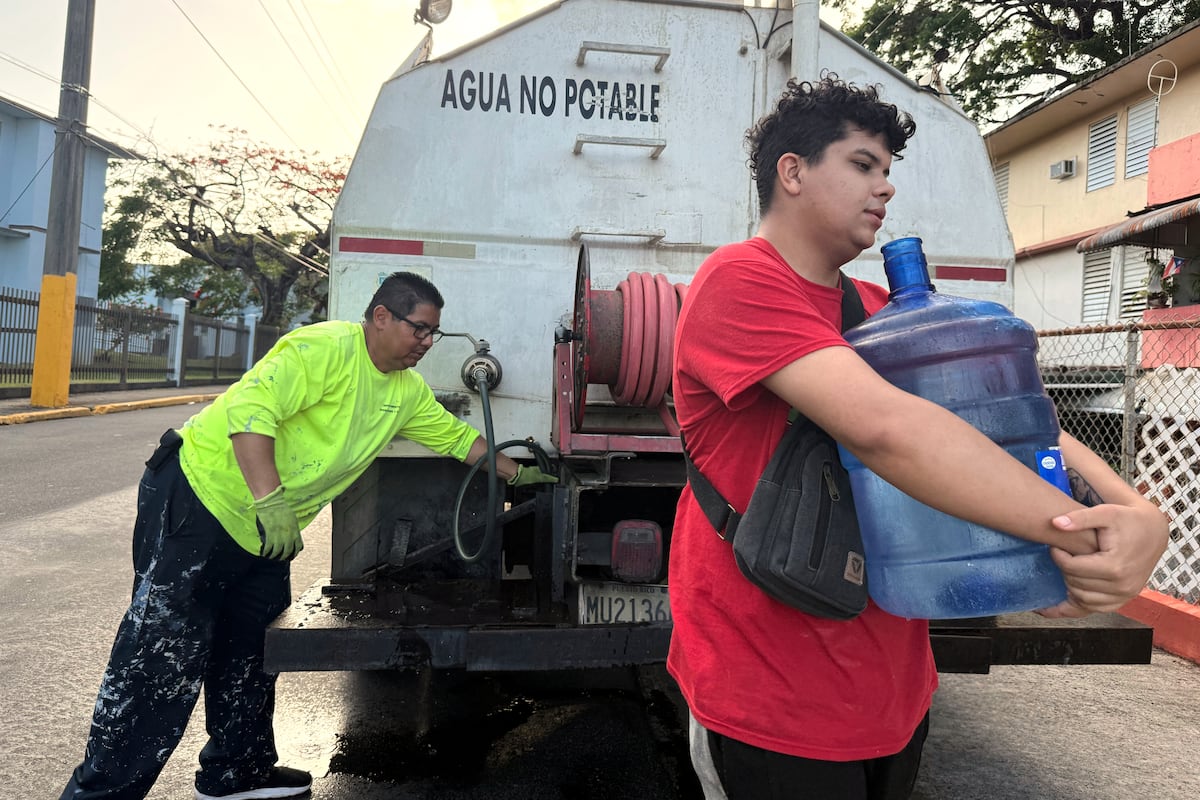
Puerto Rico’s problems are too many, too deep, and too entwined with its colonial condition to be solved by anything but a change in status. Statehood isn’t walking through that door. Independence will be a difficult, radical, and transformative change—but transformation is what Puerto Rico needs.
You might even say our people are thirsty for it.
About the Author
Alberto C. Medina, President of Boricuas Unidos en la Diáspora, is a Puerto Rico-born, U.S.-based advocate for Puerto Rican independence. He writes about Puerto Rican politics on Substack and his book, Free Puerto Rico, will be published in 2027 by The New Press. Follow him on X/Twitter at @AlbertoMedinaPR.
Like What You Read? Support Us.
We don’t hide behind paywalls. We keep it free and accessible. Give now to keep us available to all. Any amount will help!
And Now a Word From Our Sponsor
A Backpack They'll Love All Year

Back-to-school shopping doesn't have to be a battle. Give your kids a backpack they'll actually be excited to carry every day.
Sprayground backpacks combine bold designs, premium quality and smart storage to handle everything from the classroom to after-school activities. Built to last and made to stand out, they're designed for students who want to express their personality while staying organized. Start the school year with a backpack they'll be proud to wear.
What We’re Reading
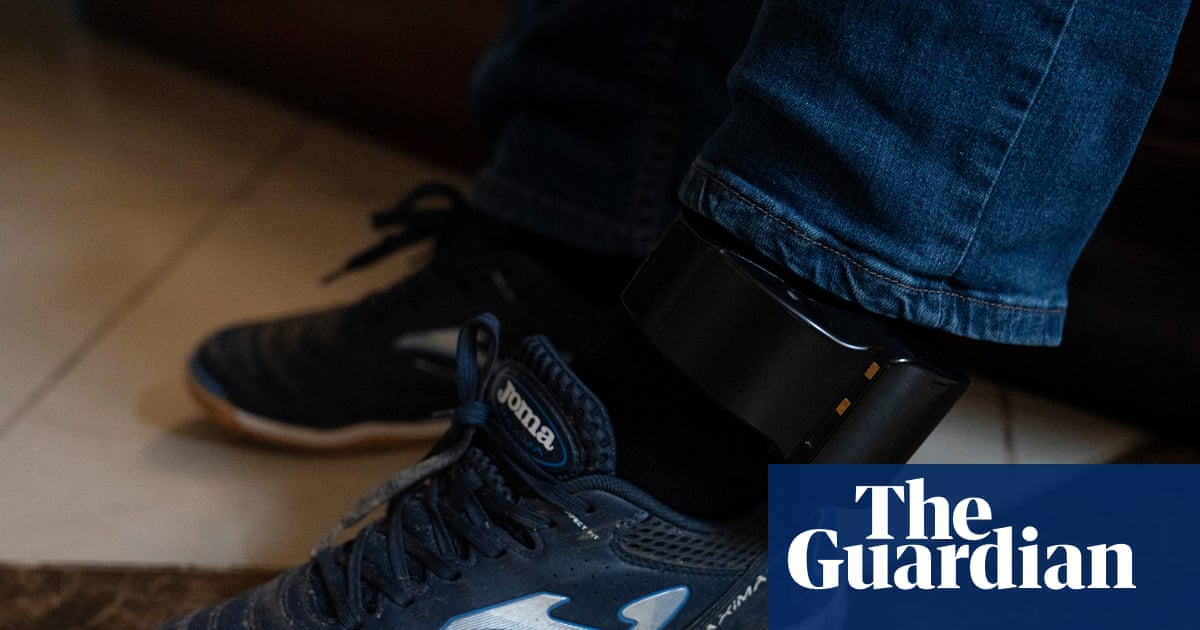
Ankle Monitor Increases: Via the Guardian, “The US is tracking nearly 54,000 immigrants through GPS-enabled ankle monitors as part of a US Immigration and Customs Enforcement (ICE) electronic surveillance program, according to private prison corporation The Geo Group. Early last year, just 17,000 immigrants were wearing the devices.”
A Win for Press Freedom: Over at Pressing Issues, a conversation with journalist Sandra Rodríguez Cotto about a press freedom win in Puerto Rico.

Julio Ricardo Varela edited and published this edition of The Latino Newsletter.
The Latino Newsletter welcomes opinion pieces in English and/or Spanish from community voices. Submission guidelines are here. The views expressed by outside opinion contributors do not necessarily reflect the editorial views of this outlet or its employees.