
In partnership with


United Farm Workers mural in Modesto, California (Photo by Sarah Stierch/CC BY 4.0 )
Opinion for The Latino Newsletter
By Dr. Laura Dominguez and Sehila Mota Casper
In recent weeks, the ground around César Chávez’s legacy has capsized. Institutions have removed his name, canceled holidays, covered statues, and reconsidered honors that have anchored this history for decades.
Latinx communities — and Americans at large — are responding in real time to evidence that Chávez sexually abused women and girls while leading the United Farm Workers in the 1960s and 1970s. The urgency to rethink commemorations of the farmworker movement reflects a deep desire to see justice for his survivors, with many calling for renewed focus on the contributions of Chicana activists.
However, we have yet to learn the full breadth of these accounts, but they are already reshaping how we hold this history. Dolores Huerta, Ana Murguía, Debra Rojas, and others have spoken publicly about years of sexual violence, and the United Farm Workers pledged to create a channel for others to come forward. Many have applauded the women’s bravery, even as a vocal minority attempts to question or undermine their stories. For many Chicanas and Latinas, these disparaging responses follow a disturbing pattern in our social movements.
We recognize that pattern because we are writing from within this history.
Grounded in History and Culture
As Latina historians and historic preservationists, our work has been grounded in protecting Latinx historic places and cultural heritage across the U.S. and Puerto Rico. That work has included sites tied to the farmworker movement, including Chávez himself. We have spent years recovering stories through oral histories, buildings, neighborhoods, and landscapes, drawing from a longer tradition rooted in the civil rights movements of the 1960s and 1970s. As our elders declared, Latinx history is American history.
As journalist Maria Hinojosa told Democracy Now! after her exclusive interview with Huerta, “She’s seen how people are moving to paint over the murals, cover the statues, change the names of streets, etc.... So, not only is she coming to terms with her own assaults, she’s coming to terms with the fact that the movement and the person who she admired as part of the movement is essentially being covered up, disappeared.”
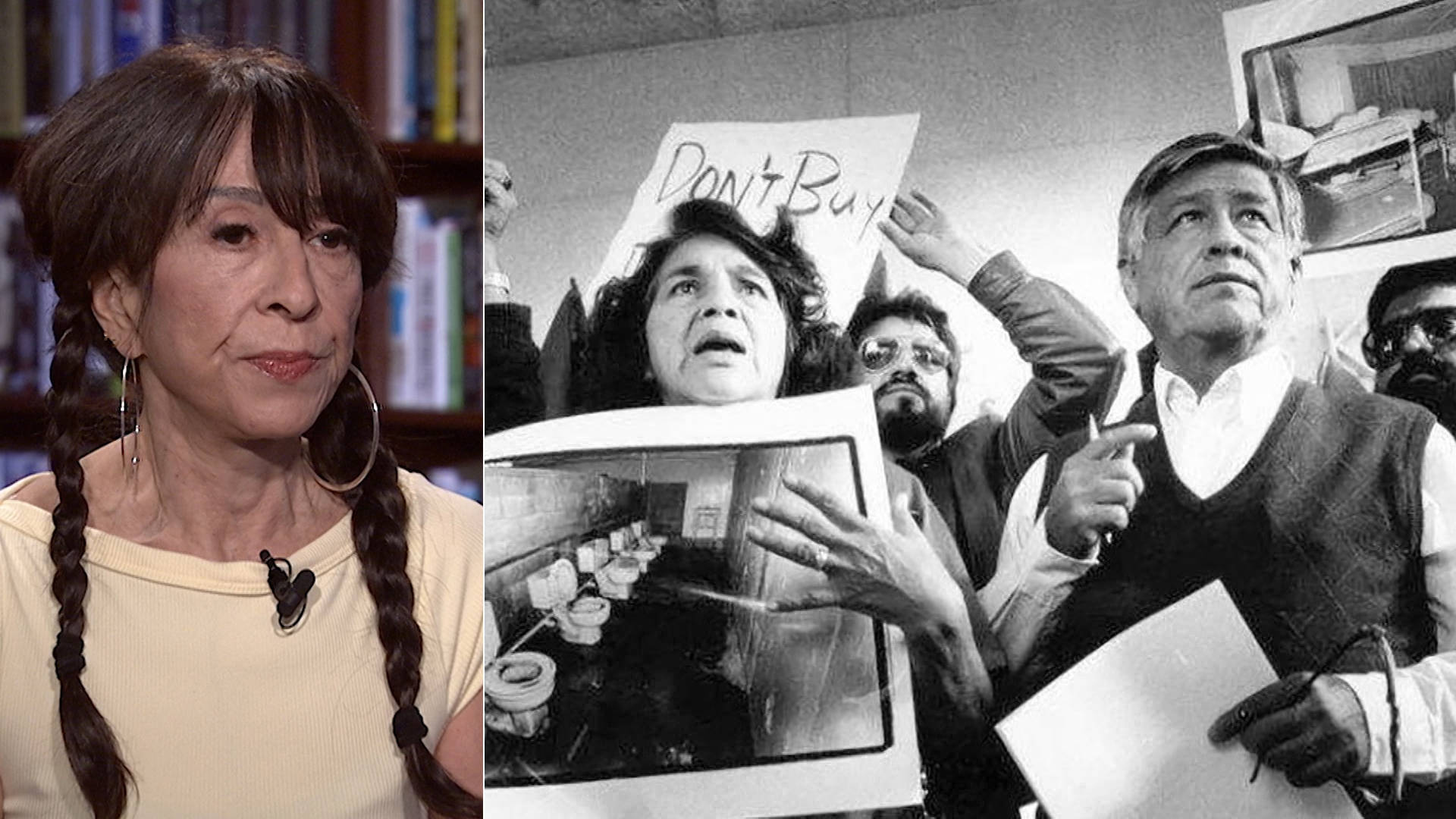
Hinojosa’s observation brings something else into view — something many may recognize. Latinas have long carried the work of remembrance in ways that are not always named. Grandmothers, wives, partners, collaborators, and those who were harmed have preserved histories and sustained movements, often without recognition. Their lives are not adjacent to this story. They are its foundation. Looking inward, we can draw on our own heritage to guide how we choose to remember, seek accountability, and heal.
Not Repeating the Past
Patriarchal traditions in our fields anointed Chávez long before we began our careers, but we carry a responsibility now to center repair and collective experiences in what comes next. The way this moment is unfolding comes through that same lineage, shaped by the same structures that determined whose voices were centered and whose were not. Any response that treats this as though it arrived from nowhere risks repeating the very patterns we are now being asked to confront.
At the same time, we cannot allow this moment to jeopardize what we have built. As conversations around America 250 unfold alongside rising anti-Latinx rhetoric, immigration, and political tension, there is a real risk that our histories will once again be reduced, politicized, or censored. A bill by Senators John Cornyn and Bill Cassidy to abolish and defund the César E. Chávez National Monument was crafted without community input. This is not accountability, but erasure.
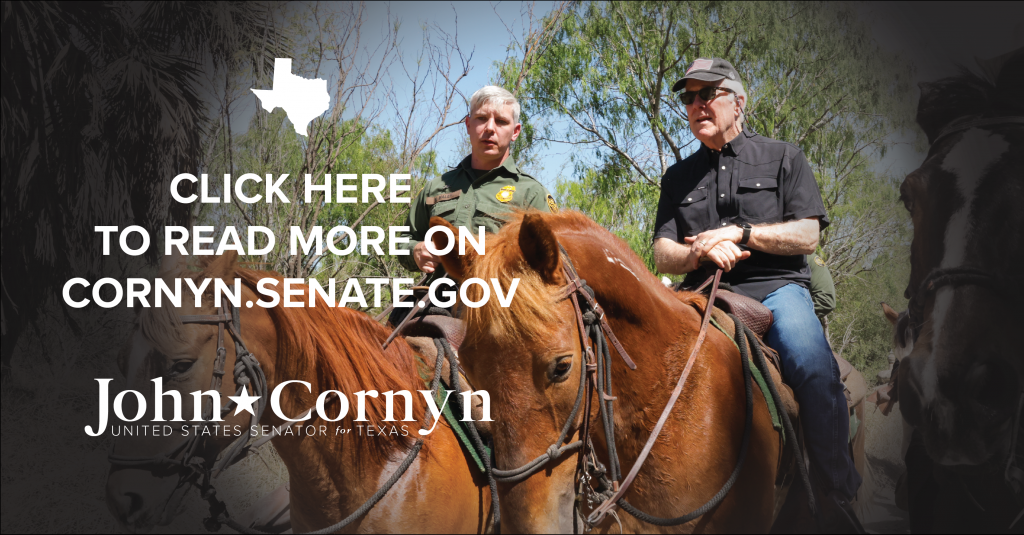
Places like the final home and resting place of César Chávez carry deep meaning, but they were never meant to stand alone as the singular representation of the farmworker movement or Latinx history as a whole.
It is not fair to begin and to end with Chávez. Our histories are expansive — they live in bracero labor camps, in barrios, in sacred spaces, and in everyday places shaped by community. Community voices must remain at the center of how we tell, protect, and carry our stories forward. That is why the pace of response matters. Hasty reappraisal of Chávez’s legacy risks replacing old narratives with flawed new ones. The urgency is real. So, too, is the danger of resolving this history before we have communal understandings of what is unfolding.
The question before us is not only what to remove or rename, but how to carry this history forward with greater honesty about who built it, who preserved it, who was harmed within it, and who has too often been asked to hold its contradictions in silence.
The farmworker movement was never carried by a single person. It was built by Latinx and Asian American workers, organizers, families, and by women whose roles were not always valued or recorded in the same way. That has always been true, even when public commemorations lifted up simpler versions of the story.
About the Authors
Dr. Laura Dominguez is a historian and co-founder of Latinos in Heritage Conservation with 18 years of experience in the field, specializing in community-based partnerships across California and the West. She works at the intersection of culture and equity, collaborating with Latinx, Indigenous, immigrant, LGBTQ+, and women-led communities.
Sehila Mota Casper is Executive Director of Latinos in Heritage Conservation, leading national efforts to preserve Latinx places, stories, and cultural heritage. She previously served as a senior field officer at the National Trust for Historic Preservation.
Disclaimer on gender usage: The authors use “Latinas,” “Chicanas,” and “Latinx” intentionally to reflect the diversity of gender identities and cultural traditions within our communities.
The Latino Newsletter is a 501(c)(3) nonprofit organization, and we just turned 2! Help us with our birthday campaign by giving here.
And Now a Word From Our Sponsor
Sound familiar?

Over 4 million people have had the same lightbulb moment.
Morning Brew is a free daily newsletter that breaks down what's happening in business, finance, and tech — clearly, quickly, and with enough personality to make it the best email in your inbox.
No yelling. No filler. Just the news, finally making sense.
What We’re Reading
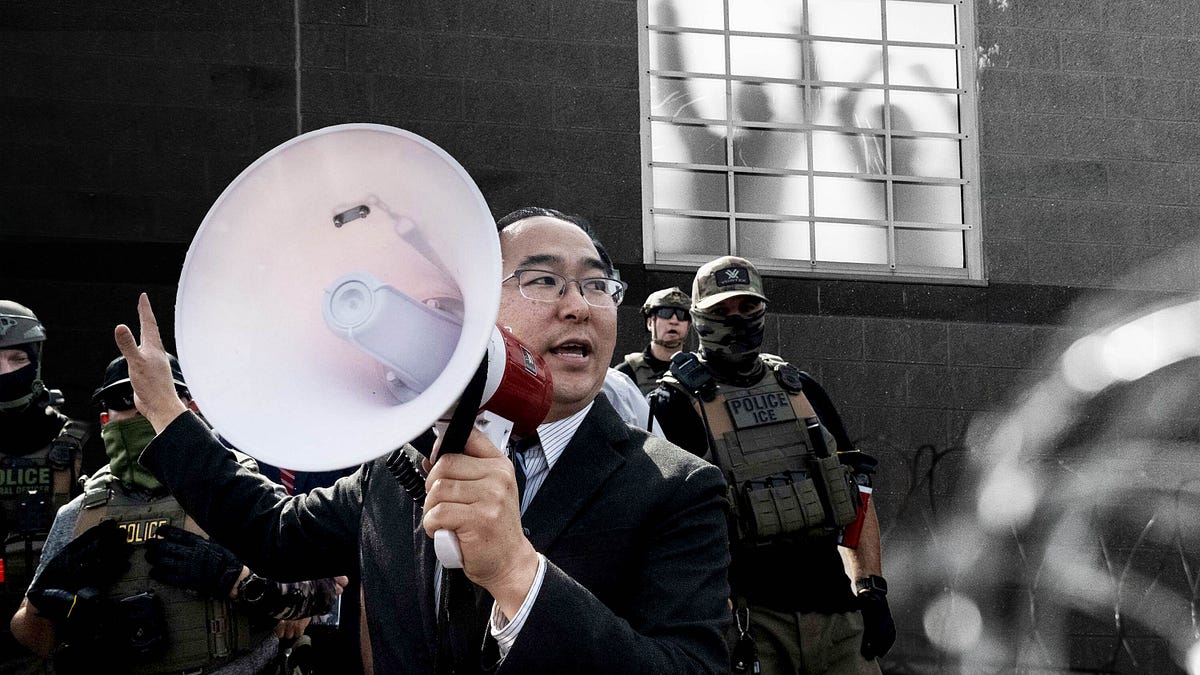
The Politics of Delaney Hall: For his latest edition of Huddled Masses, a friend of this newsletter, Adrian Carrasquillo, filed a detailed summary of how the events at Delaney Hall are shaping the overall political climate of 2026.
Julio Ricardo Varela edited and published this edition of The Latino Newsletter.
The Latino Newsletter welcomes opinion pieces in English and/or Spanish from community voices. Submission guidelines are here. The views expressed by outside opinion contributors do not necessarily reflect the editorial views of this outlet or its employees.