
In partnership with


1st Mission Support Command Soldiers salute during an award ceremony in Old San Juan, Puerto Rico, January 10, 2026. (Photo by Spc. Eric Javier II Amaro-Millan/Public Domain)
SAN JUAN — The plot: In a “daring” predawn raid, the United States captures Nicolás Maduro, president of oil-rich Venezuela, along with his wife, Cilia Flores. Accused of narcotrafficking and leading a drug cartel that never existed, the couple is flown to Manhattan and paraded — shackled and handcuffed — before the media. Back at his compound, President Donald Trump celebrates by posting a video of the operation set to Creedence Clearwater Revival’s often-misused anti-war anthem, “Fortunate Son.”
“I watched it literally like I was watching a television show,” Trump said after the raid. Welcome to the Mar-a-Lago version of Vietnam’s living room war — Trump’s Narcos Venezuela — soon to be a Netflix series, I bet.
I also watched the Trump show unfold on social media — Apocalypse Now–style clips of helicopters flying in formation and explosions illuminating the night sky during the legally questionable “Operation Absolute Resolve.” The spectacle transported me back to the 1980s — an era defined by “low intensity” war in El Salvador, a brutal mix of military force and psychological operations designed to win hearts and minds, and the capture of Panamanian strongman Manuel Noriega. Both were chapters in the U.S.-led “war on drugs” and its supposed fight against communism.
As a veteran correspondent who covered the region and reported from El Salvador, I kept thinking: the more things change, the more they stay the same.
It’s U.S. hubris. I have seen it before.
Back to El Salvador
I arrived in El Salvador in the late 1980s to cover the end of the civil war. Daily life played out to a soundtrack of gunfire, punctuated by the whir of helicopter blades slicing through the stifling heat.
It was a savage war financed by Washington. More than 75,000 civilians perished at the hands of government forces trained by the U.S. This bloody, 12-year conflict was waged under the pretense of fighting communism.
Young and inexperienced, I learned much from El Salvador: the terror of combat, the sort of fear that sends cold sweat streaming down your back. More than anything, Salvador taught me to discern what was real and what was not.
One bizarre encounter — among many — summed it all up for me.
Deep in the Salvadoran jungle, I met a Vietnam War veteran. A group of international journalists traveled through the country to cover an exhumation of villagers killed in a gun battle. The veteran sat beside a makeshift bodega on a dirt road, a walkie-talkie in hand and a case of beer at his feet, directing chopper traffic ferrying Salvadoran soldiers attacking a nearby town.
He looked straight out of Central Casting — dressed in black, classic Ray-Bans shading his bloodshot eyes. He told us he’d fought in Vietnam and was now “working” in El Salvador. I asked what he thought of the war. In a voice reminiscent of Lieutenant Colonel Bill Kilgore, he said, “Ah, best little war in town.”
A splendid little war — like Trump’s Venezuelan TV show.
Same Results?
After months of U.S. strikes in international waters — targeting boats alleged to be ferrying drugs, killing more than 100 people — and enforcing an oil quarantine on Venezuela, the U.S. has essentially left its regime intact. Acting President Delcy Rodríguez remains in power, provided she complies with Trump’s demands. When recently asked how long he planned to control Venezuela, Trump replied, “Only time will tell.” Meanwhile, the U.S. continues to target Venezuelan migrants for deportation back to their homeland.
It reminds me of when General Nelson Miles of the U.S. Army planted the Stars and Stripes over Puerto Rico, and promised Boricuas that the U.S. had come “to bring you protection, not only to yourselves but to your property, to promote your prosperity… and to give… the advantages and blessings of enlightened civilization.”
Images from this weekend showing U.S. troops in Old San Juan were just echoing Miles.
Enlightened civilization. Check. Protect your property. Sure. Sound familiar?
However, I believe time will tell that two wrongs don’t make a right.
Don’t get me wrong. Maduro’s fall is a good thing. For Venezuelans who suffered at the hands of the bloody Maduro dictatorship, the end justified the means. Who can blame them? Venezuelans have a legitimate and moral right to demand freedom, in whatever form it takes. The present regime wants Maduro back, but the Venezuelan people “just want their lives back.” They now exist between fear and hope, uncertain of what the future will bring.
The repression that defined Maduro’s regime lives on. According to The New York Times, based on reports from Venezuelans in the country and human rights groups, security forces have interrogated people at checkpoints and searched people’s phones, looking for evidence that they approve of Maduro’s removal. The U.S. has urged its citizens to leave Venezuela “immediately” after reports that paramilitaries, known as “colectivos,” are actively seeking out American nationals.
This repression has extended to journalists, as well, with 14 detained then later released, and one deported.
Few international correspondents were on the ground when the attack occurred, even though reports indicate that The New York Times and The Washington Post knew about the U.S. strike in advance. Both outlets could have dispatched reporters to cover the story or even preempt the attack. Instead, these internationally recognized news organizations chose to shelve the story to avoid “endangering” the mission. They later covered the attack as if they had no prior knowledge, with subheadlines like: “It was not immediately clear what caused the blasts.” Much of their coverage shifted to op-eds and speculation about Venezuela’s “next challenge.”
“The press can technically go in, but it’s difficult. Nobody is really in control. While Delcy Rodríguez tries to ingratiate herself with Trump, the one who calls the shots, the one with the guns is Diosdado Cabello [a high-ranking Venezuelan politician and military officer],” Guillermo Galdos, Latin American correspondent for Channel4UK, said when I reached him by phone back home in Peru. Galdos spent a week at the border, attempting to go into Venezuela.
And, even though Trump claimed the oil industry would spend $100 billion to repair Venezuela's dilapidated energy sector, he was rebuffed almost immediately.
"We have had our assets seized there twice, and so you can imagine that re-entering a third time would require some pretty significant changes from what we've historically seen and what is currently the state," Exxon's chief executive, Darren Woods, said during the meeting. Trump’s response? He threatened to sideline Exxon, the US’s biggest oil company, from the Venezuela oil deal, stating that “they’re playing too cute.”
Is there really anyone out there who believes Trump went into Venezuela because he cares about its people? The U.S. actions are more about Trump’s desire to dominate the Western Hemisphere than about making it better. Overnight, he has destabilized Central and South America.
“Trump's corollary [the Donroe Doctrine] to the Monroe Doctrine is naked power replacing diplomacy and all legal and ethical norms,” Sherman Teichman, director emeritus of the Institute for Global Leadership at Tufts University, told me.
“Maduro's seizure was an audacious extraction of an indisputable thug, by Trump, a more massively thuggish bully, unapologetically pursuing another suddenly revived imperialist adventure, the extraction of Venezuela's oil,” he added.
Nobody in the Trump administration seems to be disputing that.
“He effed around, and he found out,” Secretary of War Pete Hegseth said after Maduro’s capture.
It’s a revival of a dictum many ascribe (some say incorrectly) to Teddy Roosevelt: “If you've got them by the balls, their hearts and minds will follow.” Simply put, Trump’s attack on Venezuela, his threats to Colombia, Cuba, and Mexico, are in the service of the advancement of U.S. power in the region. And it’s not over yet.
A former News Director for Univision Puerto Rico and conflict correspondent, Susanne Ramírez de Arellano is a Columnist for The Latino Newsletter.
The Latino Newsletter is a 501(c)(3) nonprofit organization. Help us reach our $50,000 goal to fund our podcast’s third season and to offer opportunities for journalists to file their stories without paywalls or paid subscriptions.
And Now a Word From Our Sponsor
A big 2026 starts now

Most people treat this stretch of the year as dead time. But builders like you know it’s actually prime time. And with beehiiv powering your content, world domination is truly in sight.
On beehiiv, you can launch your website in minutes with the AI Web Builder, publish a professional newsletter with ease, and even tap into huge earnings with the beehiiv Ad Network. It’s everything you need to create, grow, and monetize in one place.
In fact, we’re so hyped about what you’ll create, we’re giving you 30% off your first three months with code BIG30. So forget about taking a break. It’s time for a break-through.
What We’re Reading
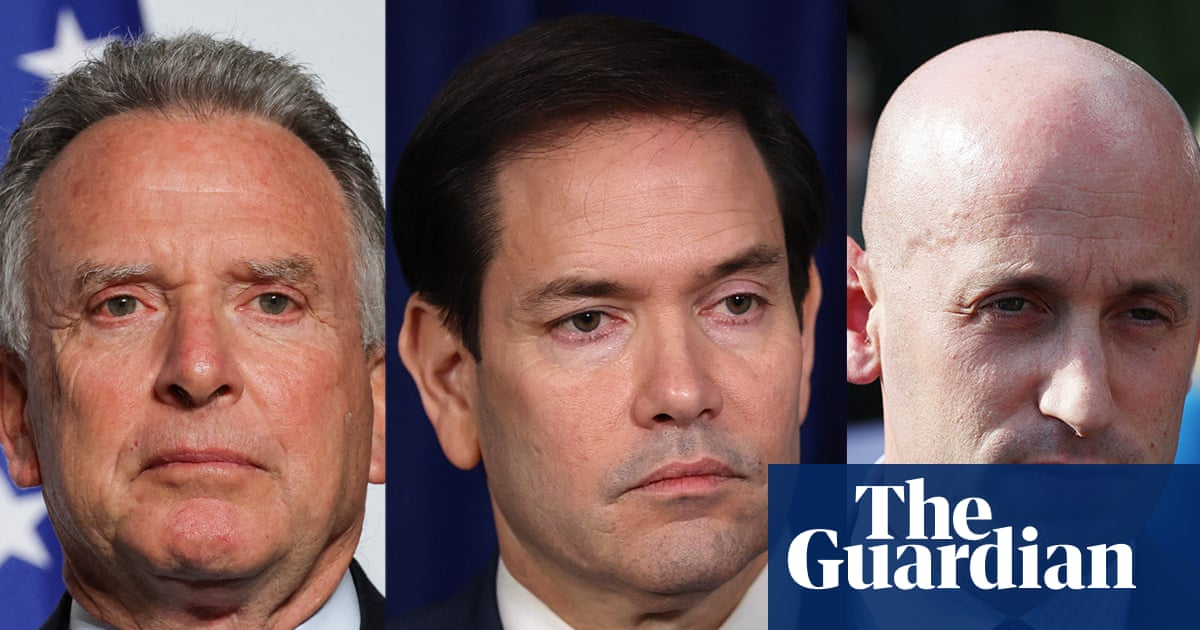
Everybody Wants Trump’s Ear: From The Guardian, a deep dive into how Trump’s circle, including Marco Rubio and Stephen Miller, are dueling over Trump’s attention span in hopes of convincing him that their foreign policy goals are the way to go.
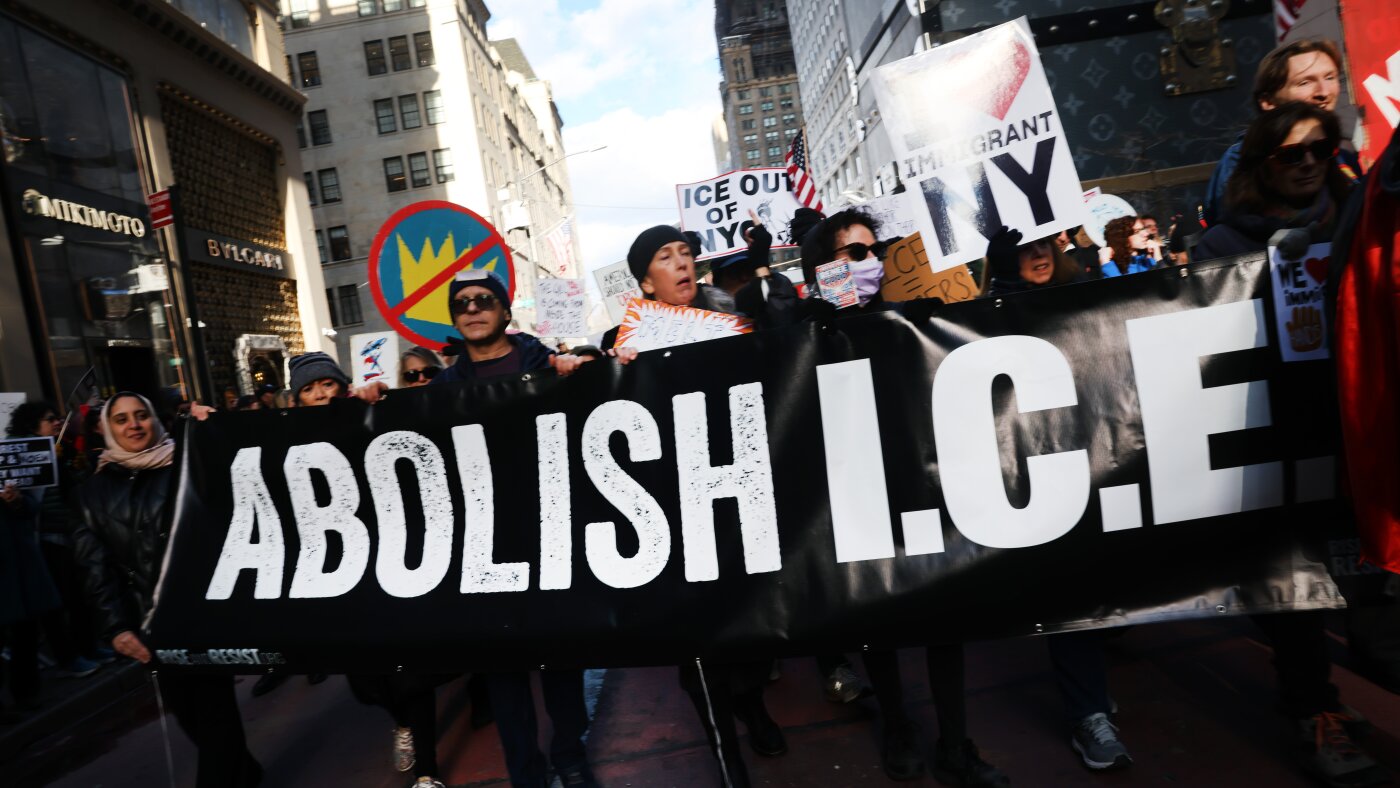
Nationwide ICE Protests: From NPR, there were at least 1,000 anti-ICE events planned across the United States over the weekend following the killing of Renee Good by an ICE officer in Minneapolis.
Carlos Berríos Polanco edited and published this edition of The Latino Newsletter.
The Latino Newsletter welcomes opinion pieces in English and/or Spanish from community voices. Submission guidelines are here. The views expressed by outside opinion contributors do not necessarily reflect the editorial views of this outlet or its employees.