

(Via Canva Pro)
Originally published at Double Click
Editor’s Note: Juan has granted The Latino Newsletter permission to republish his post about Venezuela. Juan is now a U.S. citizen and resident of Los Angeles. He was born and raised in Caracas and fled to the United States after the rise of Hugo Chávez. I made some edits to the original piece and also added an update from Juan’s Instagram page. — JRV
My phone notifications went off late on January 2, 2026, as grainy and dark images of what appeared to be helicopters and distant fires poured into a WhatsApp group my relatives had set up.
“Stay away from the window,” one of my cousins wrote. “There is fire and loud noises across the city. We are not sure what is going on." It was 10:45 PM Pacific time, and scattered, unconfirmed reports of explosions across Caracas were spreading on X/Twitter, with video footage showing smoke and fire, and what appeared to be low-flying military helicopters cruising over the Venezuelan capital.
On Saturday morning, the world learned that the United States, at the direction of President Donald Trump, had launched a multi-prong attack on Caracas and had captured Venezuela’s illegitimate leader, Nicolás Maduro, along with his wife, Cilia Flores.
The reaction across the American political spectrum, among Venezuelans worldwide, and the international community, was, as expected, conflicted at best.
In the coming days, you will hear politicians and pundits agree with a vast majority of the Venezuelan people on a single thing: Nicolás Maduro was a tyrant who mismanaged Venezuela’s economic and political systems, while routinely abusing the human rights of the people he ruled over.
However, that might be the only point of consensus as conversations surrounding Venezuela and Maduro continue in the days, weeks, and months to come. The people of Venezuela, inside the country and in exile, have no clearer picture about what the future holds for their friends, family, and nation as Trump pledges to “run the country until such time as we can do a safe, proper, and judicious transition.”

The only way to fully understand what the Venezuelan people want is to speak to them directly, regardless of their political leanings, because (surprise!) many of them have different views on what should come next for Venezuela.
Here are my three big questions on this developing situation. I encourage everyone to keep them top of mind whenever discussing Venezuela’s future.
Allies and Adversaries Will Not Stay Quiet About Venezuela
Perhaps one of the most significant and most underreported facts about Venezuela is the longstanding presence of Cubans, Russians, and Chinese nationals within the oil-rich nation. Fortunately, Tom Nichols over at the Atlantic has a detailed explainer of how Trump’s takedown of Maduro provides our adversaries a clear outlook on their own global interests: “…the president declared the ‘Donroe Doctrine,’ another moment that will stand for ages as an embarrassment to the United States and raises the question yet again of whether the commander in chief is cognitively stable enough to be ordering the invasion of other nations.”
Make no mistake — Russia, China, Cuba, and other United States adversaries may be issuing statements in support of Venezuela, condemning the United States, and calling on the United Nations to intervene — but, behind closed doors, strongmen across the globe are looking at Trump’s actions as permission to conduct themselves in a similar fashion.
Similarly, allies in the region are now trapped in a dilemma when it comes to what they can, or should, do regarding Trump’s actions against Venezuela. As POLITICO reports, the “whole hemisphere is in play,” noting that the side of the world is “paying attention, and attempting to push back on Trump through condemnations of the strike itself and warnings of what could come next.”
Will Congress Play Any Role in Trump’s Venezuela Oil Saga?
Democrats, and some Republicans, are touting the right message on how toppling Maduro will help lower the cost of healthcare, groceries, and other concerns facing American families at this moment in time. The New York Times reports that “Senator Chuck Schumer, Democrat of New York and the minority leader, said he would push for a vote next week on a war powers resolution to limit Mr. Trump's ability to take further military action without explicit authorization by Congress.” It also reports that “Senator Andy Kim, Democrat of New Jersey, said Secretary of State Marco Rubio and Defense Secretary Pete Hegseth had ‘blatantly’ lied to Congress in recent briefings when they said the administration's objective in Venezuela was not regime change.”
But will that be enough to raise alarms across the electorate regarding the Legislative Branch's constitutionally guaranteed role in declaring war? Right now, we must hope that is enough, for without a credible operation to deploy bilingual Latino and regional experts across the airwaves, Democrats risk missing their chance to speak directly to two important segments of the electorate: independents who are horrified by Trump’s actions and Hispanic voters in states like Florida.
Congress needs to go back to Capitol Hill and do three things:
Demand that the Trump Administration present a detailed plan on what constitutes “running” Venezuela, and, this is the important part, who will pay for such actions.
The Trump Administration has signaled that it has stopped deportation flights to Venezuela. However, what does Maduro’s toppling mean for the tens of thousands of Venezuelans who were stripped of immigration protections such as TPS? Congress needs to call on the Department of Homeland Security and demand answers to their plans for Venezuelans in the United States, considering some of the people fleeing from Maduro are now, ironically, detained in the same jail that currently houses the Venezuelan strongman.
Show the American people that Congress, a coequal branch of government, can lead during a time of deep uncertainty. For Democrats in particular, this means speaking directly to Venezuelans from various political leanings, showing up to community events, and booking Spanish-speaking talkers who have dedicated talking points about Trump’s lack of a plan for Venezuela.
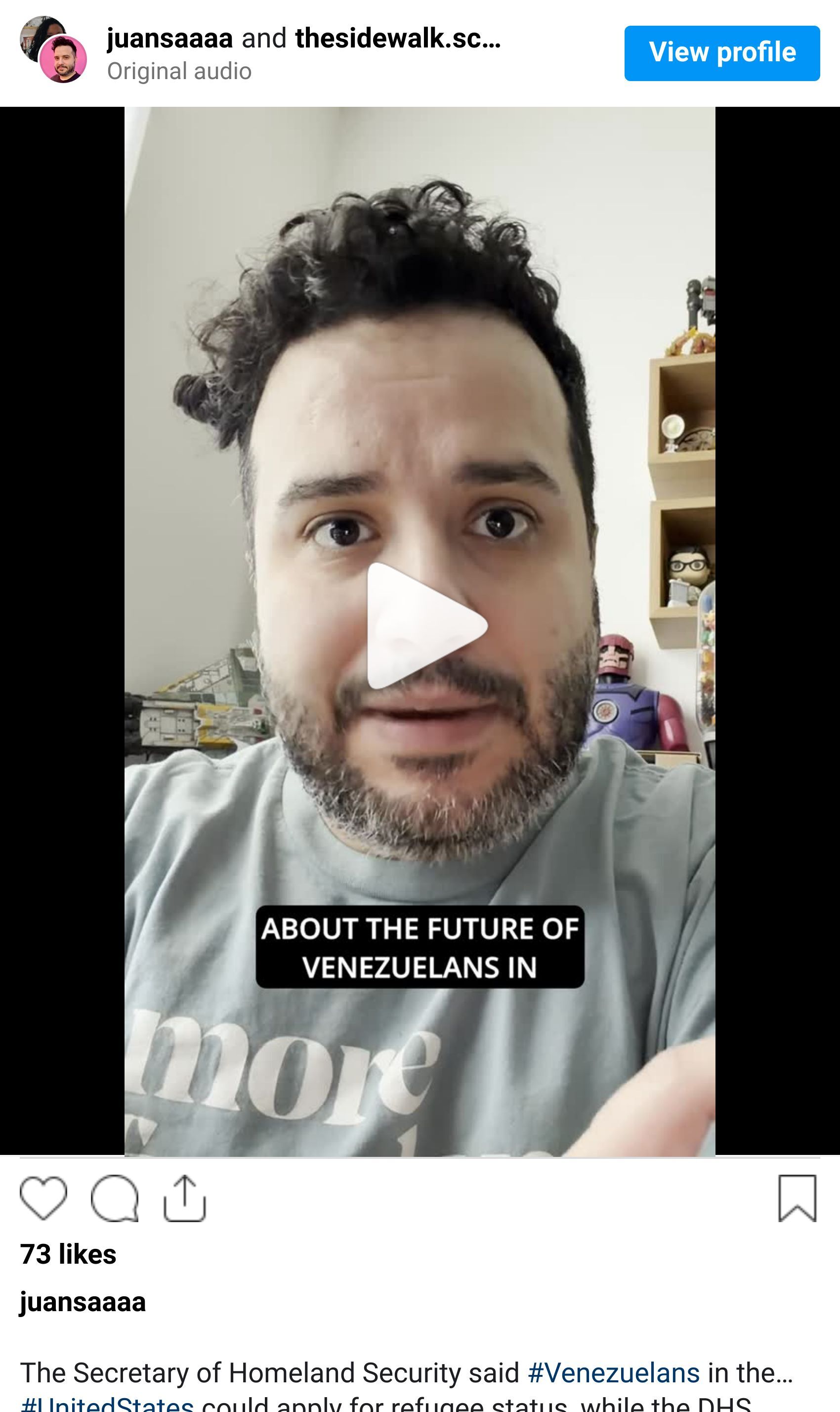
Meanwhile, the Secretary of Homeland Security said Venezuelans could apply for refugee status, while the DHS Twitter/X account contradicted the claim. So which one is it?
What About María Corina Machado?
Perhaps one of the most curious aspects of the Trump Administration’s actions on Venezuela is the sidelining of María Corina Machado, the Nobel Peace Prize winner who dedicated the prize to Donald Trump and invited Republicans María Elvira Salazar and Carlos Gimenez to watch the award ceremony in Oslo.
Trump categorized Machado, one of the few Venezuelan figures to mount a credible repudiation of Maduro, as someone who did not have the respect of the Venezuelan people. “I think it would be very tough for her to be the leader. She doesn't have the support within or the respect within the country. She’s a very nice woman, but she doesn’t have the respect,” Trump said.

This snub, although unsurprising, hints that Trump’s team may have discarded Machado and is willing to speak to someone, unclear even to Venezuelans themselves, about the future of Venezuela’s supposed transition. A reminder that removing Maduro has not led to the collapse of his regime, as the United States left three of Maduro’s top generals in Venezuela: Diosdado Cabello, Delcy Rodríguez, and Vladimir Padrino López.
But who exactly is that person, and will they promise concessions (read: oil) to Trump in exchange for political favor? That is the part that many of us should be asking in the coming days and weeks, as it is not the first time that Trump throws a Venezuelan opposition under the bus (see Juan Guaidó).
Elsewhere, Reps. Salazar, Giménez, and Mario Díaz-Balart would like you to think their support for Machado still matters. As the Miami Herald reports, they are advocating for Machado to become Venezuela’s next leader, a sharp break from Trump’s earlier comments. Of course, these are the same Republican representatives who have repeatedly failed to protect Venezuelans from Trump’s masked immigration agents.
There is still a lot to cover about Venezuela in the days to come, especially regarding the fate of Venezuelans in the United States and Congress’ reaction (if any) to this prolonged and extended conflict that the current administration has dragged the United States into.
Today, Venezuelans celebrate the ouster of Nicolás Maduro — whether that is in the privacy of their homes, on social media, or inside an ICE detention facility — as Trump and friends high-five each other in Washington, D.C.
Tomorrow, the questions about the fate of Venezuela will remain, and the lack of details from the White House — for the general public and Congress alike — should worry every single one of us.
Juan Escalante is a leading voice in immigrant rights. Once a DACA recipient, Escalante has since adjusted his immigration status and is a fixture at state, local, and national advocacy campaigns.
Donation Update
If you believe in creating new lanes for Latino journalists and voices, give to us anytime.
Julio Ricardo Varela edited and published this extra edition of The Latino Newsletter.
The Latino Newsletter welcomes opinion pieces in English and/or Spanish from community voices. Submission guidelines are here. The views expressed by outside opinion contributors do not necessarily reflect the editorial views of this outlet or its employees.