
In partnership with

Opinion for The Latino Newsletter

US Marine Corps helicopters fly above a U.S. Navy landing craft in Arroyo, Puerto Rico. (U.S. Marine Corps photo by Lance Cpl. Kyle Baskin/Public Domain)
SAN JUAN — Uruguayan writer and journalist Eduardo Galeano put it best: the United States’ “war on drugs” is “great imperial hypocrisy.” He argued that this so-called war was nothing more than a morally bankrupt excuse, a pretext for Washington’s gunboat diplomacy throughout Latin America and the Caribbean, all in pursuit of its own geopolitical interests.
That playbook, Manifest Destiny meets gunboat diplomacy, has now been dusted off by President Donald Trump and weaponized against Venezuelan President Nicolás Maduro, whom the U.S. accuses of leading a “narcoterrorist” regime.
Yet, lost in all this sound and fury — and at the heart of imperial hypocrisy — is the colonial exploitation of Puerto Rico: an archipelago that serves as a major gateway for drugs from South America to the United States, according to the Drug Enforcement Administration, and whose people have suffered the consequences for decades.
A U.S. colony since 1898, Puerto Rico is now a pawn in U.S. military actions against Maduro. The island bristles with F-35 stealth fighters, CV-22 Ospreys, MQ-9 Reaper drones, warships, more than 10,000 military personnel, and reopened bases — the most significant being Roosevelt Roads.
It’s an unprecedented show of force in the Caribbean — unseen since the U.S. invasion of Panama in 1989. Military strikes on alleged drug vessels, for which the Trump administration has not provided evidence, in the Caribbean and the Pacific have killed at least 104 people. The U.S. president announced a “total and complete blockade” of sanctioned oil tankers coming from Venezuela, deployed an armada of warships — including the world’s largest aircraft carrier, the USS Gerald R. Ford — and left the possibility of war with Venezuela on the table.
“We reserve the right, and have the right, to utilize every element of national power to defend the national interest of the United States,” Secretary of State Marco Rubio declared recently.
Clearly, these interests do not include the people of Puerto Rico. Even with a massive U.S. military presence on the island, not much has changed. Drugs continue to flow in, people continue to die in mostly the same numbers, either from a drug overdose or violent crime. The tragic part, drowned out by all the military jingoism, is that no one seems to care — not Washington, nor Jenniffer González, the Trump-supporting governor of the pro-statehood Partido Nuevo Progresista (PNP).
It’s as if whatever happens to Puerto Rico is simply collateral damage in Trump’s pursuit of regional empire-building.
The Drug Scourge
“I think the war on drugs is a big, big problem for us in Puerto Rico on many different levels. The underbelly of the war on drugs, the underbelly of capitalism, affects many people, not only the drug user,” said Rafael Torruella, executive director of Intercambios Puerto Rico, a community organization advocating for the integration of marginalized groups since 2009.
Puerto Rico has been ravaged by chronic drug use since the late 1960s. The situation has been exacerbated by natural disasters like Hurricane María, economic collapse, easy access to prescription painkillers, and the rise of synthetic opioids like fentanyl, which is 50 times more potent than heroin and 100 times stronger than morphine.
As of 2025, Puerto Rico remains crippled by a complex public health crisis and a policy focus on criminalizing drug use rather than prioritizing treatment. The opioid crisis has only intensified. Fentanyl, often cut with a horse tranquilizer known as tranq, which first appeared in Puerto Rico in the early 2000s, has become the drug of choice.
Between 2018 and 2024, 2,838 people died of fentanyl overdoses, according to Puerto Rico’s Institute of Forensic Sciences, accounting for 80% of all overdose deaths and making fentanyl, or its presence in other drugs, the leading cause of drug-related deaths on the island.
In March, a nine-month-old baby had to be treated with Narcan for a possible opioid overdose. One of the most tragic cases occurred last year, when 10 people died in the northern coastal town of Arecibo from fentanyl overdoses.
The Puerto Rican government has tasked the Department of Health and the Mental Health and Anti-Addiction Services Administration (ASSMCA) with establishing a 2025-2028 action plan for substance use. However, nothing has been done to modify the existing punitive legal framework, which still allows involuntary commitment and mandates treatment under threat of jail.
“It’s not the drugs, it’s the lack of public health approach to it that condemns people to illness, that concludes in death, to squalor, to shooting galleries, to corners where police can’t get you, to living in garbage, to being in the underbelly of capitalism,” Toruella said.
“We can’t say there has been a decrease in drugs entering Puerto Rico. We can say there has been a change in the rerouting of the entry of drugs into Puerto Rico,” DEA spokesman Tony Velázquez explained in a recent newspaper interview.
Federal and state authorities have reported fewer boats ferrying cocaine and several drug seizures. The most recent reported seizure occurred in November, when 1,168 pounds of cocaine were found aboard a cargo vessel from the Dominican Republic. Yet, it’s clear that traffickers have simply adapted, finding new routes and methods. Recent court records reviewed by The Latino Newsletter show that federal agents have intercepted pounds of cocaine and other drugs shipped through the mail.
“Right now, we are not seeing that all of this military mobilization has negatively affected drug trafficking, or the access to drugs on the street,” Torruella said. “I can’t report to you that, since Trump rolled out all his military, cocaine has doubled in price. —We have not seen that. This renewed war on drugs under the Trump administration has not really changed much of the scenario on the streets of the communities that we provide services to.”
On a Personal Note
My brother, “Larry” Ramirez de Arellano, an amazing surfer with a delicious sense of humor, died of complications from AIDS and Hepatitis C contracted through intravenous drug use. Heroin was the drug of the day in Puerto Rico back then. He was just in his early thirties. He didn’t live to see his children grow up, meet his grandchildren, or surf an ultimate wave in Rincón. Larry, along with two of his best friends, is part of those statistics that journalists include in their stories and the U.S. writes off as collateral damage.
Because of the stigma surrounding drug use and AIDS, my family refused to acknowledge what had happened, silent to the tragic reality that the scourge of drugs in Puerto Rico touches us all. If we don’t talk about it, it just doesn’t exist.
Yet, it’s madness to deny what we see today, every day on the streets of Puerto Rico — addicts hiding in the doorways of abandoned buildings, on the steps of department stores like Walmart in Santurce, begging for money in the middle of traffic, many just asking for help.
You can’t turn away and invoke a “war on drugs” and mask it as a solution. Call it what it is: a public health problem that has been criminalized and militarized for the sake of imperial designs.
A former News Director for Univision Puerto Rico and conflict correspondent, Susanne Ramírez de Arellano is a Columnist for The Latino Newsletter.
Help us reach our $50,000 goal by December 31 to power next year’s reporting, community storytelling, and a new audio documentary on Puerto Rico.

And now a word from our sponsor
Hands Down Some Of The Best 0% Intro APR Credit Cards

Balance Transfer cards can help you pay off high-interest debt faster. The FinanceBuzz editors reviewed dozens of cards with 0% intro APR offers for balance transfers and found the perfect cards.
Take a look at this article to find out how you can pay no interest on balance transfers until 2027 with these top cards.
What We’re Reading (and Watching)
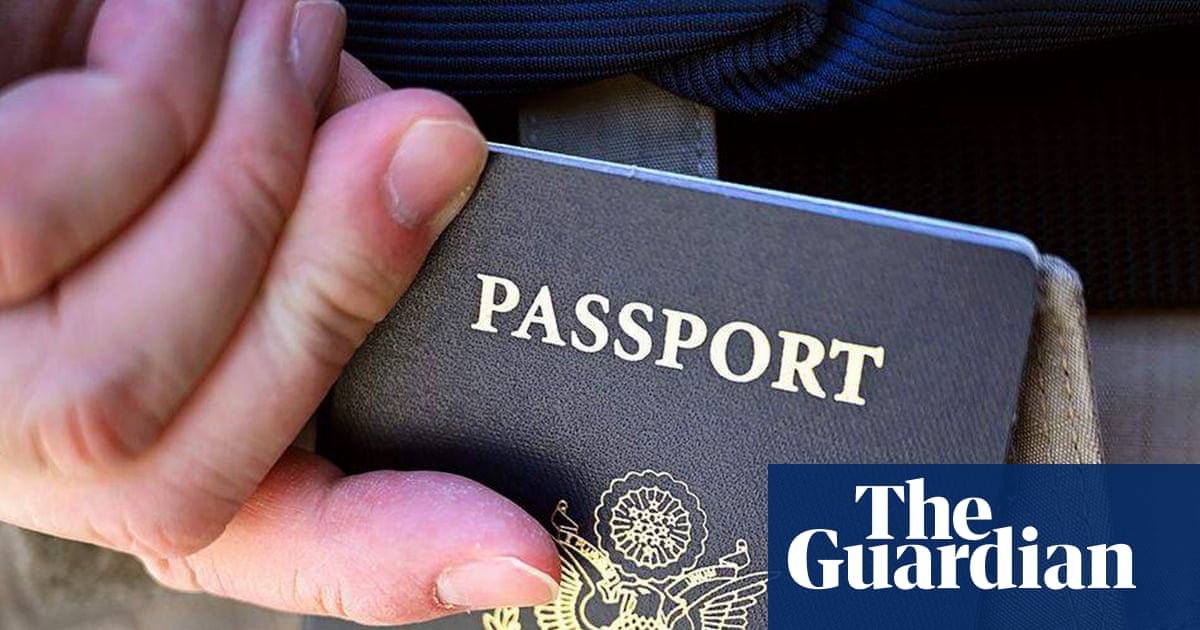
Scared of Being Stopped by ICE: The Guardian interviewed several U.S. citizens across the country who have chosen to carry their passports with them every day for fear of being detained by ICE. “No one should have to carry a passport just to exist safely in their own city,” said one person interviewed from Minneapolis
The CECOT Story: In 404 Media, after Bari Weiss spiked a 60 Minutes documentary about the brutal imprisonment and torture endured by Venezuelans deported to El Salvador’s CECOT prison, archivists managed to snag a copy of it posted to a streaming service and make it accessible to everyone.
Epstein and Puerto Rico: For his newsletter Heavy Weather, editor Carlos scoured the eighth volume of Epstein documents for mentions of when Epstein and his associates travelled to the archipelago and what business they conducted there. The documents show phone logs, grand jury subpoenas, and a chilling interview of someone with intimate knowledge of Epstein’s world.
Carlos Berríos Polanco edited and published this edition of The Latino Newsletter.
The Latino Newsletter welcomes opinion pieces in English and/or Spanish from community voices. Submission guidelines are here. The views expressed by outside opinion contributors do not necessarily reflect the editorial views of this outlet or its employees.