
In partnership with


SAN JUAN — Following the Trump administration’s attack on Venezuela and the subsequent capture of President Nicolás Maduro, the future of the oil-rich country is uncertain.
The Venezuelans who spoke with The Latino Newsletter, one in Caracas and two outside of the country, expressed differing sentiments about the attack and Maduro’s capture.
“The people are outraged and upset by the whole situation,” Rome Arrieche, a Venezuelan photodocumentarian, said from Caracas.
Yamily Habib, a historian based in France and editor-in-chief of mitú, said the feeling of seeing Maduro ousted was “bittersweet” because it was not done in the interest of Venezuelans, but because the U.S. seeks to control the country’s resources.
Liz Rebecca Alarcón, founder and CEO of the nonprofit media outlet Pulso in Florida, said she’s happy to see Maduro in court, but worried that the way it happened is corrosive to democracy in both the U.S. and abroad.
All three agreed that there is a profound sense of tension among Venezuelans as they wait to see what comes next for the country and its people.
U.S. Intervention
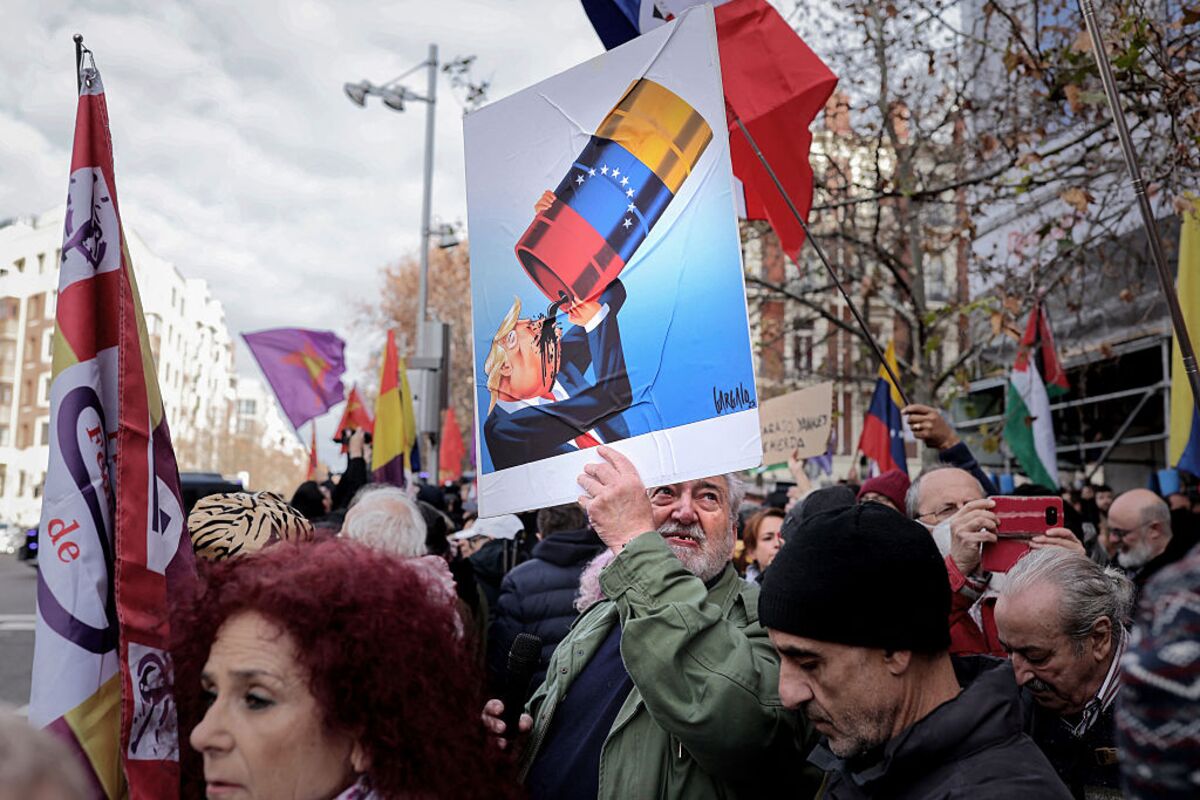
In Venezuela, many have mobilized to call for Maduro’s return and an end to U.S. intervention in the country. However, according to Alarcón, the people excited about Maduro’s ouster are afraid to publicly show it for fear of reprisals. Habib noted that many of the people she knows in Venezuela quickly went to get food and supplies, then immediately came back home to stay inside.
Photos and videos of the attack on Caracas that flooded social media show helicopters flying over the city and missiles creating balls of fire as they struck. Casualties have risen to 80, Venezuelan officials note. Both military personnel and civilians were killed during the attack, including an 80-year-old woman. Her nephew and neighbors were wounded during the attack as well. Meanwhile, the Cuban government has said that 32 Cubans were killed, including military and intelligence personnel.
Acting president Delcy Rodríguez has also called for Maduro’s return. The Trump administration accused him of “narco-terrorism,” a claim which Maduro has denied. On Sunday, Rodríguez struck a softer tone, calling for collaboration with the United States “on an agenda of cooperation oriented towards shared development within the framework of international law to strengthen lasting community coexistence.”

Anti-U.S. intervention protestors during a demonstration in front of the Federal Courthouse in San Juan, Puerto Rico, on January 4, 2026. (Photo by Carlos Berríos Polanco/The Latino Newsletter)
“In the end, what they did was extract a piece of the revolution. It's not that they ended the process. Chavismo is still in power,” Arrieche said. However, he expects the Trump administration to pressure Rodríguez to comply with U.S. demands and possibly threaten her with the same fate as Maduro’s.
Both Habib and Alarcón were dismayed to see that Trump did not back opposition leader María Corina Machado, who won the 2025 Nobel Peace Prize.
“The authoritarian way in which Trump decided to do this, as well as choosing someone from the same Maduro regime, to me, is a sign that he wants a puppet of the United States in control of Venezuela,” Alarcón said.
Habib explained she’s pausing to wait and see until the political outlook becomes clearer. While many Venezuelans are cheering the ouster of Maduro and the possible fall of Chavismo, she believes that it will likely become clear that the Trump administration only took him out to be able to more easily exert its political will and control over Venezuela.
The U.S. has long accused Maduro of being the leader of the drug-trafficking Cartel of the Suns, which it claims is a foreign terrorist organization. Experts have explained that the organization is more of a loose network of cells rather than a hierarchical organization. The Department of Justice’s indictment accuses Maduro, his wife, and three others of crimes related to “narco-terrorism” and drug smuggling, as well as possession of a machine gun. This indictment supersedes a 2020 indictment that charged Maduro with similar crimes.
Maduro appeared in court in the Southern District of New York on Monday, where he and Flores pleaded not guilty to all charges. “I am the president of the Republic of Venezuela, and I am here kidnapped since January 3, Saturday,” Maduro said in Spanish in court. “I was captured at my home in Caracas, Venezuela,” NBC reported.
Following the attack and the announcement of Maduro’s capture, President Trump said that the U.S. would “run” the country without explaining the framework for what that looks like. However, he and other Republican officials expressed a desire for a pliant administration that would allow them to exploit the country’s oil reserves, the largest in the world, and other natural resources.
Fighter Jets in Puerto Rico
Shortly after the Saturday morning U.S. attack on Venezuela, The Latino Newsletter observed several F-22 Raptors at the once-dormant Roosevelt Roads Naval Base in Ceiba, which was reactivated when the U.S. began its Caribbean campaign in the Caribbean. The planes, widely considered the best fighter jet in the world, had not been previously seen in Puerto Rico in 2025, according to Hector Rivera Valentín, a planespotter who has meticulously documented the military mobilization across the archipelago.

F-22 Raptors and other U.S. military aircraft sit at Roosevelt Roads Naval Base in Ceiba, Puerto Rico, on January 4, 2026. (Photo by Carlos Berríos Polanco/The Latino Newsletter)
“Why would you bring that plane here if you already did what you are going to do?” Rivera Valentín said when asked if he believed another attack was possible. Between Friday night and Saturday night, he heard military aircraft flying over his home.
The Latino Newsletter has previously reported that the U.S. military was in the process of ordering the necessary food support to stay in the region until at least 2027. Any future attacks on Latin American countries or military mobilizations will likely use Puerto Rico as a key strategic point for the deployment of military personnel and airships.
Interventions Without a Plan?
“We have just set a potentially disastrous precedent in terms of respect for international law, demonstrating that the United States no longer feels any adherence to or respect for the international statutes that regulate relations between states. Therefore, we are facing a new situation that could further destabilize the world, not just Latin America,” José Rivera González, political science professor at Sagrado Corazón University, said.
International law experts told The Guardian that the U.S. likely violated the terms of the United Nations charter, which states that countries must refrain from attacking each other and violating their sovereignty. However, the experts also agreed that the U.S. is unlikely to face any significant pushback for its actions.
Even though Maduro and First Lady Cilia Flores were removed from the power structure that runs Venezuela, the political apparatus that surrounded them remains in place, which could prove oppositional to U.S. designs for the country and the region, Rivera González said. Using regime change operations in Afghanistan and Libya as examples, he explained that international interventions without a plan to deal with the power vacuum they cause often lead to political and violent chaos.
It’s unclear what comes next for the country, especially as Rodríguez signals some willingness to collaborate, or at least not butt heads too much, with the Trump administration.
“Without a doubt, it is part of a new assertion of U.S. regional hegemony,” José Molinelli González, professor of International Relations at the Interamerican University, said about the attack.
Molinelli González explained that part of the U.S. interest in the region is to access Venezuela’s resources, but also to keep them out of the hands of China and Russia. He does not rule out possible military actions against other Latin American countries that are seen as defiant by the U.S. government, such as Cuba. State Secretary Marco Rubio said that Cuba “is in a lot of trouble” during an interview with NBC following the attack. Meanwhile, Trump has said that the Caribbean country looks “ready to fall.” Trump and his cabinet have also threatened Colombia, Mexico, and Denmark with possible military action.
Several world leaders, such as Mexican President Claudia Sheinbaum and Colombia President Gustavo Petro, have slammed Trump’s mentions of possible attacks against their countries. Petro published an open letter on his social media, signed by Brazil, Chile, Colombia, Mexico, Uruguay, and Spain, rejecting the Trump administration’s actions and calling for adhering to international law.
“The worrying thing is that none of those countries has an illegitimate leader in charge. You can be left-wing or right-wing. You can agree or disagree with Sheinbaum in Mexico or Petro in Colombia, but those people elected those leaders,” Alarcón said.
Both international politics experts consulted by The Latino Newsletter said that rivals to the U.S. could view the attack on Venezuela as a precedent for similar attacks of their own, citing a possible Chinese intervention in Taiwan.
The Trump administration has not ruled out another possible attack on Venezuela.
“While the gringos are stalking the Caribbean sea, the attacks on Venezuela will continue. They do not move all that money for free,” Arrieche said.
Meanwhile, Habib believes that it’s unlikely there will be a large-scale attack against Venezuela. Instead, the Trump administration will try to force the Venezuelan government to concede to their wishes.
Help us reach our $50,000 goal to power next year’s reporting, community storytelling, and a new audio documentary on Puerto Rico.
And now a word from our sponsor.
Easy setup, easy money

Making money from your content shouldn’t be complicated. With Google AdSense, it isn’t.
Automatic ad placement and optimization ensure the highest-paying, most relevant ads appear on your site. And it literally takes just seconds to set up.
That’s why WikiHow, the world’s most popular how-to site, keeps it simple with Google AdSense: “All you do is drop a little code on your website and Google AdSense immediately starts working.”
The TL;DR? You focus on creating. Google AdSense handles the rest.
Start earning the easy way with AdSense.
What We’re Reading
Who’s Next? From the Associated Press, after the attack on Venezuela, several other countries could be next on the list for a possible intervention by the Trump administration’s intervention-happy foreign policy. Cuba, Mexico, Colombia, and Denmark are fielding threats from Trump and his cabinet.
Venezuela’s Oil and Trump: From Wired, even though Trump has made it clear that he wants to get Venezuela’s oil, there is no clear path to getting it.

Carlos Berríos Polanco is a journalist from Puerto Rico who covers climate, conflict, and their intersection. He is also the Deputy Editor of The Latino Newsletter’s San Juan Bureau.
Julio Ricardo Varela edited and published this edition of The Latino Newsletter.
Consider donating to The Latino Newsletter. Any contribution, no matter how small, helps keep this newsletter free and accessible to all. ¡Gracias mil!