
In partnership with


It’s been a while since I shared what I have been writing in my reporter’s notebook, and I thought this evening would be a good moment to highlight some of the many statements and story ideas that have hit my inbox over the past 48 hours.
On Wednesday, the Supreme Court issued its 6-3 ruling in Louisiana v. Callais, striking down Louisiana's 2024 congressional map, which had created a second majority-Black district after a federal district court and the U.S. Court of Appeals for the 5th Circuit found the state's previous map likely violated Section 2 of the Voting Rights Act (VRA).
Signed into law by President Lyndon B. Johnson on August 6, 1965, the VRA was landmark civil rights legislation that prohibited discriminatory voting practices — including literacy tests and other barriers used to prevent Black Americans from registering and voting across the South.

The majority SCOTUS opinion, written by Justice Samuel Alito, effectively gutted Section 2 as a tool to protect communities of color from racial discrimination in redistricting.
“That map is an unconstitutional gerrymander, and its use would violate the plaintiffs’ constitutional rights,” Justice Alito wrote.
He added: “In considering whether the Constitution permits the intentional use of race to comply with the Voting Rights Act, we start with the general rule that the Constitution almost never permits the Federal Government or a State to discriminate on the basis of race.”
Justice Elena Kagan read her dissent from the bench and left out the traditional “respectfully” before writing only, “I dissent.”
“Members of the racial minority can still go to the polls and cast a ballot,” Kagan wrote at one point. “But given the State’s racially polarized voting, they cannot hope — in the way the State’s white citizens can — to elect a person whom they think will well represent their interests.”
As always, the team over at SCOTUSblog has an excellent analysis of the ruling.
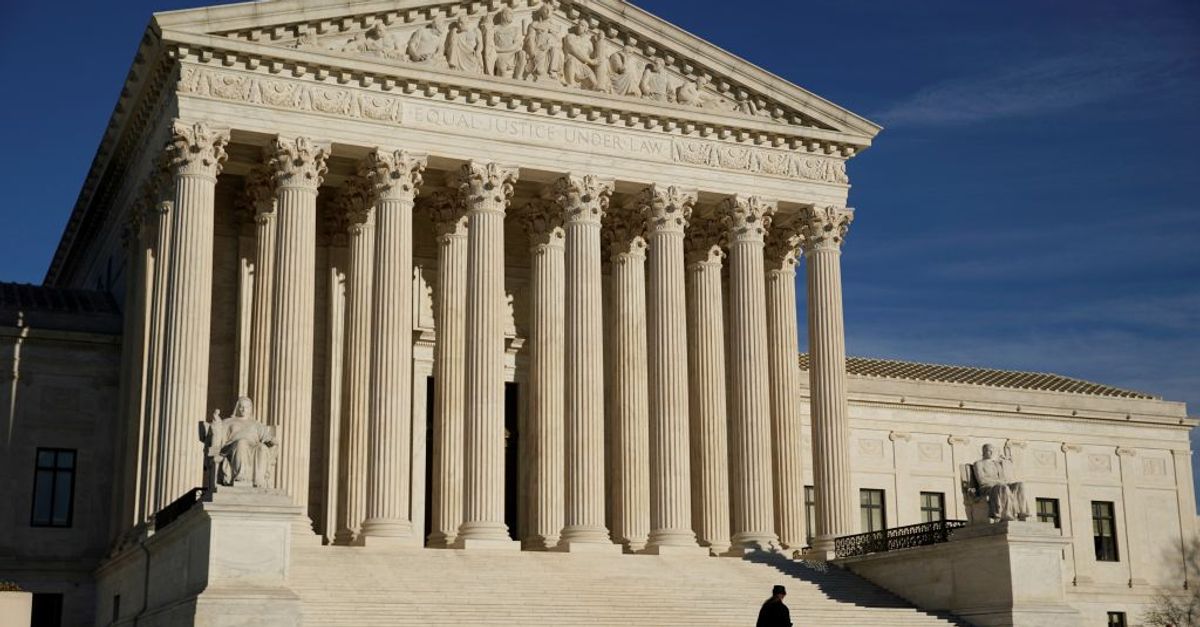
The fallout was immediate. On Thursday, Louisiana Gov. Jeff Landry suspended the state’s House primaries only — scheduled for May 16 — so the legislature can draw a new map first.
“The best way to end race-based discrimination is to stop making decisions based on race,” Landry said.
Early voting on the House seats was set to begin Saturday. All other races outside of the House ones were not suspended. Rep. Cleo Fields, whose district was ruled unlawful by the court, called Landry’s decision “the wrong move.”
“Rather than disenfranchising voters mid-election to redraw maps for political gain, we should let this election proceed as planned under the existing districts and address any redistricting in the proper cycle,” a statement from Fields said. “The fundamental right of every Louisianan to have their vote counted must not be sacrificed for a rushed political agenda.”
‘Not Since Jim Crow’
The Congressional Black Caucus (CBC), led by Chair Yvette D. Clarke (D-NY), described the SCOTUS ruling as “the death certificate of the Voting Rights Act” and demanded a vote on the John Lewis Voting Rights Act without delay.
“Not since Jim Crow have we seen this level of systematic disenfranchisement of Black voters,” Clarke said.
“To be clear: It is not just on Black communities to carry the burden of an extremist, right-wing government that sees our rights, humanity, and belonging in democracy as optional at best, and disposable at worst,” Clarke added later. “Our democracy’s best hope is that every American of goodwill stands up and says enough is enough. This fight is just getting started, and we will not be moved.”
The CBC also called for Supreme Court reform and term limits for Justices.
In a bilingual statement, Congressional Hispanic Caucus (CHC) Chair Rep. Adriano Espaillat (D-NY) noted the “decision targets the heart of our democracy,” and is “the latest step in a multi-decade effort to erase the progress that culminated in the Voting Rights Act.”
He added, “This decision makes it easier for those bad-faith actors to sideline and erase Black and Latino communities. But it’s not the end. It's a call for every American who believes in democracy and the rule of law to participate, to fight for the ideals of this great nation. We will prevail, and we will restore decency and fairness in our public life."
From the Latino advocacy world, Janet Murguía, president and CEO of UnidosUS, said: “We call on all voters to ensure they are registered to vote, and to exercise their right to vote. We will not be silenced.”
María Teresa Kumar, president of Voto Latino, noted that “this ruling makes it significantly harder to protect voters of color from racial discrimination and allows the dilution of representation through partisan gerrymandering — stripping Black and Latino communities of their meaningful opportunity to elect candidates of their choice.”
Voto Latino added that the decision “will put at risk up to 30% of Congressional Black Caucus seats and 11% of Congressional Hispanic Caucus seats in future redistricting cycles.”
Online Latinos, the VRA, and the WHCA Dinner Shooting
Also in my inbox was the latest REDESCover report from the Digital Democracy Institute of the Americas (DDIA), which tracks Spanish-dominant Latino conversations across social media and more than 3,300 public WhatsApp groups that use Spanish and Portuguese as their primary language. It is one of the most valuable resources I have found for understanding how Latinos consume and process news in real time.
Their latest report covered several big stories from the past week. On the VRA ruling — which DDIA noted landed minutes before they sent their newsletter — their early data shows a clear split. Progressive Spanish-speaking voices are framing the decision as a direct attack on Latino and Black voting power, using urgent language like “attack,” “risk,” and “panic.” Conservative Latinos are describing it as a necessary legal correction, responding with what DDIA characterizes as “a tone of validation and celebration.” DDIA said it will keep tracking the conversation.
I recommend the DDIA newsletter to anyone, so sign up here to get these reports.

The report also covered in detail how Spanish-dominant Latinos reacted to the April 25 shooting at the White House Correspondents’ Association Dinner. DDIA tracked the story through three distinct phases: the evacuation, the identification of the suspect, and the debate over the Secret Service response.
Raw, unedited video drove most of the early engagement — N+ Univision’s post featuring multiple angles of the evacuation generated more than 946,800 interactions in just 48 hours. As the suspect, 31-year-old Cole Tomas Allen, was identified, partisan narratives intensified quickly.
A $25 donation Allen made to Kamala Harris became a central talking point for right-leaning accounts, while mainstream outlets focused on his background as a teacher and Caltech graduate. On WhatsApp, reactions split between prayers for Trump’s safety and skepticism about whether the shooting was staged. DDIA also noted that Melania Trump’s push to have Jimmy Kimmel removed from ABC — after a monologue he gave days before the shooting — has produced a “Streisand Effect.” Instead of silencing Kimmel, the backlash has amplified his reach.
The Latino Newsletter is a 501(c)(3) nonprofit organization. Help us reach our goal to fund our podcast’s third season and to offer more opportunities for journalists to file their stories without paywalls or paid subscriptions.
And Now a Word From Our Sponsor
Protect online privacy from the very first click

Your digital footprint starts before you can even walk.
In today’s data economy, “free” inboxes from Google and Microsoft, like Gmail and Outlook, are funded by data collection. Emails can be analyzed to personalize ads, train algorithms, and build long-term behavioral profiles to sell to third-party data brokers.
From family updates, school registrations, medical reports, to financial service emails, social media accounts, job applications, a digital identity can take shape long before someone understands what privacy means.
Privacy shouldn’t begin when you’re old enough to manage your settings. It should be the default from the start.
Proton Mail takes a different approach: no ads, no tracking, no data profiling — just private communication by default. Because the next generation deserves technology that protects them, not profiles them.
What We’re Reading
Post Ends DEI Department: Via journal-isms, “The Washington Post has eliminated the team responsible for overseeing diversity and inclusion at the newspaper as the newsroom’s diversity figures plummet and owner Jeff Bezos punts on the diversity issue, saying that addressing it will have to wait until after he ‘fixes’ the Post, according to authoritative sources.”
Julio Ricardo Varela is the founder of The Latino Newsletter. He is also its current part-time publisher and executive director. He edited and published this edition.