

The national spotlight remains fixed on Minneapolis following the killings of two U.S. citizens this month, during separate confrontations involving U.S. Immigration and Customs Enforcement (ICE) operations.
As a food and culture journalist based in Detroit, I’ve spent the past several months reporting on how intensified ICE enforcement across the Midwest has reshaped daily life for the people who fuel the restaurant industry. Again and again, restaurant owners, chefs, and community organizers have described the same disruptions: empty dining rooms, COVID-level revenue drops, and employees forced to miss shifts as masked federal agents have become a familiar presence on city streets — particularly in Chicago.
Diana Dávila is the chef behind Mi Tocaya Antojería, one of the city’s most critically lauded Mexican restaurants. When she first began spotting federal immigration agents lingering just blocks from her home in Chicago’s largely Latino neighborhood of Logan Square this fall, she knew she would need to take action.
But how?
“It got ugly first, it felt devastating for me, as someone who totally wears my heart on my sleeve,” Dávila tells me in a phone interview. “It does take a second to digest and to get over these feelings of being angry, and so it did take a minute to really think about how do we respond? I’ve dedicated my professional chef’s life to Mexican cuisine. It’s what I get inspired by. It’s the very fabric of what I do on a daily basis, and so in seeing that I’m profiting off of this, it’s like, what can we do to help? It’s like almost having to slap yourself out of it.”
Raising Funds for Immigrant Families
It wasn’t long before scattered conversations between comrades in Chicago’s iconic restaurant scene eventually converged for Todos Ponen, a sold-out fundraiser held on January 19. The event featured more than 40 chefs at the Ramova Theatre and raised more than $100,000, providing 125 immigrant families with $800 grocery gift cards.
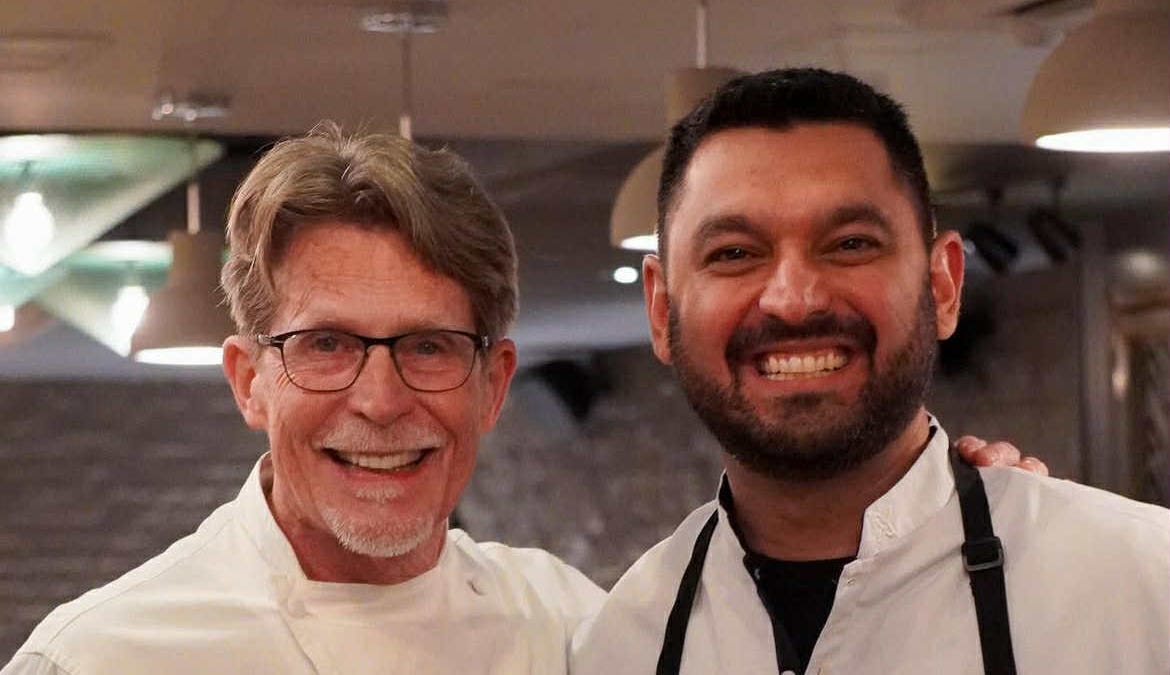
The fundraiser took shape against a backdrop of warnings shared with me earlier this fall by at least a half dozen chefs and restaurant owners — from family-owned establishments in Little Village and suburban steakhouses to some of the most celebrated restaurants in the region. Among them was industry heavyweight Rick Bayless, who described aggressive immigration enforcement tactics as an existential threat to Chicago’s restaurant workforce. Those concerns have only intensified as raids expanded.
For Dávila, the question wasn’t whether to respond, but what kind of help would actually matter in a moment like this. During the pandemic, she launched Todos Ponen — which in Spanish means “everyone pitches in” — and organized free meals for restaurant workers who couldn’t afford to stop working. This time, she knew that wouldn’t be enough. Families were losing income overnight, often with no warning, and a single hot meal couldn’t address the scale of that loss.
“Here, it’s very different,” says Dávila. “These are family members who are being literally taken without due process, and this is really having severe effects on our immigrant families facing food insecurity.
“So here we are brainstorming what else can we do instead of just one meal. Something that is going to have a much bigger impact to give them some more time to figure out what their next steps are.”
Businesses Devastated
Across town, Marcos Carbajal was reaching a similar conclusion. From his restaurants in Pilsen, Gage Park, and Little Village — neighborhoods already under intense scrutiny — he watched foot traffic evaporate. Employees struggled to get to work as enforcement activity surrounded their blocks. Customers stayed home, afraid to be out at all.
“For us, sitting right in the eye of the storm in the neighborhoods that we’re in, it has devastated my business,” says Carbajal. “We’re down much more than during COVID, and it really has put an extreme strain [on us].”
It became clear that it was time for the return of Dávila’s Todos Ponen campaign.
At Mi Tocaya Antojería, Dávila says the effects of enforcement have altered even the restaurant’s most everyday routines. She tells me that the front door of her restaurant, usually open as long as someone’s around, now remains locked at all times, and guests wanting to enter have to use a doorbell. Her team of 25, all from immigrant or first-generation backgrounds, also uses pre-shift to talk through the anxieties they may be experiencing, she says.
“We can’t let people take away our joy,” says Dávila.
Drawing on lessons from the pandemic, Todos Ponen organizers worked through trusted, immigrant-serving nonprofits to reach families in need while protecting their identities. Dávila and Carbajal partnered with groups including The Resurrection Project, Palenque Liberating Spaces through Neighborhood Action (LSNA), and New Life Centers of Chicago — organizations already embedded in neighborhoods most affected by enforcement. Organizers purchased $800 grocery gift cards from local supermercados — including Food Market La Chiquita, Super Mercados el Güero, and Carnicerias Jimenez — and distributed them to 125 immigrant families. Routing funds this way ensured help reached households quickly, without forcing families to expose themselves to further risk — while also keeping money circulating through businesses already under strain.
This response reflects a broader pattern emerging in restaurant communities across the Midwest and beyond, where informal mutual aid efforts have surfaced as enforcement intensifies and formal safety nets lag behind. In Chicago, volunteers have arranged grocery deliveries for families unable to leave home, while organizers have raised hundreds of thousands of dollars in support of street vendors forced off sidewalks to cover rent, food, and childcare. In Detroit, restaurant workers from the popular Mexico City-inspired Vecino mobilized a crowdfund campaign to support a detained colleague with legal fees and family expenses. And now, as enforcement expands into Minneapolis, organizers there are beginning to ask the same questions that surfaced earlier in Chicago and Detroit — how to act quickly, how to reduce risk, and how to build support before fear fully takes hold.
Serena Maria Daniels is a Chicana journalist based in Detroit and the founder of Midwest Mexican. Her bylines have appeared in Reuters, NPR, HuffPost, the Chicago Tribune, and The Detroit News, and she is the former editor of Eater Detroit and the founder of Tostada Magazine.
The Latino Newsletter is a 501(c)(3) nonprofit organization. Help us reach our $50,000 goal to fund our podcast’s third season and to offer more opportunities for journalists to file their stories without paywalls or paid subscriptions.
What We’re Reading
Editor’s Note: Hi, it’s Julio, founder and publisher of The Latino Newsletter. I decided to do something different today since we are at capacity for stories this week. Chicago-based journalist Hector Cervantes had initially filed a report about another Chicago immigration event from last week. We couldn’t fit the full piece last week due to our editorial schedule, so I am sharing a condensed version. — JRV
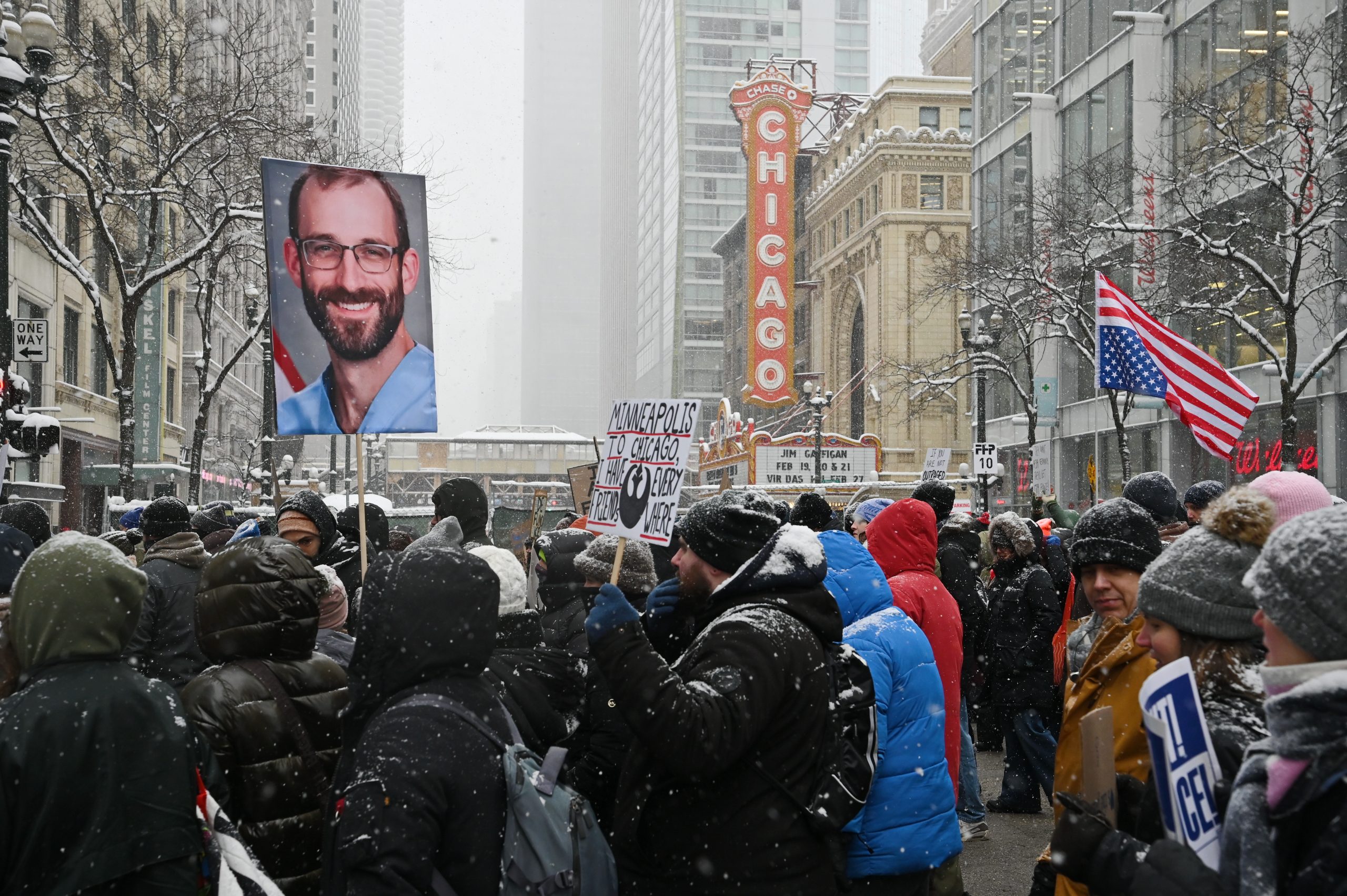
CHICAGO — As protests across the nation surge after federal agents shot and killed Minneapolis ICU nurse Alex Pretti this weekend, Block Club Chicago reported that thousands gathered Sunday for a rally and march that began at Ida B. Wells Drive and Michigan Avenue.
Earlier last week, before the latest Minneapolis news, Block Club Chicago hosted over 200 residents and local leaders at the Apollo 2000 Theater for “The Impact of Immigration: A Night of Storytelling,” a panel discussion on how federal immigration policies have reshaped life in the city, sharing stories of resilience, community action, and the ongoing fight for immigrant rights.
The panel was led by reporter Francia García Hernández, who covers Little Village, Pilsen, and Back of the Yards neighborhoods. The panel included four leaders supporting immigrant and working-class communities in Chicago: Eréndira Rendón, chief program officer of The Resurrection Project; Maria Orozco, outreach organizer at the Street Vendors Association; Karina Martinez, communications coordinator at the Brighton Park Neighborhood Council; and Delia C. Ramirez, Democratic U.S. Representative for Illinois’ 3rd District.
“What gave me hope was immigrants who still got up every day and went to work, saying, ‘We’re going to figure it out.’ The rapid responders, the whistles, the creativity people were using and going around the neighborhoods and seeing signs in restaurants and stores saying ICE was not allowed in truly inspired me,” Orozco said.
“So now, when you think of Chicago and its many immigrants, you really think of places like La Villita, Hermosa, or Logan Square, where the majority of immigrants come from Latin America. It's important to consider what it means for a community, for a city, and a nation to look around their neighborhoods and see people who now resemble the people on the stage and what that has meant for the backlash that we have experienced,” Rendón said.
At the event, Rep. Ramirez called for DHS to be dismantled, a position she has taken in the past.
“The Department of Homeland Security needs to be dismantled. The reason they act the way they do is that they label the victims as domestic terrorists, which gives them latitude to deny due process and violate their rights. The Department of Homeland Security lacks proper oversight, so we must dismantle it,” Ramirez said.
Hector Cervantes is a freelance writer based in Chicago who enjoys covering stories related to Latin culture, entertainment, and community.
Julio Ricardo Varela edited and published this edition of The Latino Newsletter.
Consider donating to The Latino Newsletter. Any contribution, no matter how small, helps keep this newsletter free and accessible to all. ¡Gracias mil!