

A street vendor sells No ICE shirts outside of the Coleman A. Young Municipal Center, near the Spirit of Detroit statue on Tuesday, January 13, 2026. (Photo by Serena Maria Daniels/The Latino Newsletter)
DETROIT — As cities across the country grapple with highly visible confrontations between federal immigration agents and residents, officials here are examining how the city can respond to enforcement activity that many residents say has long operated quietly in their neighborhoods.
U.S. Immigration and Customs Enforcement (ICE) has been a presence in Detroit since the agency’s creation after the 9/11 attacks, shaped by the city’s position as a border hub and its proximity to Canada. The state’s largest Mexican population lives in Southwest Detroit, near the Ambassador Bridge, placing federal agents in regular contact with a largely immigrant community and making immigration enforcement a long-standing part of daily life.
Councilmember Gabriela Santiago-Romero, who was raised in Southwest Detroit, has said that presence is not new. What has changed, she and others argue, is the scale, speed, and opacity of enforcement — and the city’s limited ability to intervene. That shift moved into sharper focus this week as the Detroit City Council began taking its first formal steps to examine how immigration enforcement operates locally, amid mounting community reports and little official data. The effort follows the fatal shooting of Renee Good by an ICE agent during an enforcement operation in Minneapolis, an incident Santiago-Romero said underscored how little information local governments often have about federal activity until something goes wrong.
Out of Sight
Unlike Chicago, Los Angeles, or Minneapolis — where federal immigration actions have unfolded publicly and at scale — enforcement in Detroit has remained largely out of the headlines. Federal agents have operated in the city for decades, and advocates say changes to immigration policy since the start of the Trump administration have quietly expanded who can be stopped or detained. Detroit has not required a dramatic show of force, as it has elsewhere — agents were already embedded, and now have broader discretion to act.
“Here, it's happening quietly and quickly. Here, it is very targeted. Here, it is happening at 3,4,5, 8 o'clock in the morning, while people are leaving off the freeway to go to work, to get gas in the car, or picking up their kids. It's not what you see in other cities,” Santiago-Romero said. “But it is happening here, and I think because of that, as a city, we haven't taken action or have been so vocal about it, but we heard [almost] every single week last year, and now beginning this year as well, residents saying ‘No, they're here. Do something about it.’ That's what we have to do, figure out what can we do?”
In the days leading up to Tuesday’s City Council meeting, Santiago-Romero issued formal memos to the Detroit Police Department and the city’s Law Department requesting information about any ICE cooperation, enforcement activity on city property, and whether the city has legal authority to restrict federal operations near certain locations.
Alongside those inquiries, Santiago-Romero said she wants to explore ways city officials can collaborate with mutual aid organizers who are already responding to immigration enforcement in real time.
The approach stops short of pushing for a sanctuary city designation — a move she has said is not under consideration in a majority-Black city still grappling with longstanding police injustices and the risk of state or federal retaliation tied to funding. While the City Council examines what is legally possible, she said, community members have been filling gaps left by the absence of formal oversight.
Public Comments
During Tuesday’s City Council meeting, organizers from groups such as Asamblea Popular Detroit were among dozens of people who addressed the council during public comment. On-the-ground activists like Omar Santana gave elected officials an inside view of the work that informal networks have been doing to protect families. In addition to providing households destabilized when a member of the family has been detained with food, cash, and temporary safe housing, mutual aid groups also conduct Migra Watch patrols and document ICE interactions — reports that often do not reach government officials.
“Personally, myself, I have moved families to safe homes because their homes are being stalked by quote, unquote ICE agents who don't have any identification on them,” Santana told council members. “Just last week, I had community members reach out to me about how their husbands were being detained while they were driving for the Walmart Spark Drivers [app] and have gotten beat up by these quote, unquote, ICE agents. Like, this is happening. This is real life. It might not be your reality, but it's the reality of many Detroit residents.”
Strengthening coordination with those networks and not relying solely on government responses to government actions, Santiago-Romero said, is central to understanding what is happening on the ground.
“When the government isn't saving us, when it's harming us, [sanctuary] isn't the solution. It's going to have to be the groundwork. I'm trying to build trust here so that we're able to do it together,” she explained.
In other words, if Detroiters want to limit ICE’s ability to detain residents, officials and residents alike will have to get creative.
That includes finding out what legal authority the city has to ban or limit ICE operations on city property and near what are known as “sensitive areas” like schools, clinics, and places of worship; reinforcing existing policies, like limiting police from sharing information with immigration officials; examining whether zoning or land-use laws could restrict federal activity near certain spaces; and pressing city departments to clarify what protections are already in place. Echoing elected officials in Chicago and Minneapolis, Santiago-Romero urged residents to continue documenting what they see — photos, videos, timestamps, and locations — saying that without evidence, the city cannot establish patterns or pursue accountability.
New Guardrails
Meanwhile, Michigan lawmakers in Lansing are also pursuing new guardrails that could help strengthen action at the local and grassroots levels. Outside the Coleman A. Young Municipal Center Tuesday morning right before the start of City Council meeting, State Senators Stephanie Chang and Mary Cavanagh joined advocates to call attention to a package of bills introduced last November that aims to limit how immigration enforcement operates in Michigan.
Under Senate Bill 508, law enforcement would be prevented from performing immigration enforcement in “sensitive locations, while SB 509 would ban government entities from providing identifying information without a court-issued warrant, and SB 510 would prohibit law enforcement officers from wearing masks and would require them to visibly display identification while working with the public.
For now, Detroit’s response reflects an early stage of reckoning — an attempt to reconcile long-standing community experience with the city’s legal limitations and a federal system largely beyond local control. Rather than offering a sense of resolution, Santiago-Romero said the moment demands honesty about the conditions Detroiters are facing and the work required to endure them.
“Unfortunately, under racism, this is going to be our life,” Santiago-Romero explained. “The whole [idea that] freedom is a constant struggle is very real. t is a constant fight, and until we have people in governments that actually care about people and not silo them or other them, this will always be our life. We have to talk about it in history, and to talk about it in ways that we have to move now, and it's a constant resistance. So unfortunately, I don't think this is ever going to go away. I think it's only going to get worse, and we need to be honest about why we're here.”
Serena Maria Daniels is a Chicana journalist based in Detroit and the founder of Midwest Mexican. Her bylines have appeared in Reuters, NPR, HuffPost, the Chicago Tribune, and The Detroit News, and she is the former editor of Eater Detroit and the founder of Tostada Magazine.
The Latino Newsletter is a 501(c)(3) nonprofit organization. Help us reach our $50,000 goal to fund our podcast’s third season and to offer more opportunities for journalists to file their stories without paywalls or paid subscriptions.
What We’re Reading
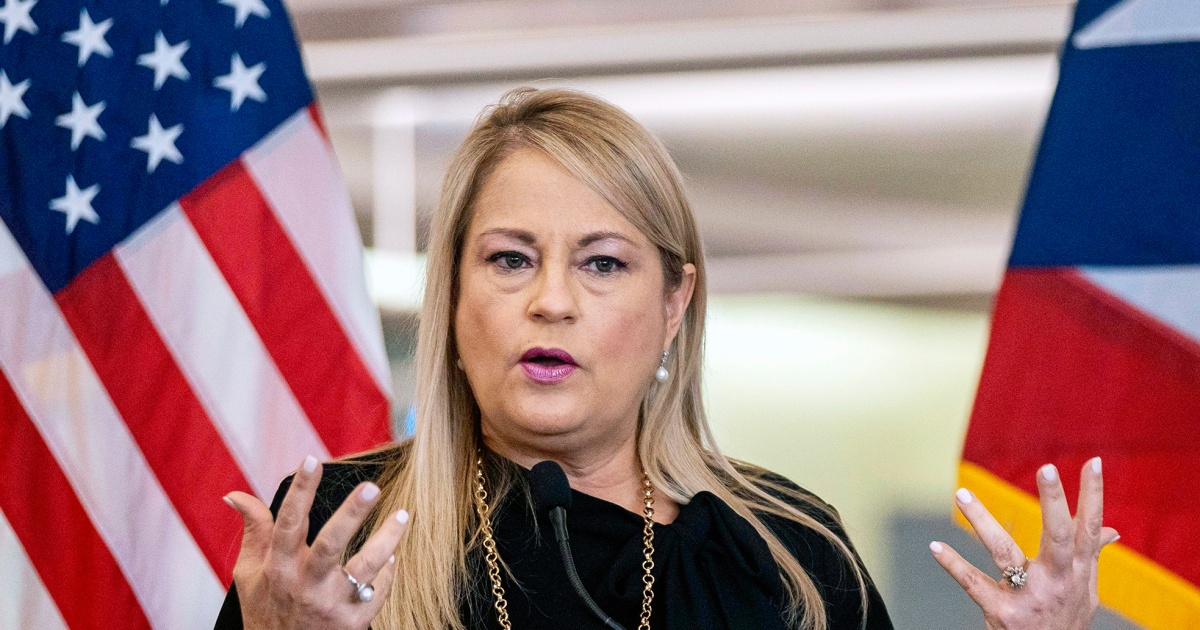
Former Puerto Rico Governor Pardoned: From NBC News, “President Donald Trump pardoned former Puerto Rican Gov. Wanda Vázquez Garced, who was accused of participating in a bribery scheme, a White House official confirmed Friday.”
Julio Ricardo Varela edited and published this edition of The Latino Newsletter.
Consider donating to The Latino Newsletter. Any contribution, no matter how small, helps keep this newsletter free and accessible to all. ¡Gracias mil!