
Three excavators demolish the East Wing of the White House, viewed from the west steps of the Treasury building on October 21, 2025. The photo was obtained by the Washington Post from a U.S. Department of the Treasury employee. (Public Domain)
WASHINGTON, D.C. — From my corner apartment, I can see everything.
The Washington Monument catching the last of the sunset. The Jefferson Memorial. The Lincoln Memorial lit from below like a promise. The National Cathedral rising in the distance. The Pentagon. Howard Tower. The blue light of the 14th Street Bridge and the rush of traffic crossing the Potomac.
The capital of the free world. All outside my window.
I moved here intentionally on the Fourth of July last year. I wanted to watch the fireworks from this window, to see them burst over the monuments, over the city, over everything this place is supposed to mean.
It was exactly as beautiful as I had imagined.
I stare at it differently now.
In this city, I became an architect.
Something is missing. Something was taken. And I am not sure this view will ever feel exactly the same.
I came to Washington from Puerto Rico 20 years ago.
Young. Hopeful. A graduate degree and a set of drafting tools and very little else.
A mentor brought me here. He had built his life in this city. He had stood on the steps of the Capitol and married a man, one of the first in the country to do so. He had testified before Congress for his right to do it. And then he did. He wanted me to know that Washington could hold that kind of courage.
He was right.
This city held me too.
My first real project here was a Class A office building. One million square feet. Constitution Square.
I started by designing columns.
Not the dramatic parts. Not the parts that photograph well or win awards. I started with the structural bones that most people walk past every day without a second glance.
But I learned something from designing those columns that I have carried into every project since.
Every decision in a building is a decision about people.
Where they move. How they feel. Whether they are welcomed in or merely permitted to enter. Whether the space says “you belong here” or quietly, efficiently, says otherwise.
That building became mine in ways I didn’t anticipate. The people who filled it — colleagues, friends, the daily rhythm of a place that felt genuinely alive — made it more than square footage. More than a line on a resume.
Last year, those same friends were told to leave.
Not the building. Their work. Their purpose. The years they had given to public service in the halls of a building in a city that had asked them to show up every day. And they had.
They walked out into a Washington, D.C. that was suddenly asking a question I recognized.
“Who belongs here now?”
I have been asking myself that question since the afternoon after the 2016 election.
I left my office at lunch and walked to the White House. I wasn’t alone. Nobody planned it. We just went — colleagues, strangers — all of us pulled toward the same place by the same instinct.
We gathered outside the fence along the South Lawn, and we stared.
Some wept. Some paced. Some just stood very still, hands wrapped around the iron bars like they needed something solid to hold them.
The capital city that cast no vote for president was grieving like it had lost one.
I stood there thinking about my mentor. About the Capitol steps. About whether the rights he had fought for, the ones that had made this city feel like mine too, would survive what was coming.
I was not yet married. I was afraid I might not be allowed to be.
I looked at that building and felt, fully and for the first time, what it means when architecture holds a promise.
And what it costs when that promise feels suddenly fragile.
None of us planned to go there that afternoon.
But we all went.
Because that is what public buildings do when they are built with intention. They become the place people go when they don’t know where else to go. When they need to feel held by something larger than themselves.
We didn’t go to a plaza. We didn’t go to a park.
We went to the White House.
Because it was ours.
Cities are never finished.
Twenty years in Washington has taught me this. Cities are not monuments frozen in time. They are not museums. They are decisions — made and remade, constantly, by the people with the power to make them.
Washington is a city of contested space. Every one of its corners carries a negotiation between history and change, between access and exclusion, between whose story gets told in stone and whose quietly disappears.
That negotiation has a process.
Planning commissions. Public comment periods. Architects, historians, community voices at the table. Not because the process is perfect. But because the alternative is that one person alone decides what a shared building means.
Thirty-two thousand people wrote in to say: “Not like this.”
People who had never filed a public comment in their lives. People who didn’t know the name of the commission, or how the process worked, or what a Class A building specification even means.
They just knew that something that belonged to them was being taken.
And they said so. More than 98 percent of them.
The response was to hold the vote online. To make sure none of them could show up in person and say it out loud in the same room.
This is what happens when architects are not at the table.
Not just the aesthetic failures. Not just the gold fixtures and the ninety thousand square feet and the spectacle of a ballroom where a historic wing used to stand.
The deeper failure.
The failure to ask the question every architect is trained to ask before a single line is drawn.
“Who is this for?”
Good architecture answers that question honestly. It designs for the people who will live in it, work in it, walk past it every morning, and feel something. It holds the memory of what came before while making space for what comes next.
The White House is not a personal legacy project.
It is the most symbolically loaded building in American democracy. It belongs — legally, morally, architecturally — to the people who look at it. Who fund it. Who stood at its fence one November afternoon because they needed it to hold them.
Ninety thousand square feet of gold does not hold people.

It impresses them. It overwhelms them. It reminds them of who has power.
That is not the same thing.
In early February, Bad Bunny placed a Puerto Rican casita at the center of the Super Bowl, and 135 million people understood immediately what it meant.

Not because they had studied architecture.
Because they had felt it.
A house that knew exactly who it was for. A porch that said, “Stay a while.” A building that made something enormous feel human.
La Casita, placed at the center of a spectacle, became an act of celebration. Of visibility. Of cultural pride on the biggest stage in American entertainment.
La Casa Blanca, placed at the center of a spectacle, is something else entirely.
Bad Bunny asked: “Who do I want to feel at home here?”
And he built for the answer.
That question was never asked on Pennsylvania Avenue.
And 32,000 people felt the difference.
I still stand at my window.
The Washington Monument still catches the sunset. The memorials still light up below. The 14th Street Bridge still pulses with the rhythm of a city that keeps moving, keeps deciding, keeps becoming.
Icons that define not just a landscape but history living in the present.
I stare at them, and I feel wonder.
I feel pain.
I feel the weight of knowing that cities are never finished — that they are always being decided — and that right now, the decision is happening without the right people in the room.
Thirty-two thousand voices said so.
This is mine.
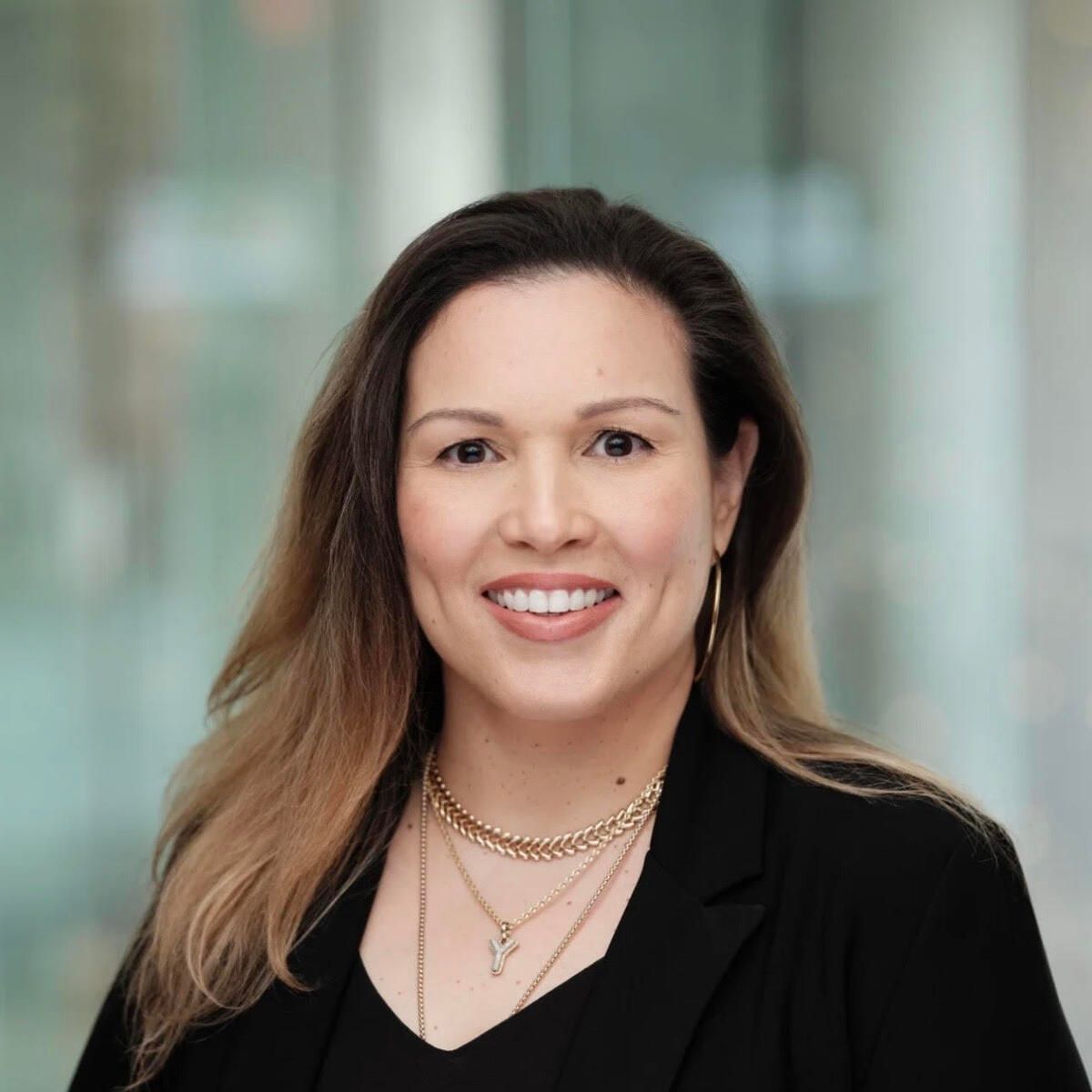
Yiselle Santos Rivera is a Puerto Rican architect, the 2026 AIA (American Institute of Architects) President-Elect, and a 20-year resident of Washington, D.C. She is the founder of YSR, LLC, a practice focused on healthcare architecture and organizational change, and a full-time lecturer at Howard University’s Department of Architecture. She is currently a doctoral candidate in Leadership Psychology at William James College. She has spent her career designing spaces that ask the question architects are trained to ask first: who is this for?
The Latino Newsletter is a 501(c)(3) nonprofit organization. Help us reach our $50,000 goal to fund our podcast’s third season and to offer more opportunities for journalists to file their stories without paywalls or paid subscriptions.
What We’re Reading (and Watching)
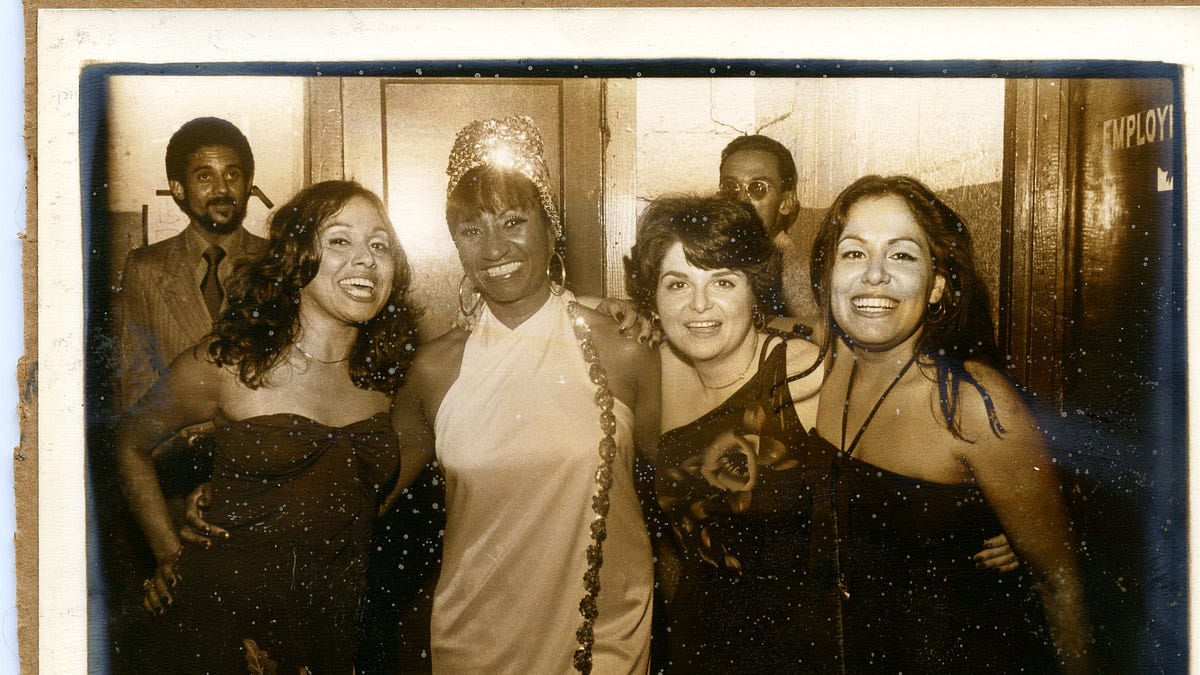
Women Salsa Pioneers: The story of Latin Fever, the groundbreaking female-led salsa band we should all know about, by the inimitable journalist Aurora Flores, who has been covering Latin music in New York City since the 1970s.
Una misma tierra: From our friends at 9 Millones and featuring the work of our San Juan bureau Deputy Editor Carlos Berríos Polanco, a powerful report about Puerto Rico’s Dominican community and how it is dealing with increased immigration enforcement on the island.
Nuria Net edited this edition of The Latino Newsletter. Julio Ricardo Varela published it.
The Latino Newsletter welcomes opinion pieces in English and/or Spanish from community voices. Submission guidelines are here. The views expressed by outside opinion contributors do not necessarily reflect the editorial views of this outlet or its employees.