
In partnership with


SAN JUAN — Over the weekend, Governor Jenniffer González-Colón signed a controversial bill into law, placing new restrictions on access to public information through records requests. Critics say that it hurts transparency and democracy on the archipelago by extending wait times for records requests, making certain information confidential, and requiring requestors’ identities be published.
“This opens the door for the government not to have to share something if it doesn’t want to,” Issel Masses, executive director of government watchdog Sembrando Sentido, told The Latino Newsletter.
Masses noted that certain provisions in the new law, such as having to notify agency heads when a request is submitted, would slow down records requests instead of speeding them up. The law contains multiple provisions that add new obstacles to requesting public information, as well as requirements that could lead to requests being considered deficient because the government has not provided the necessary information to make them sufficient.
Here are some of the changes brought about by Law 156-2025:
If a requested document is less than 300 pages or less than three years old, agencies have 20 business days instead of 10 to respond. The extension they can request has also been doubled from 10 to 20. If the document is more than 300 pages or older than three years, agencies have 30 business days, as well as the 20-day extension.
A request will not be considered sufficient if the requestor does not notify agency leadership, as well as public information officials for an agency. The law does not include provisions requiring the government to publish a directory of agency leadership emails and no public directory published by the government exists.
It would allow agencies or judges to decide what information is confidential, making it unreleasable to the public.
Agencies are no longer required to produce information in the format it was requested. In fact, a records request will be considered completed if an agency allows a requestor to visit their offices to inspect and reproduce them. However, the law does not contain provisions to allow sufficient time for inspection and reproduction.
Records requests must now include requestors’ personal information, which could lead to political intimidation or doxxing.
Agencies are not required to provide information if it is spread across several documents.
The $100/day fines imposed on agencies only come into effect after a judge has issued a determination forcing the government to hand the information over. The law also made it so requestors can only present records request lawsuits in San Juan. The fine is limited to a total of $18,000, which is chump change to most government agencies.
“The number of traps presented here are endless, some we already know, and others we will discover how they will be used to continue obstructing the right to information. I have no doubt that’s what they're aiming for when they not only approve a project like this, whose harm has been more than evident, but also fail to engage in dialogue with the people and address what the people have been demanding for months: the veto,” Masses said.
González-Colón defended signing the bill by saying that it was meant to avoid confusion and reduce the number of lawsuits filed against government agencies. She also cited fines on government agencies for non-compliance, as well as prioritizing requests by the media.
“Some of [the transparency law’s] provisions have generated confusion within the legal community, among citizens, members of the press, and government entities obligated to comply with the provisions of this law. This has resulted in a considerable number of lawsuits that could be unnecessary if the government had clearer guidelines for carrying out its mandate,” González-Colon said in a press release sent out after the law was signed.

Fact-Check
However, a fact-check by the Centro de Periodismo Investigativo (CPI) found that González-Colón’s statements were false. Written submissions filed by organizations against the bill’s signing did not demonstrate confusion about provisions in the bill, per the report. Similarly, they found the governor’s office did not provide them any proof that the new law would provide more access to information, and that the archipelago’s transparency law does not prioritize requests from the media.

“There’s definitely a sensation that this entire process, since it was started in the senate until it ended with the signature, was a process where false representations were made to all the organizations opposed to this project,” Carla Minet, CPI’s executive director and editor-in-chief, told The Latino Newsletter.
Minet explained that organizations had been assured by the Governor’s staff that there would be a meeting with the governor or her staff to discuss the opposition to the project. However, the governor signed the bill while they were all still waiting for a meeting date.
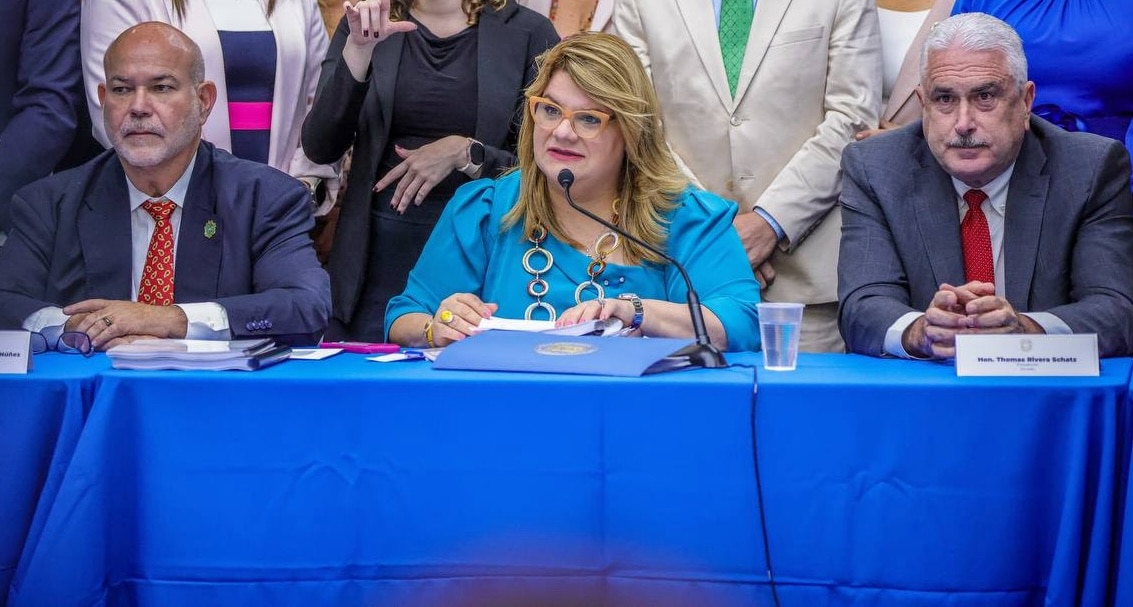
“It was a series of deceptions that speak volumes about the character and reliability of this administration,” Minet said.
My Own Experience
Journalists like myself have previously sued the government for records after they refused to hand over information or flat-out did not respond to records requests. In my experience, federal agencies like the FBI or ICE have been more communicative about records requests than Puerto Rico state agencies, like the Department of Natural and Environmental Resources, which routinely ignore requests until they’re sued.
The new law comes at a point when the Puerto Rican government has also signed other laws to limit access to public information. For example, a recently passed law limits access to data from the Demographic Registry, which experts have said will negatively affect scientific investigations and journalism.
“It’s truly lamentable. It demonstrates that the interests of Puerto Rico are not being represented, not being respected, and that democratic rights are not being respected either. We talk so much about defending democracy when we talk about global problems and conflicts, but in our own house, we’re attempting against a basic right,” Masses said.
More than 50 organizations, including news outlets and civil rights groups, had previously called for the governor to veto the bill once it arrived at her desk, citing its negative effects and its fast-track through the legislature with only one day of public hearings. During the hearing, the House President, Carlos “Johnny” Méndez, said he would not rush its evaluation. A day later, it was sent to a reconciliation committee, which added new amendments that further restrict Puerto Ricans’ fundamental right to information.
“The independentistas defeated, the minority defeated,” Senate President Thomas Rivera Schatz, who first presented the bill, said right before approving the project in the Senate, according to El Nuevo Día. Seconds before, he falsely claimed the project does not limit the public’s access to information or affects personal rights.
Democratic Representatives Nydia Velázquez (NY) and Alexandria Ocasio-Cortez (NY) both criticized the bill as it made its way through the legislature. A study by the Centre for Law and Democracy previously concluded that if the bill were signed into law, Puerto Rico would drop from 94th to 106th in its Global Access to Information Rating.
Puerto Rico has long been known for having issues with transparency. Experts have argued that a lack of transparency and access to information is what, in part, caused the archipelago’s continued debt crisis. Public policy experts told El Nuevo Día that a decrease in transparency could reduce economic activity because investors consider access to information a key metric when choosing where to invest.
About the Author
Carlos Berríos Polanco is a journalist from Puerto Rico who covers climate, conflict, and their intersection. He is also the Deputy Editor of The Latino Newsletter’s San Juan Bureau.
Help us reach our $50,000 goal by December 31 to power next year’s reporting, community storytelling, and a new audio documentary on Puerto Rico.

And now a word from our sponsor.
7 Ways to Take Control of Your Legacy

Planning your estate might not sound like the most exciting thing on your to-do list, but trust us, it’s worth it. And with The Investor’s Guide to Estate Planning, preparing isn’t as daunting as it may seem.
Inside, you’ll find {straightforward advice} on tackling key documents to clearly spell out your wishes.
Plus, there’s help for having those all-important family conversations about your financial legacy to make sure everyone’s on the same page (and avoid negative future surprises).
Why leave things to chance when you can take control? Explore ways to start, review or refine your estate plan today with The Investor’s Guide to Estate Planning.
What We’re Reading
Miller Pivoted from Mexico to Venezuela: A Washington Post exclusive reveals that Stephen Miller originally wanted to go after Mexican drug cartels, then pivoted to the deadly Venezuela boat strikes.

Bovino’s Back: Border Patrol Police Chief Gregory Bovino returned to the streets of Chicago on Tuesday, just over a month after he left the city. A spokesperson for U.S. Customs and Border Protection told WGN that the immigration enforcement campaign, Operation Midway Blitz, will continue. Bovino was seen leading a caravan of federal immigration agents throughout the city, starting off at businesses on the city’s southwest side and making their way north to the suburbs, where they were confronted by protesters, including Evanston Mayor Daniel Biss.

Serena Maria Daniels edited and published this edition of The Latino Newsletter.
Consider donating to The Latino Newsletter. Any contribution, no matter how small, helps keep this newsletter free and accessible to all. ¡Gracias mil!