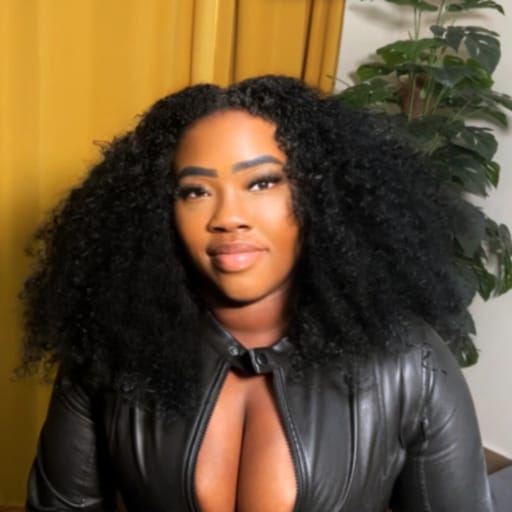
Transcript 0:00 [upbeat music] What's up, everybody? It's your host of the "Latino Newsletter" podcast, Michelle Zacarias, and today's featured guest is Katelina Esleston, otherwise known as La Gata. 0:13 She is the creator of the "Reggaeton con La Gata" podcast, founded in 2017 from her college dorm room, and it is the first femme-focused bilingual platform dedicated to the intersectional analysis and history of reggaeton. 0:29 [upbeat music] Hey, Michelle, thank you for having me. Um, it's a joy and a pleasure to be here. I'm excited to, to be in the hot seat of the "Latino Newsletter." Let's get it. All right, great. 0:43 Let's talk a little bit about you. For the listeners who may be new to your work, who is Gata, and what is "Reggaeton con La Gata" all about? Sure. Um, [laughs] it's really hard to answer that question. Who am I? 1:00 I have many titles, but I think for the sake of time in this conversation, um, I'm a multimedia artist, um, which means that I do a lot. [laughs] That means I'm producing. That means I'm recording music. 1:14 That means I'm producing music. That means that I'm writing scripts. That means I'm writing for TV. I, I really am a multimedia artist, and I also am a proud social entrepreneur. 1:27 "Reggaeton con La Gata" is a project, but it's just one project. 1:31 I own many projects, um, under my, my company, Alumina, so super proud of the work that I've done over the past 10 years, and that's how I'd say who, who I am, um, as a creative. 1:44 "Reggaeton con La Gata" is the first femme platform of reggaeton. I remember 2017 and scrolling on IG and saying, "Oh my God, there's, like, there's no reggaeton in pink." 1:57 [laughs] Uh, no reggaeton in pink, no reggaeton being curated by any women. Where are the women? Right. I remember those early days and, like, you know, shout out to DJ Blass, Yomo, Nina Sky, La Ziza. 2:12 Those are my earliest followers, Maldy of Plan B. So it was a very different time, you know, like, which is crazy. 2:20 I'm, I'm 30, and this was eight years ago, so eight years ago there were no femme platforms made by women. I had no peers. 2:27 Um, and so, yeah, that's, that's what "Reggaeton con La Gata" is, and that's my legacy, just bridging academia where it was born, entertainment, where I now reside. 2:38 [laughs] No, I love that, and especially because you're talking about the lack of representation, right? And your platform is the first that consistently centers, like, Black femme roots of reggaeton. 2:51 So what was the turning point for you that made you feel like you wanted to tell these stories? What was the inspiration? Have you always been just, like, a really big fan of reggaeton? 3:03 I have for sure always been a big fan of reggaeton, um, but what inspired "Reggaeton con La Gata" honestly was my capstone when I was a, a college, like, senior. I did a capstone. 3:14 I was studying the implicit bias of the Latin music industry, and I did a case analysis. So I, I interviewed four artists, two who are white, two who are Black. Um, one of the Black artists was Tego. 3:28 [laughs] Um, so two artists who are mainstream and two who are on the rise of each color, and I compared and contrasted their experiences. 3:36 And from what I was able to gather from this case analysis, I'm like, "Oh boy, um, this industry's a mess," you know? Um, and if it's a mess for men, I am queer, [laughs] I am Black, and I am a woman. I am triple whammy. 3:51 I'm everything that conservative people hate, and Latinos, some are muy conservador. Like, um, I know, like, Latin programming in the US likes to promote one image, but you go to Latin America, does not apply. 4:04 So, um, you know, I am hyper-aware of that juxtaposition and really having that insight on how things really work in the industry, I was like, okay. 4:14 So a common theme that I've gathered from all of the participants were if you're not adamant about making it known that this is what you did, people will erase you, and that's heartbreaking. 4:26 So yeah, I put my name in my platform [laughs] 'cause it's never gonna be a question of who did that? It's gonna be she did that. You know? I'm not playing those games. 4:35 And on the note of monetization, on a business note, I was like, all right, well, this means I need to learn what IP is and how to leverage that. And so it just set me on a path. Yeah. 4:47 I'm so happy to hear that because it's so often that, like, the work of Black femmes is either co-opted or erased, um, but you have, like, this paper trail of your work and contributions. 5:00 Um, and it's so interesting 'cause you mentioned that, you know, this inspiration actually started in the classroom, right? 5:06 It was centered around your capstone in academia, and you are now currently teaching a course on this. Is that correct? Yeah. So what a timeline. [laughs] Um, eight years ago I created "Reggaeton con La Gata." 5:20 Seven years ago, someone slides in my DM, and they're like, "Stop tweeting your ideas. Record it. Make it into a podcast." I'm like, "What's a podcast?" 5:28 Um, I didn't know what a podcast was and then, and now I've produced I don't know how many. 5:33 But it changed my life in regards to my protection, and so I created Perreo 101, and Perreo 101 has also gone on to become, like, a lecture tour. 5:42 So for the past five years, I've been hitting up, uh, universities across the country. First lecture was at Harvard. Um, pat myself on the back. 5:53 I've been there again since maybe two more times, so three times at Harvard, McMaster in Canada, Griffiths in Australia, uh, Fine Arts of University... 6:03 University of Fine Arts, excuse me, Belgrade.Uh, Stanford, NYU, Brooklyn College. Shout out to Brooklyn College. They're so sweet. All of them are sweet, but, you know, Brooklyn College is not Harvard. 6:14 They- they're, like, community-based. And so, no, mi punto es, um, yeah, it's been, it's been a journey. I would say that this is pretty much what inspired that, um, like, this 6:27 increase of discourse, and thank goodness I've been able to, to be part of it and, and in community and really learning, um, and dissecting what is reggaeton, what feels like for the first time for a lot of people because reggaeton has been so discriminated against for so long that really conversations that are happening within these past five years, six years, seven years, um, should have happened a long time ago, but they couldn't have because people were adamant about discarding it as, like, poor music or Black music or not music at all. 7:06 Um, and so, you know, me challenging that as, "No, reggaeton is intelligent," as, like, a sort of slogan for my platform has, you know, really put people in the hot seat in regards to, like, "Hey, yo, if you're really gonna go that route, di algo inteligente." 7:21 Like, you know, like, don't just, don't just write it off as if we don't hear sucerías in rock, sucerías in salsa, sucerías in all of these other genres, but simplemente porque uno no está peleando, it's not looked at in that sort of way. 7:38 I was actually gonna ask you if there are any specific challenges that you face when you're discussing these topics, like, in the classroom setting, right? 7:45 Because you're approaching reggaeton through this lens of, like, systems of power and race and identity. Has there been anything that surprised you about the dialogue that's come out of that? Surprised? No. 8:01 I'm, I'm less surprised in academia and more surprised in the field, um, because in... when I say in the field, uh, it's 'cause, and academics would agree with me on this, academics like to live in theory. 8:15 [laughs] We theorize, and we analyze, and we this and that. 8:18 In the field, I mean, like, I'm talking about in the industry, like, in the concerts, the decision-makers, the curations, the being in the studio, things like that. 8:28 I'm always just more so surprised there at the nuances and what happens behind the scenes, uh, because, you know, like, the only way to know the industry truly is to be in it, um, because otherwise things are just straight up smoke and mirrors. 8:42 [laughs] Um, there's a sort of facade that's sold to us, which is part of the magic, right? It keeps the music going. 8:48 It keeps us wanting to buy the fantasy that these artists are, are selling us, o la movie, como se dicen. 8:55 Um, but yeah, I would definitely say, you know, I'm more so surprised in the field and, um, one thing that I guess comes up a lot, you know, within this realm of, like, academia and whatever, still in 2025, is this phenomenon of is reggaeton really music? 9:14 I've... as much as I've critiqued Bad Bunny, I've also defended him, for example, in the LA Times, um, against a musicologist who was like, "No, no entiendo la importancia o el fenómeno," you know? 9:26 Or where I've spoken with Jorge Ramos, who's come to pause himself, who's of course part of an elite class, and, um, you know, really gave pause to really try to hear what I was trying to say and, and has been on a path ever since and is now an exclaimed fan of Bad Bunny. 9:43 And so, yeah, there's, there's been a culture shift for sure, um, I think of the work I've done and also that of my, my colleagues. Mm-hmm. 9:52 Yeah, and I think that's such an interesting conversation 'cause there is so much to critique and examine and, uh, interrogate about the genre, but there's alm- also so much that can be celebrated and, you know, um, platformed, and e- especially right now it seems like reggaeton is having another moment, right? 10:12 There's, like, a... I would call it a movement of, of thinkers, right? I am, am part of the movement. I am a leader of said movement. I'm not the only leader. 10:22 Um, I recognize, you know, different people who are adding their granito de arena to this beach that is reggaeton in this conversation, as Michael Manuel says. Villano Antillano, her existence is revolutionary. 10:36 Um, it's completely pushing the bar as to how we think of reggaeton and in the sense of, like, a cishet perspective, um, out loud because [laughs] queer people, we've always existed. 10:50 We've always interacted with reggaeton. I've been peleando with men and women my whole life, right? Y gay, you know? 10:57 Um, but now it's a conversation, and now it's being analyzed, and now it's like, you know, it's like, yes, this is feminist. And yes, this ca- I mean, or it can be, you know, if you want it to be. 11:07 Um, and so I would definitely say that's what's shifted, this, um, the step away from, like, the ci- cishet normativity in the sense of like, "No maricón, estamos." 11:17 [laughs] We're here, and we're queer, and, you know, like, and we've always been here, and we take up space, and we do it sin pena, sin vergüenza. 11:27 And I think by us being louder and prouder, there's, like, a ripple effect. That's why cishet men like Bad Bunny painting his nails is a conversation. It's why, I mean, he's not the only one. 11:38 Jhayco, I think of, like, a lot of reggaetoneros do that, right? 11:41 Um, there's been a shift in regards to masculinity and what's considered sexy and what the girls want, and they sort of, because las mujeres, to put it in the words of Wisin when we interviewed him for Loud, um, he was like, "Las que mandan reggaeton son las chicas." 11:59 It's true, you know? Like, we... like, as much as men think they're the center of the world with reggaeton, you're singing to us. [laughs]If we don't wanna dance, then the song's not a hit, you know? 12:11 We're the ones who validate it. 12:12 So, que te digo, I think that us determining what's sexy or really, like, being out loud or like, "I like when a man is soft," now these reggaetoneros are, are giving softer, um, and I think that's nice. 12:25 Personally, like, as a consumer, I don't care for it because a mi me gusta la suciedad. [laughs] I like that hard reggaeton. It's not my, my taste, but culturally I like what's going on because there's less machismo. 12:38 Right, and I think that brings up an important point because we do see someone like Bad Bunny who has the platform that he has challenging these, like, inherently masculine troll, challenging machismo at that level 12:53 can really, like, mean so much, right? And we can speculate all day about his identity or his orientation, but that doesn't really matter, right? He's still pushing the boundary in specific ways. 13:05 Um, but I'm wondering like, you know, because like you mentioned, so much of, like, the mainstream reggaeton is male-centric, what are some of the, I would say, guess misunderstood aspect of reggaeton's relationship with Blackness and Caribbean identity? 13:24 So first and foremost, I do wanna say, like, you know, I know people like to credit Bad Bunny with, like, pushing that envelope in regards to queerness, but I think that's too much credit for a cishet man. 13:34 Um, so I just wanna, like, for the record say, like, I want to give credit always to queer people because we're the ones whose lives are at risk, right? 13:44 Like, trans people in Puerto Rico and, and them being, like, murdered literally by transphobes, los bugarrones who are going to la isla, and that can't possibly compare to, like, a cishet experience. 13:55 So I do wanna say that for those who are listening. Um, but I do want to, you know, and to answer your question, I think that, you know, in part to... 14:04 in, in relation to this, I think it's important to really focus on the Black people who, who exist and what they're doing outside of the mainstream. I don't care about a chart. [laughs] I don't care about a cover. 14:20 I care about, you know, artists who are out here who have the audacity to put their art into the world and to make that the focus of who they are. 14:29 Now more than ever, especially in this economy [laughs] and this administration, um, it is such a bold move to really say, "I could, I could give up. 14:39 I can cave in to, you know, what society expects of someone who looks like me, and I can go that direction." But no. 14:47 Instead, I'm going to create art that challenges that, that que va contra la corriente, that, you know, that really represents the whole population of people. And in my opinion, I, I think that culture... 15:02 I think one of the most shocking things, even in relation to your previous question, like, culture doesn't show up for culture the way that we should. Um, we don't. 15:12 And a, and a classic case study for me to be very specific here, um, Goyo walked Victoria's Secret and sang and performed in 2023, and in 2025, Cardo G performs as well. Two very different levels of buzz. 15:27 Two very different levels. I don't see la cultura, you know, acknowledging that. 15:33 I don't see them being like, "Oh, you know, um, she, she did that thing already," and, and, you know, when it was actively happening, that support. 15:40 I think we, we really dropped the ball when it comes to supporting visually Black people on me identifico. 15:48 Um, I won't trauma dump here 'cause we're keeping it light, but I do think that there is a disconnect with how people pay attention to queer Black femmes especially. 15:58 That's an extremely fair and valid criticism, um, and definitely when we're thinking about, like, what is allowed to be mainstream, right? Like, who are the gatekeepers? 16:10 And I wonder if for you, having, you know, s- such a nuanced and in-depth understanding of how people are allowed to kind of rise in the ranks of, like, mainstream reggaeton, who are the artists that you feel are continuing the political tradition of reggaeton? 16:31 Nobody. [laughs] Um, I think in 2025, reggaeton has deviated, um, and I think it's okay to acknowledge that. 16:41 Um, one thing that I try not to do, and my colleagues we talk about this all the time, we try not to assign im- import- importance to people, um, before they've earned it or if they don't deserve it, just simply because we wanna see an aesthetic on a certain person. 16:57 If they're not a feminist and they're... you know, but they look like they might be, let's not call them that, right? 17:03 Um, and so no, it's very bold for me to say no one, but if you're s- if the q- the question was who's continuing it, um, and I'm thinking back to, like, the 2000s, who from the 2000s or from the '90s is keeping that tradition of political messaging alive? 17:21 Nobody. [laughs] Nobody. Nobody from back then today is trying to speak to the masses así. René has always, like, in some way, shape, or form involu- involucrado some sort of messaging in his music. 17:38 It's who he is, and so maybe, maybe him. Um, he gets on my last nerve, so I don't really analyze him too much. But, um, I do think that there's a lot of new gen artists who are doing a lot of cool things. 17:50 Of course, Bad Bunny's one of them. Um, Villano Antillano's another one of them. I think that literally... I can't wait till my book drops, y'all. 18:00 I think literally until people have a better understanding of how messed up the industry can be, 18:07 it's revolutionary just to exist, and th- I know how simple that sounds, but that's the truthUm, I think it's revolutionary just for the Black artists who exist, revolutionary. 18:19 The women who have the audacity, revolutionary. The men will always be fine. But, you know, the, the queer, um, queer people in, in regard- regardless of gender, revolutionary. 18:32 But women and Black people specifically just existing, for me that's, that's as revolutionary as we're getting right now. Um, with that said, that's just so I'm clear, within the context of reggaeton specifically. 18:46 I'm not saying that it doesn't exist in music, Latin music, but reggaeton, nobody is leading me to the mountain right now. [laughs] Nobody. Um, and, and I'm just being honest. Yeah. 18:57 Well, that's been one of the criticisms of Bad Bunny, right? Is that he hasn't spoken out enough in some ways, and I think, you know, you're damned if you're, if you do, you're damned if you don't. 19:08 Like, he's pushing boundaries in some ways. He's not doing a lot in other ways. Um, and, and I don't know. I don't know. I don't think there's like a... I, I can see clearly what I'd like our artists to 19:23 platform and showcase and amplify, and I don't think he's there right now. Would you disagree with that? [laughs] Like- I think my, you know... I'm producing right now Reggaeton con La Gata weekly on iHeart. 19:36 I have spoken to I don't know how many activists, I don't know how many artists, I'm literally not counting. 19:42 But one thing is clear amongst, you know, the general consensus of me and my, my friends who are activists, I don't consider myself one, 19:50 these artists are not gonna save us, and this generation has a really bad, um, really, oh my God, an infuriating amount of bad, um, expectation to be saved. We're- Yeah... we are who was... 20:07 We're gonna save ourselves. It's either we're gonna save ourselves or we're gonna be drowned based off of the actions we did not take. 20:14 And so, um, I think, you know, I don't want to contribute to the, the narrative of damn we do or damn if we don't. He's doing amazing things. He's doing way more than a lot- most people are, you know? 20:29 And that's true for a lot of artists. Um, and they didn't, you know... I really don't wanna contribute either to, they didn't sign up for this, 'cause there is a level of responsibility that comes with it. 20:41 I have said, case in point, um, to Balvin for example, I'm like, "If you don't know what to say, that's okay. I don't wanna hear you talk about Afro Latinidad. I don't. But I do wanna see you pass the mic." You know? 20:54 Like, you don't gotta say nothing. I don't wanna hear it from you, quite frankly. You know? I don't think you're gonna butcher it, and I think that's real, and I think people have been doing this their whole lives. 21:05 I think, PSA, like, stop looking towards these artists. Start looking at each other. Um, it's infuriating. I, 21:13 I, you know, last thing I'll, I'll say [laughs] quick because honestly me pica, pero, um, you know, it's become blatantly aware to, you know, evident to me as an educator that people don't understand the privileges and freedoms that we have, that we enjoy every single day, what it took for us to get them, and what it takes for us to keep them. 21:34 And that's why I'm starting a school, girl. And that's why Perreo 101 [laughs]... Perreo 101 is a Rubik's cube. 21:39 It started off as a podcast, it turned into a lecture tour, and then an instrumental album, and then an audiovisual experience, and then a party, and now it's a school. 21:51 What can you share with us in terms of upcoming projects or things that you'd like to talk about, events, things that you're really proud of? I am particularly proud of the work that I've done with Perreo 101. 22:04 I literally have been part of thesis projects ac- for students across the globe. France, uh, Belgrade, as I mentioned earlier, uh, Australia at Griffith University, um, in London, in Canada. 22:22 Um, and so, you know, that's the impact and I'm extremely proud of that, especially 'cause I didn't know what a podcast was. 22:29 I picked up a mic, I got a mic from Amazon, a little cheap one, um, you'd laugh at it today, and I'm, you know, I, I was in the room with my sister. 22:38 She's watching Netflix loud as hell, and I'm not thinking about headphones and the setup, oh, the growth, um, and, and sound control or nothing, I'm just yapping. 22:48 Um, I'm proud of the popcorn style that I took with that podcast. I was just like, "You don't understand maleanteo? Let's talk about it. You don't understand bellaqueo? Let's talk about it. 22:58 Um, you don't understand why these reggaetoneros are becoming pastors? Let's talk about it." Um, and so, you know, it's, it's been really cool. Today for it to emerge now as a online school, 23:11 um, that came as an, a direct response to, um, honestly the shutdown of my tour. Uh, y eso no fue por, you know, sin querer. 23:23 I've gotten, um, inquiries for this tour for the past five years consistently, and, um, this semester for the first time ever, um, it's not that there weren't inquiries, there were, they were rescinded not because I did anything or anything like that, but because Trump, let's get into it, Trump is affecting, uh, universities at the federal level. 23:44 Um, these DEI, you know, policy pullbacks, they're not just like headlines. They have real impact. He is literally threatening universities, departments over th- their branding. Latino studies, why do you need that? 23:59 Chicano studies, African American studies. He's threatening funding at the million dollar level, and that has a ripple effect over into someone like me who's a public scholar. 24:09 Um, and so that's quite literally what happened. You know, shout out to University of Santa Cruz. Shout out to University of Arkansas. They both reached out to me. That's what happened.Um, and that was my last straw. 24:19 I said, "All right, [laughs] Trump, you're officially affecting me." [laughs] And I mean, don't get me wrong, I've been out here and I've been advocating, and so it's not like that was the straw that broke camel's back. 24:29 But quite literally, it affected me, you know, on a financial level, and I'm like, all right, I have community, Perreo 101 is based in community. I have friends who are doctors. Let's see if they're down for stuff. 24:41 And so shout-out to Dr. Davila Ellis from JMU, shout-out to DJ Savvy, shout-out to, um, Isabella, Ariano, who are teaching Fempathan, that's intro to gender and sexuality here at Perreo 101. Shout-out to Dr. 24:57 Marisol LeBrón, who wrote Policing Life and Death, who is... That... Which is major. You know? It's, it's major. I need an affiliate code, Marisol. 25:05 I don't know how much I promote that book as if it's mine, but it's literally life-changing. You know? And, and especially instrumental into what's going on right now. 25:14 The militarization of the police, the, the guns that they're using, Puerto Rico was a stomping ground for that. Reggaeton was the first thing to be policed with AKs, literally. 25:24 And so for people to not understand the political aspects of reggaeton, to me, is hilarious. It's lazy, because by definition, reggaeton is intelligent. 25:34 And lastly, shout-out to PhD candidate Nick Rodriguez, and PhD candidate Megan Curray, um, from UCSD and Plymouth University respectively, who are helping me teach the Tego Calderón, um, course. 25:48 Which I think is crucial, now more than ever. You know? Because people are not really understanding of these roots. 25:55 And I think, you know, to your point, none of these courses, none of this work would be at risk if it wasn't meaningful or if it didn't contribute to something that was rooted in resistance. 26:11 Um, and so I really appreciate your contributions, your work. It's evident that you're able to kind of develop this following because you're passionate, and you're well-researched, and, you know, you're opinionated. 26:23 You get to have these thoughts out in the open for people to say, "I also feel that way." So, so much admiration and respect for the platform you've built, for the work that you do, for your contributions. 26:36 Um, to wrap things up, I wanted to ask you, in the spirit of the Perreo 101, what is your ultimate reggaeton track to dance to? That's a hard one. Um, 26:51 I'll give you one old school, one new school so I don't get chewed up. Um, [laughs] Um, new school, I don't know what brujería this song has on me, but it's not even... It's made by a Chileno. They're like, "Have me." 27:05 Um, I'm surprised they're doing the thing. But no, um, Juliano Sosa, Ñengo Flow, and I forget who else is on that track. 27:15 I'm, I miss those songs where there's, like, 10 people on the song and you don't know what's coming next. Gang. Vamo' a hacer cochina' cuando te busque en la nave. Dale, ponte exótica, puti, pa' que te grabe. 27:25 Tú me tiene' grabadito como este jarabe. Yo sé que- Okay. So they gave that to me in contemporary, so I had to stan. I love Cochinae remix. Um, es tan sucia. Yes. Sorry, you guys, but, like, me prende. I love that song. 27:41 And de La Vieja Escuela, it's not popularly known, but I love Sar- You guys know my name is Gata because of guayaba because of Plan B. But that's not the song. The song is ¿Quién Es Plan B? by Plan B. 27:55 [singing] Yo anoche me la encontré. Me hubo cabrona a mí y pa'l carajo me largué. Vine yo y me le acerqué. Sobre tu persona yo le pregunté. 28:04 Um, and that's from, I believe, their album, I don't know if it's an album or a mixtape, perdóname. El Mundo de Plan B with DJ Joe, si no me equivoco. But it's super, super, like, reggaeton sex, that era, and I love it. 28:18 I love it. Um, it's one of those songs that as a teenager I would play. You know, I'd have parties, and my mom would let me 'cause she wouldn't let me go outside. She's like, "You can throw all the parties you want to. 28:29 I wanna see you, um, with your nasty ass." And so [laughs] I would... 28:33 You know, um, I clean the house, and I'm in the bathroom, and I'm showering, and I have reggaeton playing, and then that song would come on, and I am running with my towel like, "Oh my God, wait, ¿quién? Stop. 28:44 What the..." Uh, not yet, because she'll end the party before it starts. So anyway, um, that's definitely a song. [laughs] A mí no me gusta... Yo no soy romántica. Not right now. I'm not in love. I'm single. And so 28:58 I, m- la música romántica no me atrae tanto ahora. Not right now. Um, not as a consumer. As a, as a recording artist, yes, and that's very shocking to me, but as a consumer, it doesn't do anything for me. So yeah. 29:12 Thank you so much for that. I am gonna add all of those songs to my playlist so I can listen thoroughly through them. Gata, thanks so much for being here with us today. Thank you for having me, you guys. 29:24 Make sure to check out Reggaetón con La Gata, um, weekly, and, and Perreo 101 University, please. 29:31 Shout-out to contributions in reggaeton, all the folks who maybe may not be in the mainstream headline but deserve their shine and their credit. 29:41 [upbeat music] It's a wrap for this episode of the Latino Newsletter Podcast, a show about us all the time. Don't forget to like and subscribe, follow us on social media, wherever you get your podcasts. 29:59 Until next time, this is Michelle Zacarias. This episode of the Latino Newsletter Podcast was produced by Joaquin Cotler, Juan Diego Ramirez, and Michelle Zacarias. It was edited by Julio Ricardo Varela. 30:14 Music by Cast of Characters via Soundstripe and by Javi Vibes and La Gata. Season two of the Latino Newsletter Podcast was made possible through individual donations and the Latino Media Consortium.