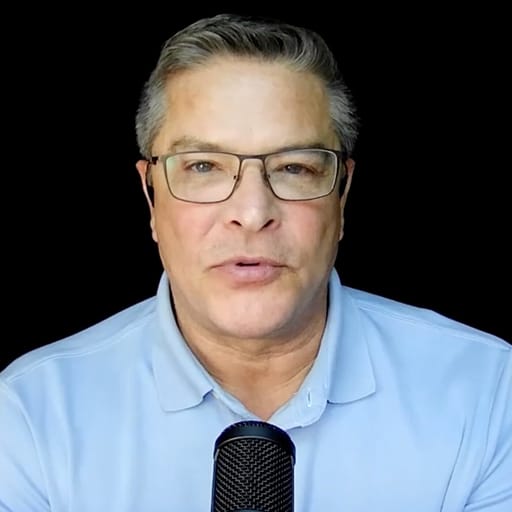
Transcript 0:00 [upbeat music] Welcome back to the Latino Newsletter Podcast. 0:03 I'm your host, Michelle Zacarias, and our guest today is John Carlos Frey, a six-time Emmy Award-winning journalist, documentary filmmaker, and critically acclaimed author. 0:14 He is also the host of The Rays podcast, which can be found on all streaming platforms as well as YouTube. John's work has been featured on major news outlets and streaming services. 0:25 He's also a nationally recognized voice in investigative reporting. Thank you so much for being here, John. It's a pleasure to be here. Thank you, Michelle. So let's jump right into it. 0:36 Um, you have done so much coverage of immigration, the border, Latino communities for many years now. Can you walk us through what originally pulled you into this work? Yeah. 0:50 The very first story that I had heard of, I was not even a journalist. I- I'm going to out myself. 0:56 I was an actor for a long time in Hollywood, and I heard of this story while I was still an actor about this, this weird water canal area in southern San Diego, California. 1:10 It was a canal that brought water from the Colorado River to the agricultural fields in the Imperial Valley, and which is east of San Diego. And the canal runs along the border. 1:22 And at the time, migrants would cross this canal to get into the United States. When they were coming in to work, it was a way that they could avoid detection by going into the water. 1:31 It's similar to what migrants face when they reach the Rio Grande River in Texas. And this canal was designed in a way to be swift. 1:40 It was deep, it was cold water, and it had become the deadliest body of water in the United States, meaning that migrants drown in this canal regularly. There were no safety features. 1:53 There were a couple of warning signs. There were no lights. If you went into this cold water, chances are you might not come back out. The sides of the canal were concrete. They were steep. 2:03 If you got into trouble, you couldn't swim. Well, we know migrants, for the most part, are wearing their clothes, right? 2:08 They're wearing tennis shoes and jeans and backpacks, and so they're not prepared for what they're going to encounter. 2:15 Anyway, it's kind of a long background story, but the reason I'm telling it is because nobody was helping these migrants. They were-- They had actually designed a machine. 2:24 The, the, the individual organization that managed the canal had designed a machine to pluck the bodies out of the canal. Wow. They weren't gonna put a tow rope in, ladders, lights, warning signs in Spanish. 2:38 None of that was happening. 2:40 They spent the money to devise a tractor, basically with a claw at the end of it, so that they could just dip into the canal and grab the individuals who had drowned in the canal, kind of like dead fish. Wow. 2:52 This story was, was told to me, and I was shocked by it. I grew up close to the border. My mother came to this country without papers. I saw her be deported. I, I witnessed what it was like. 3:05 I know the story of migration from where I grew up. I could see the border fence from my family home. 3:10 And so knowing that migrants were drowning and instead of trying to save them, let's just find a way to pluck the dead bodies out of the canal, was shocking to me. And I thought I needed to do something about this. 3:21 I, I had a contact as an actor, uh, at CBS. They happened to pass me on to CBS News, and I was telling them about this deadliest body of water and that they should cover it, and they needed to do a story about it. 3:34 I happened to somehow be put in touch with 60 Minutes, which is CBS News, and one step after another, and the, the pieces kind of fell in in a kind of a synchronicity sort of way. 3:48 Uh, they asked me if I could help them tell the story. They were interested. 60 Minutes did a piece on the All-American Canal, which is the name of the canal, of a very ironic name, All-American Canal. Yes. 4:01 And they did a very big exposé. They exposed the water agency that managed the canal. They talked about the deaths, about this machine. I produced the piece for them because I had contacts there. 4:14 And all of a sudden, from one day to the next, I became a journalist for 60 Minutes for CBS News. That was my first gig. Wow. How old were you when that happened? In my thirties. Wow. So- Yeah... 4:26 you, you kind of dove headfirst into this endeavor. Would you say this is the story that kind of got you to the point where you said, "You know, I can make a career out of this. 4:36 There's more stories that need to be told like this"? Or did you think at the time that this was gonna be like a one-off? No, it was a very strange experience for me. 4:45 It was, as we were putting the piece together about the canal, it was clear that this is what I was supposed to be doing. It was very clear. I had been an actor for a long time, but I was starting to get sour on that. 4:56 And when I stepped into this role, I was-- it was very clear that nobody was telling stories about migration. I was, at the time, very interested in the fact that a lot of migrants were dying in the deserts. 5:07 Um, border crossers were dying in the deserts and nobody was reporting on it. It was hundreds and hundreds of people who were losing their life on a regular basis. 5:14 I mean, if, if hundreds of people were dying in any other place in the United States, in a park or a traffic accident or a plane crash, it would be front page news. 5:22 But nobody was talking about the massive migrant deaths. So that's why, that's why I stayed, to try and pitch those kinds of stories. I'm independent. I'm a freelancer. 5:34 So the way that I would work was to find these kinds of stories, like the canal, take them to news agencies and see if they wanted to produce the stories. Mm. 5:44 So I mean, you've done, you know, so many different formats and styles of, like, journalism, right? You've done kind of more traditional journalism. You're also, like, a filmmaker. 5:54 Would you say there are, like, pros and cons to, like, the filmmaking world, um, or things that you can do in filmmaking that you can't do in traditional styles of journalism that draw you more towards that?Style of storytelling Yeah, I, I think that news, broadcast news for the most part, especially more recently, is for shit. 6:16 I mean, it's horrible to try and tell a story on broadcast television, which is the kind of journalism I do. It's... 6:23 I'm a broadcast journalist first, and so a documentary or a film allows you the freedom to go in depth and to really tell the nuances of the story. You have 90 minutes to tell a story as opposed to 90 seconds. 6:37 Most of the hits on broadcast news, especially national news, are 90 seconds. So how do you tell the, the actual details of the story if that's all you have? So I really have moved in the direction of documentaries. 6:52 I don't do national news anymore. I don't do live news or broadcast news anymore. I do strictly documentaries, is the only, it's the only venue that I work in now. Hmm. And podcasts as well, right? 7:04 Well, podcasts too, because, you know, the information that's out there, just like you know, it's really hard to get the truth and the facts, espec- especially in our community, in the Latino community. It's not covered. 7:15 I see reporters who are white, which is fine if they're great reporters. Um, I don't see very many Spanish speakers telling the stories on the national level, and they miss a lot. 7:26 You know, they have to bring an interpreter. I- they even do stupid things which I hated when, when I was working for the news outlets. 7:34 Um, I would have to ask the questions to the individual I was interviewing in English, even though the interview subject that I was talking to did not understand English. 7:45 It was just for the broadcast audience so that they would hear my words in English. I refused to do it. I said, "I'm going to speak to them in Spanish. That's their native language, and you're gonna subtitle it." 7:56 I mean, they won't even subtitle. They wanna make... I have to ask the question in Spanish and then come back and ask it in English so the people that watching would hear the English words. 8:05 So I, I mean, there's a whole separation between the community and what people... and the kind of information that they're getting. So- Right... I, I mean, I can go on on that subject for a long time. 8:16 [laughs] Yeah, I mean, I think on that subject, I'm wondering if you... 8:20 You know, you're someone who has obviously a personal connection, a cultural connection, and, and then you have the language or the linguistic connection there, right? 8:27 So is there anything that you have witnessed in your time reporting on the border or immigration that you've seen, um, that you feel might be, like, a misconception that people have about migrants or asylum seekers? 8:43 I think in, in general, broadcast news in English, and I'm talking about all the broadcast news outlets, including cable, MSNBC, CNN, Fox, ABC, NBC, CBS News, PBS. PBS a little better. 8:56 But all of those national news outlets, and I've worked for all of them, I've placed stories with all of them, um, they don't know what it is to be migrant. They don't know what it is to be Spanish speaker. 9:06 They don't know what it is to be Brown. They just don't have a clue. They report on the confines within the borders of the United States. Foreign bureaus, uh, are gone now. 9:18 They don't have reporters in foreign countries anymore for the most part. 9:21 I remember doing a story about, uh, women in Honduras fleeing the country of Honduras trying to get to the United States because th- there was a high incidence of domestic violence. 9:31 The country of Honduras is the highest rate of femicide, women being killed by their partners, by their husbands, than any other country in the world, and I wanted to do that story because a lot of women were seeking asylum in the United States. 9:44 And I did an interview with a woman who had been beaten by her husband. Sh- he was a high profile, um, politician in the country of Honduras. She had, uh... 9:54 When I met her, she had had a couple of teeth broken by her husband. 9:59 Sh- um, she had a, a fat lip and a black eye, and we did the interview, and she was recounting what had happened, and she was trying to get to the United States for protection. That was the story we were trying to tell. 10:10 I took that, that video of the interview to the executives to try and get them to tell the story on their broadcast, and they asked me, "Can we find a woman that speaks English and that doesn't look so badly beaten?" 10:25 They wanted something pretty, and they wanted something nice because that's the audience that they were trying to appeal to. They didn't get what I was trying to... Like, this woman had just got her face bashed in. 10:36 That's what the story's about. And, and they wanted to kind of Hollywoodize it. They wanted to glamorize it a little bit. They wanted it to look good. They didn't want the truth. 10:45 Um, I think that that goes on a lot in broadcast news. It's... I'm gonna say the word because that's exactly what they do. They whitewash things. 10:53 They, they elevate things more in the area of entertainment than they do actual hard news and, and heavy reporting. So I had become disenfranchised with broadcast news. That's why I try really hard not to do it as much. 11:06 Wow. Yeah, and that's such an interesting, I guess, progression for you, too, right? 11:11 You started as an actor, then you transitioned into journalism through broadcast and filmmaking, and now it seems like you're still m- shifting and moving and changing in the way that you're telling stories. 11:26 Um, and obviously one of those ways was through the creation of your podcast, um, The, The Raids, right? 11:33 Which I was recently on, and we had a conversation, um, that I feel like we only touched the tip of the iceberg on, and that's about Tom Homan. Um, 11:43 I know at the, at the time that we were conversing about it, Gregory Bovino had just allegedly gotten demoted, um, and removed from Minneapolis, and now we know, um, that Tom Homan is essentially gonna be steering the wheel. 11:59 Um, but Homan has a history of really aggressive and brutal immigration enforcement tactics, and you were mentioning that, right? 12:07 Um, he had previously called immigration enforcement the rule of the law, and he spoke at a press conference where he essentially said that although they're gonna be removing 700 federal officers from MinnesotaThey were committed to enforcing their mission and that they would be leaving back about two thousand federal officers to remain in the area and conduct, quote, "targeted immigration enforcement." 12:33 Right. 12:34 One of the things that we talked about was how this didn't start under the Trump administration, and in fact, like, there had been all of these sort of like systems and infrastructures that have been set up over the years that have led to this. 12:46 Can you tell me a little bit about what you know about Tom Homan and kind of what you've seen, um, in terms of immigration enforcement that has changed over the years, even under, say, like Democratic leadership? Right. 12:59 Uh, we'll, we'll start there. Um, Bill Clinton, President Bill Clinton, Democrat, well-known Democrat, uh, when he was in office, and he served eight years, two terms, he's the father, the creator of the border walls. 13:11 When he was in office, there was a push to build border security along the U.S.-Mexico border. 13:17 We did not really have border walls at the time, and there was a push by politicians to build walls, uh, between the United States, and Bill Clinton signed off on it. 13:28 Uh, Bill Clinton, as a matter of fact, had a speech, a State of the Union speech, where he went after what he called at the time illegal aliens, and that they were ruining this country and, and we needed to block ourselves off from them, and we needed to get rid of the criminal element. 13:42 I mean, it, uh, it almost sounded like the speech was written by Donald Trump back in the day. 13:47 So this idea that immigrants are bad and scapegoating immigrants and making immigrants responsible for American crime, uh, has been going on for a long time. It's a political construct. 14:00 I can point to the bad guys, the immigrants, and say that I'm gonna save you from them and, and look like a good guy. 14:07 So this idea of pointing your finger at them, at the other, at the Brown folk, at the Spanish speaker, has been going on even before Bill Clinton. 14:16 I mean, it happened in the, in the force- first, uh, George Bush presidency and on down the list. 14:22 So by the time we get to Trump, because immigrants have always been used as political scapegoats, by the time we get to Trump, there are a lot of laws on the books already to harm immigrants, to harm migrants. 14:36 We have a massive border patrol force. The day that Trump took office in his first term, we already had a massive U.S. border patrol force at the border. We had border infrastructure. 14:47 We had helicopters flying every night, Black Hawk helicopters, military helicopters. We had night vision capability. We had heat sensors. We had drones flying over. There was a, a military zone. 15:00 If you were in this area, in this zone from Texas to California and in between, you could be stopped if you were in this territory. You could... 15:09 Your Fourth Amendment rights for search and seizure were already being violated. 15:14 If you were driving around, a border patrol agent could stop you, frisk you, ask you to get out of your car, break your window, or pull you out of your car, tear your seatbelts off, um, if you were being suspected of smuggling drugs or smuggling what they would call aliens. 15:30 People were being shot in this region. People were being killed. The border patrol agents themselves were not being held accountable. They were killing dozens and dozens of people with their firearms. 15:42 They were even firing into Mexico. I did a story years ago for the, for the Washington Monthly, which is a magazine, about border patrol agents firing their weapons into Mexico and killing people. 15:54 There were ten separate incidents where border patrol agents fired their weapons into Mexico, and on six of those ten occasions, they actually killed somebody. Border patrol agents were never held responsible. 16:05 There was never an investigation. There was never a prosecution. And they got away with killing somebody standing on their own soil. In every one of these cases where somebody was killed, they were not armed. 16:16 So I can take that example of border patrol killing people in Mexico and the way that it happened and take a look at what happened in Minneapolis, where agents involved are not being investigated. 16:31 The investigation is whitewashed. It was a good shoot. Everything that you saw here was defense of themselves. So this, this whole idea of what we're seeing today started a long time ago. 16:43 Congress, Democrats, and Republicans have funded this deportation machine, have funded this militarization at billions and billions of dollars. 16:53 The budgets for the Department of Homeland Security, ICE, Border Patrol, almost every year increase. They have never decreased. 17:01 We have increased the size, the strength, um, and also the way that their, their tactics are deployed. 17:08 We're allowing them to run rampant at the border for decades, so I'm not surprised that the way that we see them apprehending people in LA and Chicago and Minneapolis and North Carolina is the way that they've been doing it for a long time, and it's very hard to stop because it's their training. 17:26 This is the way they are trained to attack. They're trained to see the migrant as a threat, as a enemy, so they're gonna shoot first and ask questions later. Uh, that's where we are. 17:39 One of the things that, you know, we noticed is that, uh, uh, prior to, I guess, everything that's currently happening with the administration's enforcement, immigration enforcement tactics, like, we didn't see this type of violence, um, necessarily in places like Minneapolis. 17:55 Um, and so what we are seeing is that violence being brought over by Border Patrol, by the presence of ICE, by the presence of federal immigration agents, um, and that is what consequently led to the death and, and violence that we're seeing now, um, in places like Minneapolis and Chicago and Portland. 18:19 You have to understand that the way that Border Patrol, which is the majority of the forces that we see on the streets of the United States todayBorder Patrol. 18:28 I know we call them ICE raids, but the people in army fatigues, the people who are dressed to the nine, the people who are masked, people holding guns at people's faces are US Border Patrol. This is their training. 18:41 They themselves call them paramilitary. They call themselves paramilitary. They're trained as military. Ever since 9/11, they are taught to defend the United States from invasion of terrorists. That's their own motto. 18:57 So when they come to the streets of Minneapolis, they're not peace officers. They're not asking questions. They're not asking you for your ID. They're not asking you for papers. 19:07 They see you as a threat, as an enemy, and the only way they know how to communicate is with force. If you don't respond, they will smash in your window. If you don't respond, they will pull you out of your car. 19:19 They will tackle you. They will handcuff you. They will point guns in your face because that is their training. That is the recruitment. They want people who will do that. 19:28 They want people who will act in a military style. So the violence that we're seeing, it's a great point that the violence that we're seeing is caused, is caused by the tactics that are being used. 19:40 It's not caused by the citizenry. They're not defending themselves. They're not armed. The, the two individuals you brought up were not armed. They didn't brandish weapons. 19:50 They didn't threaten the lives of the officers themselves. The training is what's violent. Um, I, I know that I didn't even respond to your w- first question about Tom Homan. Tom Homan is from that ilk, you know? 20:03 He is the person who created the family separation policy during the first Trump administration. He's the one who suggested take children away from their parents at the border and they won't come as a deterrent. 20:16 This is the man who now has the reins of the immigration raids. Yeah, Greg Bovino is gone, but I think you have a worst, a worst criminal in the space where Greg Bovino was. He's a horror of an individual. 20:30 He wants families to be torn apart. He wants children to be lost from their parents. He's stolen fifty thousand dollars from an FBI sting, you know? 20:39 This is the guy that's running the show, so we should all be very concerned. It's not a de-escalation. They don't know how to de-escalate. Right. 20:48 And I think that's been a big talking point in terms of why people have been so critical of Democrats calling for, like, reform or, uh, more body cameras, more surveillance, more training. It's exactly what you said. 21:02 It's like this is inherent to the job and the position and the title. And I think this is-- it, it's interesting because you laid out an entire timeline, and yet so many people are 21:14 saying that they feel the intensity or the, the danger or the kind of, uh, elevation and escalation of violence now in ways that they haven't felt before. 21:25 Do you feel like in terms of, like, actual damage to, uh, immigrant communities, has it been more the openly anti-immigrant Republicans or the Democrats who've been sort of quietly upholding the system that have created more harm? 21:43 You know, I, I, I wa- I wanna say it's Republican today because they're in power, and it's happening under their watch. But the keys to allow them to step through this door has been both Republican and Democrat. 21:58 We have been scapegoating immigrants for thirty, forty years without any immigration reform. I mean, I think that the biggest problem here is that we have invited undocumented immigrants into the US for decades. 22:11 We have allowed the numbers to grow for a very long time under both Republican and Democrat rule. 22:17 We've asked them to come and pick our crops and clean our hotel rooms and work in construction sites, and we w- haven't given them rights. We haven't given them a path to legalization. 22:28 We haven't given them any sort of rights to fight whatever cases that they have. We've made asylum much more difficult. We've made the border crossing much more difficult. 22:36 There hasn't been immigration reform in this country for forty years. 22:41 So we invite them all in to do the work for us, but when it comes time for them to declare rights or to defend themselves, we haven't given them anything. 22:49 I mean, maybe in California, we've given them this fake little driver's license. 22:55 But, you know, i- if you're being apprehended by an ICE agent and you're driving in your truck to work and they pull you out of your car, what is, what is your fake driver's license gonna do? 23:04 It doesn't prove that you are in the country legally. So I kind of blame the government system. I don't rely on the government system itself, Republican or Democrat, because they don't defend migrants. 23:16 They don't defend them. They scapegoat them. Migrants today in this country, certainly for the most part, at least by the administration, are evil. They're, they're wrongdoers. They're criminals. They're behaving... 23:29 I mean, I keep hearing the word we're gonna get the worst of the worst or the criminal element out. They're not criminals. You know, for the most part, they're fleeing conflict in their own countries. 23:39 So I, I don't know how you can fix this without fixing the holistic underground element, which is allowing these individuals to become a part of society as opposed to a scourge. 23:54 So that's, that's on both sides of, of the aisle. 23:58 I wanted to shift gears a little bit because, you know, one of the things that we've been seeing is kind of this trend of, say, like, first generation Latinos who have in recent years kind of favorably, favorably, um... 24:16 Let me re-say that. Let me re-say all of that. So I wanna shift gears a little bit because in recent years we've seen kind of this influx or growth in Latinos who favor Donald Trump, right? 24:29 Um, and in terms of Latino identity and representation, this has been one of the biggest topics post-election. 24:35 Um, we know that, uh, ProPublica recently released the names of the twoUh, federal immigration agents who killed Minneapolis, uh, protester Alex Pretty. 24:46 And they were identified in record doc- in records, um, as Border Patrol Agent Jesus Ochoa and Customs Border Protection Officer Raymundo Gutierrez. 24:58 How is it that as we navigate telling stories about Latino communities, we also acknowledge that Latinos are not monolithic and that there are actually many Latinos who are in favor of this administration's policies? 25:15 I- it's such a complex question. Um, if you're talking about recruitment and if you're talking about, about Latinos within the ranks of the Border Patrol, it's rampant. 25:26 I mean, there have been Border Patrol chiefs, the very heads of Border Patrol sectors and, and the Border Patrol itself in Washington, DC, Latinos who run the entire organization. 25:36 And I think most of that has to do not necessarily with cultural ties. It has to do with necessity. 25:43 I mean, if you grow up poor or lower middle class along the border and you're Brown, the only job available that's a decent job maybe will be a Border Patrol agent. You know? There's not a lot for someone to do. 25:57 If you're in a high school that's along the border, you're gonna have a Border Patrol team come to your high school and set up a little booth for recruitment. 26:06 They're gonna tell you how great the job is, what your benefit package is gonna be, how much money you're gonna make. You're gonna get to drive Humvees and three-wheelers and helicopters. 26:17 You're gonna get to shoot 'em up, bang 'em up cowboy style. You know, they sell this as a glamorous kind of a, of a job. 26:25 I don't think the idea of apprehending your own is a part of the discussion of going after other Brown people. They actively recruit Brown people, Spanish speakers, um, because that's who they need. 26:41 But conversely there, once you get on the job, I have spoken to many, uh, brown-faced Border Patrol agents who hate the job. You know? 26:50 But by the time they start to hate the job, they've got a couple of kids, they're married, they got a mortgage. So it gets really complicated. 26:57 Border Patrol, as far as a law enforcement agency, has one of the highest incidents of alcoholism, has one of the highest incidents of suicide. So a lot of the employees within the ranks are unhappy. 27:10 They hate what they do, but they're kind of stuck in, in that place. So it becomes, becomes a really complex issue. Um, I am always surprised to see Latinos going after Latinos, but it's also not uncommon. Yeah. 27:25 I think we, we touched briefly upon, like, the idea of assimilation and how a lot of our parents and, um, older relatives were, 27:35 uh, conditioned and taught us to be conditioned to believe that if we do well, if we work hard, if we follow the rules, we will be the exception to the rule, right? Right. 27:45 And so I think that kinda ties into a little bit of, like, what we're seeing now where there's, you know, a demographic of Latino Trump supporters who see themselves as the exception to the rule. 27:56 They see themselves as being different or, or better, right? 28:00 But I, I do think to the point that you were making about, like, the necessity, it, it's so interesting 'cause I think there are parallels between the predatory nature of, say, like 28:10 recruiting someone to the military versus recruiting somebody to, like, a Border Patrol, um, or ICE position because they are targeting, like, very young demographics. Impressionable people, yeah. Yeah. 28:24 Impressionable and, you know, the other thing that you mentioned was, um, a lot of these people are not... Their promises are not being delivered upon and- Correct... 28:33 that's been one of my favorite pastimes is going online and there's Reddit threads of people saying, "I never got my signing bonus." [laughs] "I'm not being paid. I'm not... 28:42 All these things that were promised to me actually are not happening." Right. 28:45 And so I don't know if that's gonna actually create a shift or, um, consequences, but I do think that, um, the, the marketing and the amount of advertisement that goes into kind of recruiting people is really intense. 29:00 Um, and they do make it into this, like, over-glamorized position. They present it in such sexy ways, you know. I mean, I have been to the recruitments in high schools. 29:10 They actually come to the physical high school, a team of well-dressed, well-uniformed with their badges and their green uniforms and their hats and, and their American flags and this patriotism and this is defending America, and we're gonna pay you, you know, starting salary 60,000, 70,000 with the potential in a couple of years to be making six figures. 29:34 You're gonna get full benefit packages, medical and dental. I'm telling you, in the areas where they come, the best job that you can get is working at Whataburger or maybe Costco, but that's about it. 29:46 That's about the only jobs available there so what are you gonna do if you come from a blue-collar family or a poor family? You don't even need to have... 29:54 In some cases, you don't even need to have a high school diploma to become a Border Patrol agent. Border Patrol agents also recruit at gun shows. 30:02 They're recruiting people who wanna shoot a gun, who think that immigrants are bad. They're recruiting ex-military. They're recruiting people who have this mindset already of the enemy. 30:14 They're recruiting former police officers. So there's this whole kind of grouping of what kind of an individual you are psychically. It's a really shitty job. It's a really shitty job. 30:25 You're looking to chase Brown people all day long. That's what you do so I'm sure it wears on people. We try to have these conversations with some nuance. 30:35 I also think, like, there needs to be just some accountability when it comes to having these sort of inter- intercommunal conversations, right? 30:43 Like, what sorts of discussions do we need to be having with youngMen and boys, if they feel like this is their only option um, how are we providing resources and opportunities? 30:56 How are we letting them explore the alternatives to this, right? Um, and, and, and I think there's a lot... Like you said, it's a really complicated and, um, difficult thing to dissect in like a short period of time. 31:09 But I also do think that there's been so much content that's been specifically targeted to young men around this. Um, and so it's easy, like you said, when you're impressionable to kind of fall into that rabbit hole. 31:23 Right. 31:24 Let me ask you, because you're someone who also came from kind of a non-traditional journalism pathway what advice would you give to young Latino journalists who want to tell meaningful stories, um, and impactful reporting? 31:39 I, I think that's the best thing. The way that you phrased the question is the best answer, is to do meaningful work. 31:45 What's missing from the media landscape, what's missing from journalism today, at least the kind of journalism that I've done in the past, are meaningful stories. 31:54 W- what has happened to journalism is we just chase the hot moment or the press release and regurgitate. 32:01 All I see today is just the same story, the same story over and over and over again, and we think we're doing journalism because we, we accelerate or something goes viral. Go for the viral story. Go for the hot story. 32:15 That to me is not journalism. It might be a piece of it, but you're missing 99% of the stories. Tell stories about your community. 32:22 Tell stories about, you know, not necessarily about yourself, but what you're seeing and what you're involved in. That's what I did. 32:29 You know, I, I started on this podcast telling you about a story that I heard about in my community about this canal, and it went all the way to 60 Minutes. 32:39 Um, you know, because I've been telling stories about my personal surroundings, they've gotten to Netflix and to HBO and to Hulu and, and major outlets. 32:50 These are stories that none of those outlets would pursue themselves. 32:53 I've taken stories that are valuable to me, that are seeking justice, and I've packaged them in a way that will at least attract some of those bigger outlets, and they're just personal narratives of migrants, of Brown people, of Spanish speakers. 33:09 Those stories don't traditionally make it, but it takes a journalist who knows how to tell a story to get them to those places. 33:16 So I, I would say to any journalist, "Don't settle for what at least mainstream media is telling you needs to be done." You know? 33:23 Like, just like you, Michelle, telling stories about the community, I think, you know, I think is the best way to be a journalist. 33:30 You do see a lot of the cycle of the same sorts of stories, and oftentimes it is, um, trauma coverage, right? Totally. People are being abducted. People are being kidnapped. They're being killed. 33:41 It feels like there's so much news fatigue because that's like the focus of what often goes, like, viral. 33:47 But, you know, for someone like you who y- has been telling these types of stories for so long, what would you say is like a story that you felt especially proud of? Um, I know you shared the canal story. 34:01 That was really, um, really i- interesting. I'd, I personally had never heard of this, but- Right... 34:07 now kind of looking back on the span of your career, was there like one documentary, one story, one thing that you really felt like, wow, like, if nothing else, like, I'll have this story? I'm never fully satisfied. Um, 34:22 I keep telling the same kinds of stories because I feel like there's a misrepresentation or a lack of representation about the Latino community. 34:29 I'm f- primarily focused on the migrant community, on the immigrant communities. Um, they don't get a fair shake in the media. I watch coverage every day, at least broadcast coverage every day. 34:41 I look at my phone, and I flip through clips, and for the most part, I, I, I'm just gonna say it. It's a bunch of white people telling stories about Brown people, and they've never spoken to a Brown person. 34:52 [laughs] So if I'm proud of anything, it's the fact that I've been able to sort of bridge the gap between that community and what most of Americans think of that community. 35:03 I've been able to tell stories about farm workers or, or about laborers, about people who've crossed the border. I, uh, for a small documentary outlet, 35:13 found, um, found a way by paying Mexican drug cartels to cross the US-Mexico border with a migrant group. 35:21 I put myself in the group with them, and from Mexico, we crossed the US-Mexico border illegally, and we walked through the deserts of Arizona in August because I wanted to report on what it was like. 35:33 Um, those, those are the kinds of stories that would never make it anywhere else. We wouldn't really know what it's like. We think... 35:39 All we could probably think of if you're just a, a, a white person in the middle of the country, that that very act that I just described is heinous and illegal. 35:47 But when you get to know the people who are making that journey and you get to know the difficulty that they're coming from and why they've made that choice and who they are as individuals, it's a holy act. 35:58 They're coming to help people, to help themselves. They're desperate. They have no choices. Those are the kinds of stories that, that most interest me and that I will continue to tell. Well, thank you so much for that. 36:11 I think before we wrap up, I wanted to ask you one thing. How do you emotionally take care of yourself, right? Especially covering all of these very, like, trauma-forward style stories. 36:24 Um, and sometimes you get to report on happy endings, but, like, you've been in this work for a while, so how do you mentally, emotionally, physically take care of yourself? It's a really good question. 36:34 It, it's, um, it's a direct choice to, to participate in self-care. I don't go until the wheels come off. It's a daily routine, a practice of quiet time, of meditation, maybe a step into nature. I'm an avid gardener. 36:50 I have like [laughs] a bird and butterfly sanctuary in my backyard. I sit quietly.I feel the sunshine, I breathe the air, um, I surround myself with, with peaceful people and situations because of what I do. 37:05 I wanna go in full. I wanna go empowered. 37:08 I don't wanna be beat up and worn out and overstressed and overworked, and this kind of work of seeing human drama and human tragedy on a regular basis will wear you out really quickly. You'll burn out really quickly. 37:22 So if you don't consciously take care of your insides and your outsides, um, you won't be able to make it. So, um, I'm, I'm consciously daily, and I do mean daily, making sure that I get to deep breathe and be quiet. Mm. 37:39 That's good advice. I think maybe I need more of that too. [laughs] We all do. We all do. Yeah. The word is... 37:44 The world is really loud, it's really scary, and things are happening so fast right now that it's very hard to keep up. I turn off my, my screens. Like, who does that anymore? 37:54 Like, at a certain hour of the day, I put my phone down, and I shut my laptop off. I don't do anything. I don't watch television. I just be quiet. 38:04 Um, and that's really hard to do because the world is all around us on screens. Uh, I, I make it a conscious effort. It's hard sometimes because shit's happening, you know? Yeah. And I wanna pay attention. 38:15 I'm a journalist. I wanna know what's happening, but I have- [laughs]... to turn that off. That's so funny. I actually... A- and especially a broadcast journalist, right? Mm-hmm. 38:24 Like, breaking news is always happening, um- Always happening. 38:27 Yeah, and I think I've also kind of come to a similar conclusion where, it, at the end of the day, whether there's breaking news or not, like, the world will continue to revolve without me, and, like- Right... 38:38 if I'm not telling the story, someone else will. But yeah, I love that. I love the idea of disconnecting, intentionally disconnecting and making that decision to reset. So thank you so much for that. 38:50 Thank you so much for being on the podcast and for sharing, um, a little bit about your history and your insights, um, and for just being here and all the work that you've done over the years, so. Thank you so much. 39:02 Thank you, Michelle. Been a pleasure. The pleasure is mine. [upbeat music] This episode of the "Latino Newsletter Podcast" was produced by Joaquin Cotlar, Juan Diego Ramirez, and Michelle Zacarias. 39:19 It was edited by Julio Ricardo Varela. Music by Cast of Characters via Soundstripe. Season 2 of the "Latino Newsletter Podcast" was made possible through individual donations and the Latino Media Consortium. 39:32 The views and opinions expressed in this podcast are those of the guests and hosts and don't necessarily reflect those of the Latino Newsletter or its staff. 39:43 [upbeat music]