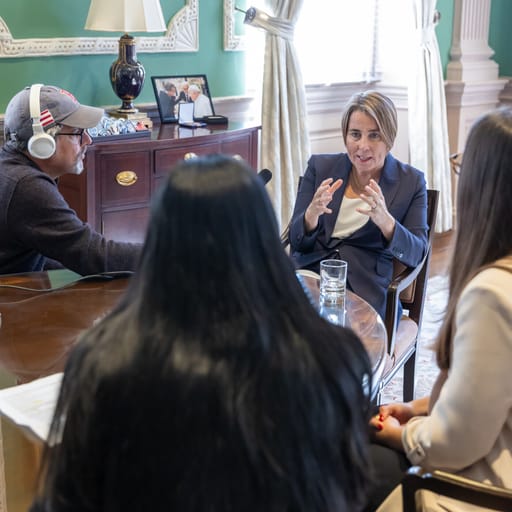
Transcript 0:00 [upbeat music] Welcome back to the Latino Newsletter Podcast. I'm your host, Michelle Zacarias, and today we have a very special episode with our founder, Julio Ricardo Varela. Julio, what can you tell us? 0:13 First of all, you've done a fabulous job as the host of season two, so I have to tell you that first, Michelle. 0:18 I've become a big fan of the show, but I'm coming back as a role of producer, and also I'm gonna put on my executive director hat first, and founder hat, before we talk about the show that we're about to present. We just 0:31 announced earlier this week a major partnership with El Planeta of Boston, 0:38 which El Planeta, for anyone that follows journalism in the Boston area or in Massachusetts or in the Spanish language space, El Planeta is one of the OGs, and we set up a partnership with them. 0:51 This is how we're gonna do it. They are going to file stories in English for us, for the Latino newsletter, and then after we publish, they're gonna create Spanish language versions at El Planeta. 1:03 And so we're gonna try that, about 20 stories. We're gonna see how it works out. We're super excited about the partnership. Javier Marin, who is, if you know journalism, Javier Marin is... You talk about OG the OG. 1:16 He's one of the journalists in Boston who sort of broke ground. It was like this big thing, and I'm a big fan of El Planeta. Super excited. Well, our first story, 1:29 which was already printed in the Latino newsletter and in El Planeta, also has a podcast version, because we had the opportunity to interview the Governor of Massachusetts, Maura Healey. That's a big deal. Which is huge. 1:44 So basically, what you're gonna hear, Michelle, are the two correspondents for El Planeta, Rosana Marinelli, who's also a multimedia correspondent for the Latino newsletter, and Lisa Martin, who just graduated college, 2:00 and we went to the Massachusetts State House to interview the Governor of Massachusetts, and Rosana and Lisa did the interview, and I recorded it. So I am a producer in this episode. 2:17 So here is the Latino newsletter and El Planeta, our interview with the Governor of Massachusetts, Maura Healey, about the state of Latinos in Massachusetts in 2025. Thank you again for your time. 2:31 So Governor, we wanted to start first, it's not news that Hispanics and Latinos now make up a bigger share of the state's population and economy, and their numbers keep growing. 2:42 But this year, many Latino families still can't afford to buy homes in Massachusetts, more people leaving the state, and fears tied to immigration enforcement this year, even for local businesses, threaten the community stability and economic participation. 2:57 So I would like to introduce the conversation around what actions are being taken beyond policies. Well, first of all, it's wonderful to have you here, and welcome to the Governor's office. 3:08 You know, when I think about the Latino population, Latinos are the fastest growing population in Massachusetts. They are driving our economy, driving businesses. 3:17 Look at the number of, of entrepreneurs that we have from the Latino community. 3:21 I'm particularly the- excited that during my time as governor, the number of Latino businesses has increased by 11,000, from about 49,000 to 60,000. 3:33 So that's an example of what I'm talking about when I'm talking about Latinos driving the economy here in Massachusetts, and I think there's even greater opportunity for that ahead. 3:44 It's also the case that this has been a challenging time, I think, for residents across Massachusetts, and particularly now with some of the actions taken by the Trump administration and what ICE is doing in terms of driving real fear and anxiety into communities, particularly Latino communities, more broadly into immigrant communities, and that's been really heartbreaking to see. 4:06 You know, I am very committed, as I have been from the beginning, to making Massachusetts more affordable, and that has led me to focus on things like housing, building more housing. 4:18 I put $5 billion into building more housing in Massachusetts so that we can increase the number of housing units and drive down rents, drive down the cost of homes. We introduced new programs. 4:32 One is the One Plus mortgage program, and that's a m- program that's designed to increase homeownership among first time home buyers. 4:42 And what's interesting to me is that 52% of those who participated in that program, the One Plus mortgage program, are Latino, and I think that's really exciting to, to see, you know, that growth. 4:56 But we've got to continue to focus on housing. I made things like accessory dwelling units something that you can do by right. We did a lot of permitting reform and zoning reform. 5:07 We gave tax credits to developers, and those developers have increased housing in our gateway cities by... We'll get you the exact figure, but I think last count it was at least 600%. 5:21 So I'm gonna continue to focus on housing and other cost drivers as well, energy and healthcare. 5:27 Talking about rents and home prices, according to MassINC, rising rents and home prices are putting getaway cities' naturally affordable housing at risk, and many are choosing not to buy homes. 5:43 What concrete actions are you taking to ensure that the high cost of living does not force this community to leave the state? Housing and housing affordability is an issue across America. 5:56 Every, uh, state in America is dealing with this issue, the high cost of housing. And what I've focused on doing here in Massachusetts is trying toIncrease the number of homes as quickly as possible. 6:10 That's why I introduced and signed that five billion dollar Affordable Homes Act into law. We have done things... Let me, let me back out, okay, for a second to take a step back. When I took o- took office as governor, 6:27 there was a study, and the study showed that we were short two hundred and twenty thousand homes in Massachusetts. And so I got to work, and we really focused on building more homes. 6:41 And because of the actions that we have taken, we now have a hundred thousand homes that have been either built, started to be built, or have been permitted to be built. Okay? 6:52 So we're working every day to increase the number of homes in Massachusetts. 6:57 Some of that has meant taking old abandoned buildings, old office space that's empty, old mill space, and converting that into housing, giving tax credits to developers so that they can develop more affordable housing in our gateway cities. 7:13 I m- mentioned other investments in public housing. We've made investments in public housing and actually have brought back online sixty-five thousand public housing units that we didn't have before. I also 7:26 did things like eliminate brokers' fees. You know, if you're a renter, I want you to be able to afford rent. I also don't want you to be stuck with paying a broker for an apartment, so we got rid of that. 7:39 Those are some of the things that I've done, and I'm gonna continue to focus on this every single day. 7:44 One of the things I've talked about recently, though, is that President Trump needs to get rid of the tariffs on lumber and building supplies because it just makes it more expensive for housing production around this country, so we need to, to see those tariffs go away. 7:59 So now regarding Chelsea, Chelsea is expected to lose around three hundred students, a five percent drop from last year, largely from Latino and immigrant families. 8:12 Our community is in fear, and are other communities experiencing something similar? What concrete actions is your administration taking to protect these students and keep them in school amid fears of ICE enforcement? 8:28 I've spent time in Chelsea. I've been to Chelsea. I've sat with family members who had their loved ones taken. 8:35 I remember being in an apartment one afternoon with a mom and two little kids, and the grandmother and the aunt, and the little kids were just waiting for daddy to come home from work, and they were by the window where they usually see him 8:53 get out of the van and come up the stairs and into the apartment. 8:56 And it was just heartbreaking to see those little kids waiting for their dad, and then their sixteen-year-old sister standing off in the corner of the room just crying because, you know, their dad had been taken by ICE. 9:10 And what we've seen in Chelsea and in, in communities around Massachusetts, and we've seen it in states around the country, is that ICE has been, instead of targeting only violent criminals, people with violent criminal records, which is what we were told they were going to do, 9:30 they've instead been taking so many people who have been part of our community for a long time, have 9:39 started businesses, been working, paying taxes, raising families in our communities, including Chelsea, and it is just so heartbreaking and tragic to see. 9:51 People have been afraid to go to school, to go to the doctor's, to go to work, to shop. It's terrible for our communities, and it's terrible for the safety and well-being of our residents. 10:05 It's also hurt us economically because businesses have closed or people haven't been able to go to work, which means they can't pay the bills and they can't feed their families. 10:14 And so just this whole situation with ICE has been 10:21 heartbreaking, it's been unnecessary, and it's having a real detrimental effect on our community and, um, on communities around the United States. 10:33 What we have tried to do as a team, as an administration, is to work closely with immigrant organizations and work in communities to see where we can provide assistance to make sure that people understand their rights under the law and that people are connected with legal services. 10:54 Many... Imagine, we've got many US citizen children who've had their parents taken, so we have to also look after now these US citizen children to make sure that they're cared for, fed, going to school, all of that. 11:09 It's been very, very challenging to say the least, and it's not okay, and I've called on the Trump administration to stop targeting innocent, tax-paying, law-abiding people. 11:22 People who were given lawful status to be here, enabling them to live, to work, to contribute to our communities, have had their status taken away, many Venezuelan, and that does not make sense to me. 11:35 It doesn't make us stronger as a country, and it doesn't make our community safer. 11:41 [outro music] So now about the World Cup, we are very happy that the World Cup is fast approaching and has become an important part of our community's culture. 11:59 How do you see this as an opportunity for Massachusetts to strengthen the community sense of belonging even now?Well, everyone loves soccer [laughs]. I mean, everyone loves soccer around the world. 12:14 We had hummus here, uh, not too long ago this summer. 12:18 Whoever comes here will have a fantastic experience because I know people across Massachusetts, across New England are going to turn out for what will be a huge celebration. 12:31 We're gonna have so much going on in addition to the actual games. We're gonna have activities out in communities around the state, and I think, you know, for 12:43 the Latino community, this is particularly exciting because so many different countries are going to be represented and so many different cultures, and it's also a chance to bring the world to Massachusetts and a chance for Massachusetts to show ourselves off to the world. 12:59 So I'm really excited about it. As a fan of soccer and as a fan of World Cup, I'm excited. 13:06 I'm also excited because it's gonna bring an economic benefit to our state with so many people traveling to be here to take in these games in Massachusetts. 13:16 Are there any plans to ensure our communities remain safe during the games? Absolutely. For many months now, we have had multiple agencies at the state level coordinating on this. 13:31 We wanna make sure that people have an excellent experience and a safe experience, and so we've had multiple agencies coordinating. They meet regularly. 13:42 They talk with the FIFA organizers, and we're mapping all this out to make sure that we have the, the right resources in place and that these games go off without a hitch. 13:52 You know, I wanna make sure that people know that we are investing in our people. We're investing in people in Massachusetts. We wanna see growth. We wanna see economic growth. We wanna see job growth. 14:03 And the ways I'm doing that as governor, I'm making huge investments in education, free community college, investments in vocational classes and training. 14:15 We're making investments, like, in teacher diversity so that we have diverse educators. Literacy. These are important investments that we're making. We're also making huge investments in childcare. 14:26 I'm the only governor to continue to fund childcare after COVID money went away at the rate that we're funding it. That's really important because we've increased the number of childcare seats in Massachusetts by 20,000. 14:38 That means those kids have a place to go, and their parents, importantly, are able to go to work because their little ones are cared for. We've also made investments in public higher ed. 14:50 I mentioned free community college, which is a game changer, but we've also taken steps to make sure that people stay in college. 14:57 We've increased the stipend to allow students who are on financial aid to get additional monies to support, whether it's for gas or food or books and supplies, and we've also increased the amount of financial aid for Massachusetts residents at our public higher ed institutions. 15:15 So I want people to know that these are important investments that we're making in our people, and they're really gonna pay off. [gentle music] Sharing the- Thank you. Right. Yeah. 15:31 What a huge opportunity for Rosana and Lisa to be able to be there talking to an elected official, asking these important questions. Julio, what did you think about the interview? I'm gonna share that with you, Michelle, 15:46 but being the true producer that I am, I actually asked that same question of Rosana and Lisa, so let's hear what they have to say first before I answer your question. 15:57 So this is post-interview with the governor of Massachusetts. We're in her office, just to give you sort of a, a, a picture of this. She left, so now we're, like, recording in the governor's office, 16:12 and there's these photos of, like, old Massachusetts people, and you can look out, and if, if you know the Massachusetts State House, it's like the classic Beacon Hill, America, colonial vibe, and here's- Yeah [laughs]... 16:24 like, two Venezuelan journalists and a Puerto Rican dude wearing a Boston Red Sox hat and a Puerto Rican flag talking about the interview. 16:32 Here's what both Rosana and Lisa had to tell me, and I believe we start with Lisa. Here it is. Hi, my name is Lisa. I'm a reporter for El Planeta. Boston is Hispanic newspaper. Um- Do you have a last name, Lisa? Yeah. 16:46 I'm Lisa Martin [laughs]. My job at El Planeta is audiovisual videos, and I'm in charge of that. Great, and I'm talking to someone else who actually did work for the Latino newsletter and is gonna continue to do work. 17:01 Can you just say who you are? Yeah. Thank you, Julio. I'm Rosana Marinelli. I'm the editor and reporter at El Planeta, and now will continue working with the Latino newsletter as a reporter. 17:12 So we just finished our conversation with the governor. We got about 20 minutes. We got questions, and these things go in fast, in and out. Any impressions as journalists? Do you wanna start, Rosana? Yeah. 17:26 It was interesting that she continues to highlight throughout her administration, and she reinforced that today, that she's investing in businesses, in local businesses, and that's important. 17:40 I mean, we are keep growing in the state, and that investment in the businesses will also help the economic stability for Massachusetts, so that was very interesting and important to, to highlight that for our community. 17:55 And then Lisa, like, you're a recent college graduate, so I did not have interview an elected leader of a state on my journalism portfolio when I was your age. What are you thinking right now at the moment? 18:08 Like, from Venezuela, we are in the governor's office. Come on. I was very nervous, actually. You did great. 18:15 And this was my first time interviewing a governor.And I think I just did on- only like 10 interviews in my life. This might be my 11th interview. 18:25 I think it was, like, a very fluent conversation, and we got the chance to talk about different topics that are important for our community and for us as Latino, and I think it was, it was, it was great. 18:40 So I'm gonna leave you with this last question for the both of you because you are covering our community here in Massachusetts, and, you know, here we are, we're, we just finished with the governor, but you also see what the community's saying. 18:50 So what are people telling you about being Latino in Massachusetts, Lisa, like right now? I know the governor addressed issues of affordability and housing. 18:59 What's the mood out there when you go out there and talk to people? From your reporting, like, what are people telling you? What are they worried about? Yeah. 19:06 Part of my, of my job is to go out and interview people about prices, about cost of living, about security, about everything that is around us every single day, and sometimes I don't get many responses. 19:22 They're afraid to be on camera. They don't wanna be only, like, on, on audio. Like, they don't wanna appearing, like, in any newspaper or in any video or something. 19:34 So also, like, for us as journalists, it's tough doing this job right now and getting responses that we need for our community. 19:44 So they are afraid of security, they are afraid of food, all the things with NA- SNAP benefits. They are afraid of little things that we do and that we need every single day. And what about you, Rosana? 19:59 You're a little bit more of a veteran reporter now. Like, what's the community feeling in Massachusetts, the Latino community, from all your reporting? 20:05 Yeah, our community is in fear, but a fear of not feeling that this is their home anymore. 20:13 I've received responses, and I've received the mood that they were feeling that Massachusetts was becoming their home, even for people that they have just been in a year here. 20:27 But right now, this year, that feeling of being afraid is that same feeling that maybe it's similar to what they felt before in their, back then in their countries, and that sense of belonging anymore is what they are afraid the most. 20:46 [gentle music] Bueno, gracias. Thank you so much. Thank you so much. 20:57 Again, I cannot express how admirable it is for two young, early career journalists to really be asking these important questions in the governor's office. 21:15 What do you think about it though, Julio? You never answered the question. Here's the thing. W- we wanted to do something special with El Planeta to start our partnership, and what better way to start it with 21:29 interviewing a sitting governor about Latinos in a state that you call home. I mean, I've called Massachusetts home for 30 years, right? 21:40 The future of this commonwealth, this state, is Latino, and it, and as you hear the governor talking about small businesses and education and affordable housing, a lot of issues that have permeated throughout the country are very real here in Massachusetts. 21:55 So from that perspective, I'm really glad that we had the opportunity to ask the governor of Massachusetts a couple of questions. But at the same time, 22:05 politicians are politicians, and there's a reelection campaign next year, and Maura Healey will not win if she does not deliver for Latinos in the state. 22:15 I think we're gonna get invited back, and I think there's gonna be more difficult questions to ask, right? But I also think it was super important for this first one 22:26 to, to really try to bring someone like Governor Healey into an audience that might not necessarily have followed her work or even in Massachusetts, the fact that she's talking about Latinos and, and shared a lot of information. 22:42 I mean, she did share a lot of details. So I'm very grateful that we got the opportunity, and I was also really excited for the two Venezuelan journalists, who are amazing. 22:53 I just wanna thank the governor's office for realizing that we are part of the ecosystem in this state, and we're part of the national conversation about Latinos. 23:02 And yes, sitting governors need to get interviewed by the Latino Newsletter, so hopefully it's one of many. We gotta get one for you in California, my friend. 23:12 I don't know if any governor will let me in their office, but we'll see. [laughs] Come in and be like, "Yo, let's produce." You'll be fine. 23:18 [upbeat music] We appreciate you being here again and keeping the important questions at the front and center of this political ecosphere. Thanks again, Michelle. Talk to you soon. Talk to you soon. 23:33 [laughs] And that's a wrap on the Latino Newsletter podcast. This episode of the Latino Newsletter podcast was produced by Julio Ricardo Varela, Joaquin Kotler, Juan Diego Ramirez, and Michelle Zacarias. 23:50 It was edited by Julio Ricardo Varela. Music by Cast of Characters via Soundstripe and Joaquin Kotler. 23:59 Season 2 of the Latino Newsletter podcast was made possible through individual donations and the Latino Media Consortium. 24:07 The views and opinions expressed in this podcast are those of the guests and hosts and don't necessarily reflect those of the Latino Newsletter or its staff. 24:14 [upbeat music]