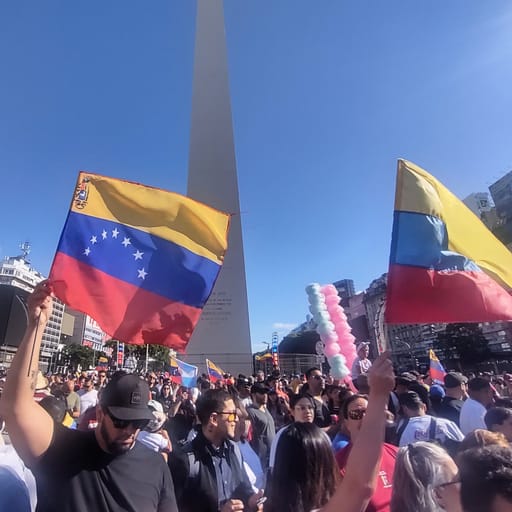
Transcript 0:00 [upbeat music] Welcome back to "The Latino Newsletter Podcast." 0:04 I'm your host, Michelle Zacarias, and our guest today, Juan Escalante, is a nationally recognized digital strategist and a leading voice in immigrant rights. 0:13 A former DACA recipient, Juan is a fixture at state, local, and national advocacy campaigns. 0:19 With over a decade of experience, his expertise and insights have been featured in premier outlets such as The New York Times, USA Today, Univision, and CNN, amplifying his influence in shaping national conversations on immigration policy. 0:34 And of course, today we'll be talking about Venezuela, so who better to have on than Juan, who is a proud Venezuelan American. 0:42 He arrived in the US from Caracas at the age of 11, and he's currently residing in Los Angeles, California, where he continues to speak out in defense of immigrant rights. Thank you so much for being here, Juan. 0:54 Thanks for the invitation. It's nice to be on this side of the screen this time. Well, let's get right into it. 1:00 I know that you probably have a lot of thoughts and opinions on this matter, but I think we wanted to talk a little bit about some of your published work that you've written, um, on the subject. 1:10 And you mentioned in a most recent, um, published article that you have an understanding of, like, the variety of perspectives and how they differ between Vene- Venezuelans who are still inside of Venezuela at the moment and those who might be living in the US. 1:27 And I'm wondering if you could just give us a little bit of insight around that. Yeah, of course. Uh, and thank you for that kind introduction. Um, yes, uh, I've lived in the United States for the past 25 years. 1:40 Uh, fled Venezuela, uh, upon the rise of Hugo Chávez, but I've kept in touch with, uh, um, with my family for the years and ha- have had a front row seat to a lot of the struggles that they have witnessed and experienced, uh, largely due to 1:57 food insecurity, lack of re- basic re- necessities like water or electricity, rolling bl- blackouts, I mean, you name it. 2:04 Um, my family has also been targeted and in some instances, uh, even kidnapped by, by the high crime rate that cities like Caracas continue to experience. 2:15 So I think, you know, as a well-rounded person in terms of having both, you know, an ear on the ground through my family back in Venezuela, but also being clear about what Congress is and isn't doing here, as well as the White House, uh, I've been trying to kind of inform myself of those two very, um, different perspectives to kind of, uh, you know, put some, put some added footnotes, uh, to a lot of the coverage that is continuing to pour out through mainstream media in the, in the, i- in the past couple of days and then obviously in the days to come. 2:50 Yeah. 2:50 And, uh, to that point, I think there are two big topics of conversation that I'm kind of seeing at the center front, and one of it being obviously, like, whether or not you're, um, in favor of the elected leadership in Venezuela. 3:04 There has been a lot of criticism about how US sanctions have had a significant and measurable impact on the Venezuelan economy, obviously compounded with some internal management and governance. 3:15 Um, but would you say there is a clear distinction between what separates the effects of the US sanctions versus what was already seemingly broken? 3:26 Yeah, I mean, there's, they're still denying that there's a compounded impact between the management and the sanctions, right? 3:32 So, like, internal and external pressures have basically pummeled Venezuela into, you know, the collapse that it's currently experiencing. I'm actually writing about that for a piece out in Prism. 3:42 And, um, I think ultimately the type of economic mismanagement that, that Chávez, later the Maduro, uh, administrations carried out with, you know, little to no help from anybody in the, in, in the hemisphere com- that basically came into it being a situation where Venezuela found itself more and more isolated in the region and being pointed at by the United States as a rogue actor that decided... 4:12 that, that deserved to be punished, and that somehow those economic sanctions were going to be a tool to coerce or push those regimes, Chávez and later Maduro, out of power. That didn't happen. 4:26 And through those policy failures and lack of any sort of real solution at the local level, meaning free and fair elections or any sort of, uh, organized protest against the established governments, 4:41 we're now s- we're in a, in a situation where one of the most oil rich nations in the, in the world, right, doesn't have dedicated healthcare for its citizens, uh, it's suffering from hyperinflation, and it's put itself in a position where now what we're seeing is essentially the toppling of a strongman, but under the guise and direction of the United States, which for all intents and purposes is trying to push its new leadership, Delcy Rodríguez, the Maduro's vice president, into the direction that they wish her to go through. 5:17 But that's just not sufficient in the terms of what is going to happen to Venezuela, the country, and its citizens in the short and long term of things. Yeah. 5:28 And I think to that point, there's a lot there because regardless of whether you were in favor of elected leadership there or not, it seems like a majority of Venezuelans who are currently in Venezuela are feeling some kind of dissent or anger about the fact that their elected leader was essentially kidnapped, um, and abducted by a US force. 5:50 Um, and so I, I wonder if you can speak to that because it feels like even when there's a, a moment of relief or celebration or whatever it is, there's also a lot of conflicted feelings about the US's involvement in that and their true intentions.Yeah. 6:08 I mean, look, um, for a lot of people, it's gonna be hard-pressed to find Venezuelans outside of the country, uh, who are dissatisfied with the toppling of Nicolás Maduro by what- whichever way it may seem. 6:20 Obviously, he still has a, a broad support base, uh, that is essentially protesting the way that the United States, uh, you know, captured him and his wife, Cilia Flores. 6:33 And those two realities are very much so, you know, at, at odds, right? 6:39 You have the celebrations that many people saw on TV throughout the world of Venezuelan, uh, communities, you know, from the United States all the way down to Europe and beyond. Um, but in between, 6:53 um, is also a, a very specific apparatus that is basically in place to clamp down on any sort of free opinion about what should or shouldn't happen to the government of Venezuela. 7:08 Uh, The Washington Post posted a piece this week, uh, and through their reporting, they're saying that there's a broader crackdown on any sort of speech that essentially, uh, talks well about Trump's operation, that talks bad about the current regime under Delcy Rodríguez, who is now the acting president of, of Venezuela. 7:30 And I think through that, you can kind of see essentially that the opinions are divergent. I don't, I don't wanna confuse that the fact that, like, there's, you know, n- no support for Maduro's, uh, regime, but... 7:44 or within Venezuela. But at the same time, I think it's important to remember that the people who have expressed any sort of criticism live in fear, and if they so much as send out a 7:55 message through WhatsApp or a meme, they could be, uh, arrested and prosecuted the same way that journalists continue to face all type, all, all type of oppression in a country that, according to Marco Rubio and the Secretary Kristi Noem of Homeland Security, say it's a lot freer today than it was yesterday. 8:14 And I just find that very hard to believe, even with Nicolás Maduro out of power. Yeah. 8:20 I think this brings up this point about the US media and the oversimplification of narratives, um, that sometimes distort the reality of people's lived experiences in Venezuela. 8:33 Would you say that there is, you know, anything in terms of, like, the US media and its coverage that it gets right about Venezuela? 8:42 I think oftentimes the ways in which we see the country of Venezuela is, is at extremes, right? 8:51 It's either it's a country that's about- is, is on the verge of collapse, or it's a country that is safe according, if you were to take Donald Trump at his word during this, uh, his latest, uh, effort to, to, to run for the presidency. 9:07 Um, and for me, the truth ultimately lies with the people who are able to tell you that in order for them to buy a sack of flour to, you know, have in their homes, they have to wait in unimaginable lines or try to basically hunt it down like a treasure throughout, throughout a city. 9:27 Uh, you also have to contend with the realities of essentially having to put together whatever resources you have to make it through another week and another month while prices continue to rise. 9:36 So I think that, you know, while mainstream media may try to essentially categorize a country in one way or another, the best way to essentially get to the center of things is to talk to Venezuelans about Venezuela, which has basically become my motto this week. 9:52 Because there are so many things happening outside of just Caracas, which is the capital city. 10:00 You know, Venezuela is a very diverse country that has anything from a chunk of the Andes mountain range all the way to plains and beyond rural communities. 10:09 And those people's stories and those people's voices are also missing from, from, from a lot of these type of conversations, uh, either from lack of access, uh, because Venezuela's not essentially, you know, welcoming reporters without a w- you know, unbiased reporting without any sort of checks, uh, from, from the, from the current regime. 10:31 Or, um, those are the voices that are just not often accounted for, and I think that those are kind of like the m- the underreported, uh, pieces of this much broader story, right? 10:41 What are the people in, in this, in El Estado Bolivar of the south of Venezuela bordering Brazil have to say about what's happening? 10:48 Uh, and what does the rest of Venezuela as a whole, uh, have to essentially state about their future, uh, under what's going on between the United States and Delcy Rodríguez as the new head of state? Yeah. 11:02 I kinda wanna bring it back to the United States for a bit because, you know, uh, some of the things that you're mentioning sound like direct parallels of what's happening here even. 11:12 Um, you know, the censorship of media, and e- even now we're seeing the Trump administration rescind temporary protected status, um, for Venezuelans who are living in the United States. And w- 11:25 we also found out obviously that this Minneapolis woman, Rene Nicole Good, yeah, she's 37 years old, was shot and killed by an immigration officer. 11:35 So for you, just kind of understanding the larger context around imperialism and militarization, do you see there being a direct correlation between the militarized violence and executive overreach abroad versus the presence of, say, like ICE and Border Patrol here in the United States? 11:53 You know, I think ultimately right now we're, we're seeing in the United States is essentially an administration that has no regard for people who are currently going through some of the most traumatic moments of their lives. 12:07 That you, you're, you're talking about essentially seeing, uh, a person, Nicolás Maduro, being toppled.And essentially picked up by, by, by military squad in the middle of the night and then try- and then sent to New York for, to face justice. 12:23 But at the same time, you're sending a message that somehow the country is now fixed because this person, Nicolás Maduro, is no longer in charge. And as I mentioned before, that just couldn't be further from the truth. 12:35 So, you know, those narratives are in conflict both here in the United States and also abroad, right? 12:43 Here in the United States, you have Venezuelans, uh, being told that they won't be offered any type of asylum protections, any sort of temporary protected status like you mentioned, which is essentially a, 12:56 uh, a type of immigration, uh, benefit that would allow people to remain in the United States until conditions are favorable in their home countries for them to return. 13:06 That means either, uh, an economic collapse, uh, political instability, uh, natural disaster, so on and so forth. Uh, and 13:15 it's within those contradictions, right, that I think just some of the parallels that you maybe, um, that, that you're referencing are, are coming into focus, right? 13:23 If you protest, uh, or speak out against, uh, immigration enforcement in the United States, you as an outlet, uh, may be discredited or disparaged, you know, by the White House or by the Trump administration. 13:39 Uh, if you protest on the street, uh, you're seeing essentially some of the aftermath and impact of what's happening where citizens of the United States are taking to the streets and essentially saying that, you know, "My neighbors are not gonna be taken without any sort of, any sort of due process." 13:54 And you see anything from people being pepper sprayed in the face to unfortunately facing, um, you know, the other end of a gun, uh, which is what happened, uh, Minnesota where this woman tragically was, uh, shot and killed by a federal officer. 14:09 Uh, meanwhile in Venezuela, if you speak ill about the government, same thing, right? 14:14 You're, you're, you're, you're basically taken into custody and this is a place that doesn't have regards for any, for any sort of type of human rights. 14:22 So you may just be disappeared without any sort of communication with your family in Venezuela. Uh, so I think it's concerning, right? 14:30 Uh, it's, it's, it's certainly concerning, you know, when, when you put one thing next to the other and you see these, the, how these things play out. 14:38 Uh, what I'm hopeful right now is, you know, hoping that Congress to some degree or another assert- asserts the authority and hopefully has a seat at the table within this continued talk about the future of Venezuela, mostly because the people, and specifically talking about the United States, mostly because the people here in the United States are afraid of going back and facing the ni- the Nicolás, the, the regime that Nicolás Maduro basically set up and the United States chose to leave there in place. 15:08 Characters like Delcy Rodríguez, Diosdado Cabello are not unfamiliar players of persecution and oppression. 15:17 So while those people remain in power, there should be a conscientious play to say what essentially is going to happen to the people of the United States who are from Venezuela, and is it safe for them to even pretend to go back. 15:32 Yeah. And I think this speaks to kind of a larger point about like what defines safety and what the intentions were kind of going in there, right? 15:40 Because this immigration enforcement policy that we have in this country, um, directly undermine the claims of solidarity that, um, solidarity and liberation that Trump's administration is preaching about Venezuelans and like their country. 15:54 So we're seeing this juxtaposition and I think that the elephant in the room here being that Venezuelan oil is a valuable resource and so a lot of people are already speculating that it's gonna be central to Trump's administration strategy moving forward. 16:11 So I'm wondering how do you see that playing out in the next several weeks or months? 16:15 You know, I was talking, um, to a couple of colleagues today about everything happening, um, you know, regarding Venezuelans in the United States and 16:28 my words were basically, you know, "Marco Rubio should know better," right? And the obvious thing here is that that is just not the case. 16:35 Even if he knew better, the Trump White House is basically making it very clear that they're going to talk oil first, human rights, democracy, people, whenever we get to it, if we get to it. 16:50 And again, coming back to like domestic policy here in the United States, that should give a lot of pause, right? To the people here in the United States who are worried about their Venezuelan friends and neighbors. 17:00 That should give concern to elected officials, right, about essentially how we're going to be, uh, what the expectation is from Venezuela if we're continuing down this path, right, and we're going to somehow micro, macro manage, you know, Delcy Rodríguez's, uh, government out there. 17:20 And ultimately what's gonna happen to the people both in Venezuela that we claim to have liberated, and where is, what does it say for, about our country, right? 17:29 If we're going to be deporting these people back to the same, uh, oppression that they fled from just under a rebrand and a different head of state. 17:41 Um, I think that those are very valid questions that really deserve real answers and not just, you know, a secondary thought. 17:48 Because if we're talking and if we're, you know, I, and I, and I say this kind of like in the, in the air quotes type of deal, if we're being sincere as a country that we want to help our neighbor, that we want to talk about this hemisphere and protections and, you know, everything that, you know, is being parroted on, on, on late night TV, you know, from people in Washington, DC, then we also have to center the people of that country, whether they are exiled or-Whether they're still back there hoping, praying, right, that the United States is actually going to follow through and help them you know get out from the, from underneath the m- the, the impact of the Maduro regime. 18:32 Yeah. 18:33 And, you know, I think you make a lot of good points, but I, I will push back a little bit and say that there seems to be so much valid skepticism based on the US' history of, um, I guess imperialism or executive overreach, and especially now in this administration, um, where we've seen throughout history US has had intervention in places outside of Venezuela, right? 18:58 Like Chile, Guatemala, Panama, Nicaragua. So just understanding the context of all of that, there seems to be a lot of fear and uncertainty around what role the US should play, if any, outside of the United States. 19:15 And, you know, even as far as looking at the legal process for this, it seems like Trump went, you know, out of his way to essentially go through without congressional approval, um, without any direct threat of war, um, essentially, uh, reviving the Monroe Doctrine. 19:32 So we're, we're seeing an administration that is being really conniving and strategic in the way that they're implementing some of these, like, political moves. 19:41 And I'm wondering for you, as someone who has, like, personal ties to the region and also has, like, a larger understanding of the historical and political context, um, do you feel like Venezuela has the structure, the communal support to really take the reins and rebuild after something like this? 20:04 You know, uh, just to kind of clarify, yeah, no, I... The United States as a whole does not have a record of doing good when it intervenes in foreign affairs, right? 20:15 So I, I think that, you know, that's a, a, a really big exclamation point when it comes down to everything that's happening here. 20:23 But I think, you know, your question about whether or not Venezuela as a whole has the ability, you know, to come out and essentially regain itself, you know, from ev- from the, from everything that has trans- transpired over the past twenty-five years, I think that the, the determination is there. 20:42 I think that there's a, a willingness even from the people who have fled and made lives and, um, moved to other countries to help, right, their, their families, their friends, you know, back home see a better future and build a better country for generations to come. 20:58 Unfortunately, that's all going to depend as to whether or not those people are taking into account and are given the self de- uh, the self-determination that they should be given, right? We saw the... 21:10 an, an election just in twenty twenty-four where María Corina Machado basically, uh, ran, uh, her own campaign. 21:21 Later it came under, u- under, under El Mundo, and was able to kind of com- like, bring out receipts and said, "You know, this is essentially the machinery that is operating here in the, in, within Venezuela that is, you know, e- either rigging elections or maintaining the status quo." 21:37 And, you know, if we're going to talk about, you know, how we present those type of arguments while simultaneously praising those people, right? 21:47 There, there was, there's no shortage of Republicans in Florida right now praising María Corina Machado and saying that they wish her to be the president of Venezuela eventually down the road. 21:57 But if we're going to talk that talk, the, and we're going to just at the same time just thumb our nose and say, "No, but we rather deal with these people because they know where the oil is and where the money is and everything else," then, you know, we have to ask her questions. 22:11 Why is it that we're not uprooting the entire system from one go? Why is it that, you know, the United States has to essentially threaten Venezuela with a second strike? 22:22 Why is the, the, that the Trump administration has to say something like there may be boots on the ground when they know, just as you mentioned, Michelle, that they didn't get a, a congressional approval the first time? 22:31 Now that Congress is back in session, I don't think that they're gonna get c- congressional approval for any other time because now the, the, the spotlight is on the White House, right? 22:42 And I think that for the listeners who are kind of like not following some of the, some of the, quote-unquote, "insider baseball" here, Congress is the body in the United States that has the authority to declare war. 22:54 The president may be the, the, the chief in command, uh, when it comes down to the armed forces, but ultimately there needs to be some level of accountability here. 23:05 What we have seen so far is an administration from the executive branch just acting as if this were just another day under the sun, and that they're just doing this out of the kindness of their heart, but at the same time saying, "We're gonna prioritize oil, and everything else will just come second because it's all about national security, and the people, well, they have a freer country today than they, than they had before." 23:30 And those are two very different things that are hard to reconcile for anybody who's listening. Well, I think that's a great note to end on. 23:39 Um, you've given us a lot to think about, so I appreciate you for being on and for sharing your perspective with us. 23:45 And I also know that this is a deeply personal issue to you, so, um, you know, I appreciate you being able to contextualize it and also personalize the stories of people who are most directly impacted by this. 23:57 My opinion is one of many out there when it comes to the Venezuelan community inside and outside Venezuela. So I'll just repeat what I said earlier in the, in the show. 24:07 If you wanna talk about Venezuela, talk to Venezuelans, not just talk to one. 24:11 Talk to many, because the truth of the matter is, is that the future of Venezuela will be shaped by the people of Venezuela inside and outside their country, or it should at least.Those people should be taken into consideration when we talk about these subjects. 24:26 So I encourage everybody to essentially take, take what I'm saying and, and apply it, right? 24:32 Look for Venezuelans that you may disagree with or who may disagree with each other, and between that, that web of differing opinions is where you'll be able to really put and weave in together all of these different types of narratives that we'll continue to see. 24:48 And, you know, I'm appreciative to you for, you know, um, for the interview and for the space. 24:53 Ultimately, I feel that this is, this is a story that we're gonna come back to and, you know, uh, I'd be happy to come back whenever you guys will have me. And that's a wrap on the Latino Newsletter Podcast. 25:05 I'm your host, Michelle Zacarias. 25:07 Today, we'd like to take a second to acknowledge Rene Nicole Good, the 37-year-old woman who lived in Minneapolis and legal observer who was shot and killed by immigration enforcement today. 25:17 She's the first documented US citizen that had been killed by immigration enforcement officers. She was a mother and a partner. 25:28 [upbeat music] This episode of the Latino Newsletter Podcast was produced by Joaquin Cotlar, Juan Diego Ramirez, and Michelle Zacarias. It was edited by Julio Ricardo Varela. Music by Cast of Characters via Soundstripe. 25:44 Season 2 of the Latino Newsletter Podcast was made possible through individual donations and the Latino Media Consortium. 25:51 The views and opinions expressed in this podcast are those of the guests and hosts, and don't necessarily reflect those of the Latino Newsletter or its staff. [upbeat music]